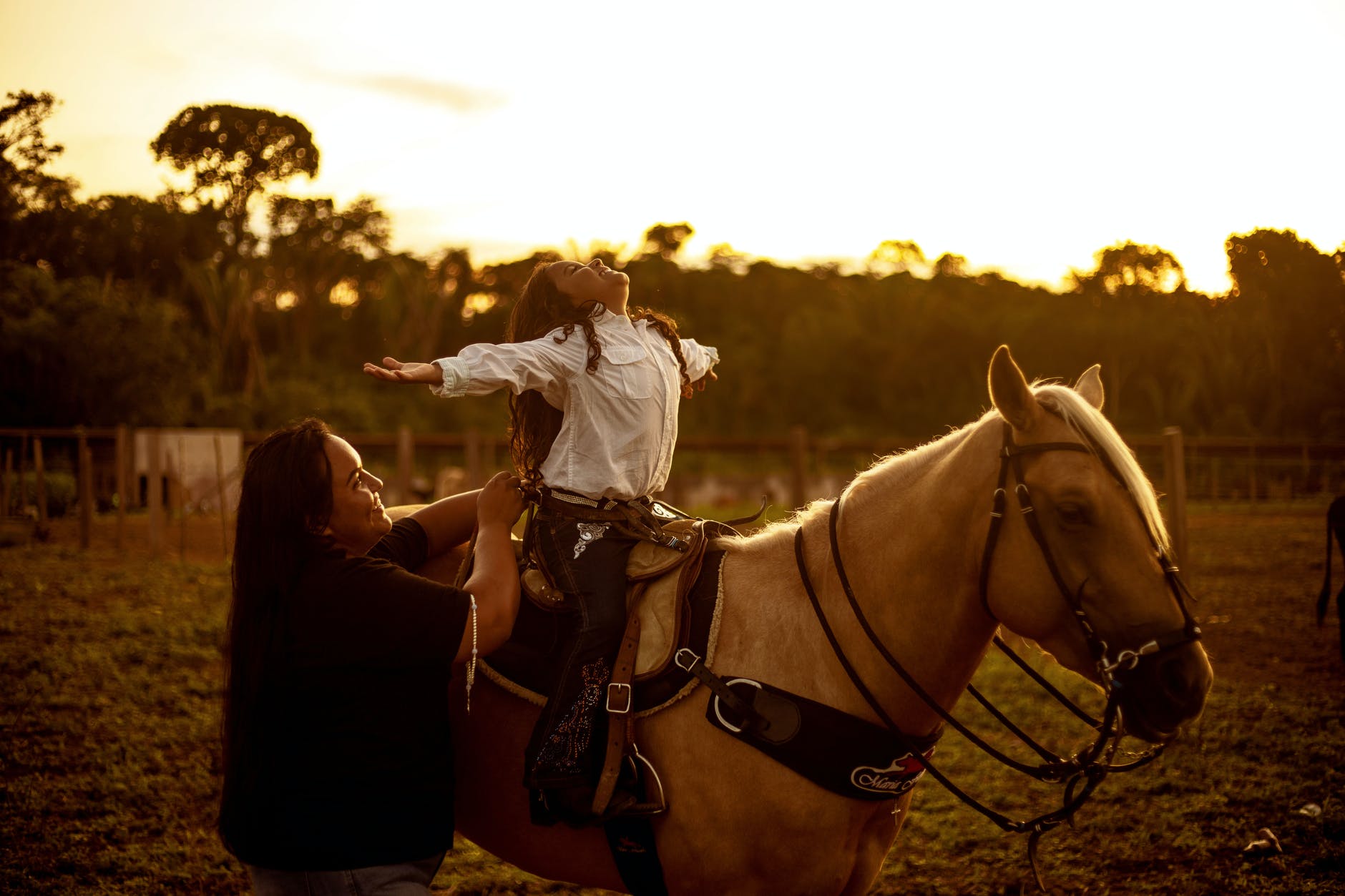
Have you ever noticed how a child’s face will come alive when they are doing something they love and enjoy? Even grown ups will light up when they are doing something they love.
People who love what they do and love who they are don’t take vacations from it or from themselves. It lights a fire within sparking up a joy that cannot ever be contained. In life, humans light each other up along the way like lining up dominoes and with one gentle nudge, each domino knocks into the other crashing and cascading down. Or like Pringos, “Once you pop, you can’t stop!” LOL
No one can ever take that purpose away once ignited. It cannot be faked, copied, or even categoried <– made up word. Be you and pass on your light of being. The greatest gift is the gift of oneself. One’s own transformation and change.
Who are you? Who are you becoming?
What are you?
When were you? When are you?
Where were you and where are you?
Why are you?
How are you?
Be and become. The light. The love. The joy. The hiccups. haha
Children should at least get 3 hours a day outside to play not in front of screens or constantly listening to lectures. (Yes screens when used appropriately and lectures each have their own respective places). However, I (we) am/are calling for some tune ups in our public school schedules as well as curriculums. The amount of children in our society who lose focus, have increased behavioral problems, diagnoses for all of these “labels” is truly astronomical. Our school is a microcosm of what is happening nationally. Every year should not get more challenging for a school and its teachers / administrators / leadership. We need to rise to this challenge and return to basics. Do you remember playing as a child? At home and at the schoolyard? How much time did you have? How about the games you played in your childhood? Tag, freeze tag, races, hide and seek, Mr. wolf/fox, climbing trees, rolling all around, creative and sustained imaginative play … so much happens for children during this process of play. And, truthfully speaking, grown ups need a little folly in their lives, too as Erasmus well put it. Without it we are walking shells of a human. Children are showing us what they need. Some are loud about it and some are quiet about it. No one wants to sound, be or be remembered like the teacher (or parent) in Charlie Brown.
We are society and can change it. We know and are aware as educators about true and real life child development. The stages we all learned about and went through ourselves as children: Sensorimotor, pre-operational, concrete and formal. We need more playtime not more screen time / not more memorization/rote learning not curriculum that is abstract and out of touch with real children and how they learn. When it comes to testing and what a child “knows” we need both objective and subjective. We are all human. We need brain breaks. “Coffee breaks” for grown ups and “Energy” breaks for children.
We do not need more regulations or checklists…teachers, families and our schools are communities of “life-long”-curious-engaged learning. Should feel joy and fun coupled with respect, responsibility and a life-long readiness to learn and have curiosity. We all want what is best for our children / our future. Three hours of focusing on “school work” without a brain break knowing humans tend to lose focus most easily (in five minutes) especially when they are tired, stressed, experiencing distractions in their environment, performing repetitive tasks, or when dealing with complex information for extended periods of time. It is a lot we are requiring of our children. We have to be the change we wish to see in this world as Gandhi put it.
There truly needs to be a tune up. As a community school we can be a model for what real life / engaged learning embodies, looks and feels like. Children (truly, all of us) learn by doing and being active, engaged participants not passive observers. Using what they learn to apply it in real life / challenges is the best gift that we can give and bestow upon our children/our future who we pass the mic too. Here are several articles that I hope inspire you.
Instead of asking: “What’s wrong with him or her?” Ask, “What happened to him or her?” This will help you guide and have a better relationship with the children and grown ups in your life.
In a society that is in a rush to label, diagnose fix and break, be the exact opposite, be the one who slows down to notice, show compassion and listen. Just be there through the tears, through the ups and the downs. Notice and be present. Love.
We are society and we can in fact, choose love, consistency and conversations where we listen more and talk less. Slow down, listen to what children are showing and sharing. You will find out exactly what they need, don’t need and in return what you need and what you don’t need.
Slow down. Turtles have a lot to teach us in this way. Not the ninja turtles but the ones who hold up traffic as they cross the street. Taking their time. One turtle paw at a time. One paw in front of the other. There are times to be a cheetah and there are times to be a turtle. Choose wisely.
In the words of someone I love. ” Love you to the end of thealphabet... [and beyond it] “. Here are the abcs filled with love, light and affirmations. Cheers to speaking life and love over each other and our children.
A for amazing and astounding.
B for brave, bold and beautiful.
C for courageous, considerate, compassionate and caring.
D for determined and dedicated.
E for evolving and energetic.
F for fabulous and fun!
G for giving and getting.
H for healing and health.
I for intelligent, inspiring and insightful.
J for joyful and jazzy.
K for knightly and kind.
L for loving and learning.
M for masterpiece and magnificent.
N for neat, nice, natural and neverending!
O for observant and ongoing.
P for precious, persevering and playful.
Q for quissential, quaint and quirky!
R for resilient, respectful and ready for life!
S for special and sweet.
T for talented, timeless, thoughtful, tactful and tenacious.
U for ubiquitous, unique, unconditional, unbeatable, ultimate and unabashed!
V for valorous, valuable, venerable, vast, versatile and valiant.
“If you can’t run, walk. If you can’t walk, crawl.” — MLK
If you can’t crawl, roll. If you can’t roll then get that tummy time in. This is the story of the stages of development and how children need caring grown ups to nurture our babies so they grow into their fullest potential. This is what to expect when you’re expecting. This is how we care for and nurture children after their basic needs of nutrition, toileting and shelter have been met. Early childhood development is impacted heavily by the mental health of the people who care for them even while they are in the womb. Care is solely based on three actions caring grown ups give: love, safety and consistency. During the early years of life, the brain is constantly and consistently growing and care should coincide with that growth. Grown ups have a mission to foster security, love and safety starting at birth which leads to toddlers establishing a strong sense of self and self-worth. Children not only want safety, love and consistency but they also need it.
Being able to build and sustain healthy relationships to consistently meet children where they are in order to secure a healthy attachment depends on the wholeness of the grown up who is caring for children. Are those who are caring for children well and healthy? A great question for grown ups to ask themselves is: “How am I feeling?” “What can I do about?”
In reality, a “healthy head start” is not always an option for babies. This is where early intervention comes in as a plan b if the family unit is broken. Early intervention such as head start, home cares and preschool improves the outlook and success of children growing into healthy and thriving adults. Caring grown ups help build a strong foundation also known as the brain. It also aids in breaking a family generational cycle of poverty. Need support?
Here are some resources and ways to support infants and toddlers in the first three years of life:
Do you remember your early childhood? How did you experience it? What three things came to mind? Did anything not come to mind?
Birth through five years are essential in building a foundation for life and that is where an early learning program comes in. An imprint is left for lifelong learning. Babies, toddlers and preschoolers are born ready to take in the love of their new people, environment, and information. When a child is born they are “making one million neural connections per second” according to Zero to Three.
These connections are made strong by daily continuous and consistent positive experiences and routines. Positive experiences correlate to positive outcomes in the long run of a marathon in a child’s life. A child will learn to trust or distrust people based on their early experiences in childhood. Most of all, grown ups support children as they gain the foundation needed for thriving in their life after childhood.
How do we do this? How do we support children? It’s as easy as 1, 2, 3 and A, B, C as the Jackson 5 sang about. Here is an awesome resource that gives age-by-age tips, strategies and activities for children as you help them learn and grow.
It focuses on the whole child centering on emotions and self-awareness, social skills, character, literacy, math, science and the creative arts.
So, what three things did you think about when it came to how you experienced your childhood? Our three are play, love and care for self, others and the environment. List the top three things that remind you of your childhood. Share in the comments below.
Meet children where they are in life’s journey. Most of all, care and inspire them to care and the rest handles itself.
“I know what I want to do, and it makes sense to get going”. — Warren Buffet
Children know who they are and what they love to do from an early age. Families, educators and the community also discover what children are passionate about especially by paying close attention while being astute observers. When children arrive at school they get going in on the things they care about all while living out the mantra: being in the present moment. Something most of us could learn a lot from. While being in the present an idea enters the brain also know as a spark of joy that sends signals as what we’re supposed to be doing. An idea.
I had a student who had an idea. He started building a truck. More specifically, a cement mixer. In fact, he loved trucks. All kinds of trucks. His family was worried as he seemed obsessed with trucks and he didn’t like books so much. I mentioned that they just may have a builder on their hands. He gets distracted by what he cares about most because when there was a book about trucks he would study it research like and consumed by it ranging from non-fiction to Goodnight, Goodnight, Construction Site. When asked what he wanted to be when he grew up, he said a garbage truck so he could keep Earth clean. When we went to the library on Wednesdays for story time, instead of listening to the story he would instead gravitate towards the window to watch the construction workers work. He would be engrossed by the construction site across the street and name every single truck as well as what they were doing. I mentioned it to the storyteller and she prepared stories the following week in honor of my student and the site across the street. We also met the team who were building. My student’s eyes lit up and stood in awe as the team described what they were working on. He asked the most questions and even got to sit in the cement mixer he saw each Wednesday, the exact truck he was building. This came full circle and his family beams with pride as their son is an expert in building and mechanics. He drew and from what I see online still draws blueprints, creates and builds.
Our ideas are unique to only us. No one else dreams the dreams we dream. It is vital to fulfill our mission. When a child is doing something they love they don’t have to be told or rewarded to do it. Even when they grow up it is the same as they do something they love. They do it because they want to be there. They do what they love and care about. That is the greatest gift. Are you honoring your child and your own inner child?
This is where intrinsic vs. extrinsic motivation comes in.
Children are intrinsically motivated to do the things they love to do. They don’t need awards or even praise. They just do. They get going.
So what is it that your child wants to get going on? How about you? Just do it.
Everybody needs a little love in their lives but you know what else everybody needs? Play.
You can discover more about a person in an hour of play than in a year of conversation. —Plato
While in Vang Vieng, Laos, we happened to catch children playing from a far distance. No grown ups present. They climbed through tree roots, explored water, caught fish and laughed a lot. They waded water in the stream made their way out and found a large paint roller and rolled it all around in the dirt. I smiled and reminisced as my nostalgic childhood materialized.
“That’s what play looks and feels like. That’s honoring childhood.” My partner and I started sharing about our childhoods. How we were fortunate that ours looked like the childhood the children were playing in right before our very eyes. Childhood is finite and infinite at the same time. It lives on.
No fences, no dittos, no rules. Freedom. To feel and play. True play gives us a push into being in our body and mind. Everything is connected: spatial awareness to making connections.
Play gives children practice to what they are learning and observing. It works for grown ups too in life, family and business. Want to learn more about your colleagues in less time? Keep it simple. Kick the typical “meeting” and get out there and play.
Play Opens Doors
No matter where children and grown ups live or what they’re overcoming, play is essential.
It opens doors and shows us what we’re capable of and what we’re passionate about. It shows us who we are and are meant to be. We all are competent, capable and creative human beings. From birth until we die, we have to play in our purpose.
Play Promotes Collaboration
Listening and talking. Everyone plays a part in it. From role play / interacting with others to make believe / symbolic thinking. Even without someone else…being able to collaborate with yourself in your own world is the art of meditation. Play is meditation.
Play Gives Grace to Fail and Try, Try Again
Riding a bike to kicking a ball. You ride, you crash. You kick, you miss. You try again.
What did you love to play as a child? As an adult? Did it change? Why?
How do you notice and celebrate the fall? There are so many ways to acknowledge it with children in natural ways. Bring in and celebrate the changing seasons with some of these creative ideas. Please feel free to share some of your family’s ideas in the comment section below: sharing is caring! These sensory and awesome activities are simple to set up and perfect for inviting your child to explore and notice the wonders of Autumn.
1. Take a Walk to Notice the Changing Leaves
Change the lyrics of the classic Bear Hunt song to “We’re going on a leaf hunt” and take a walk together as you notice the leaves falling as they crunch beneath your shoes and spy the changing colors. Walk while collecting colorful various sized leaves as you go. Invite your children to tell you what color, texture and size of each leaf in fun ways. For example…notice the size by pondering outloud: “I wonder if it’s bigger/smaller than your hand?” “How does it feel?” “Where did the green disappear to?” “How did the color change?” “Which is your favorite shade?” Once you’re home, invite your child to sort the leaves by size, shape and color.
2. Sensory Play with Fall
Sensory play is vital for babies and children and there are lots of amazing ways to represent the colors of Fall. Invite your child to change the leaves with food coloring or Tempera paints. Wonder out loud: “If you could change the colors of the leaves, what color would you change them to?” “How does a leaf change its color?” Offer Blue/Red, Yellow/Red, Yellow/Blue primary paint combinations to discover what they turn into.
4. Sing Autumn Songs click below for some ideas
5. Read Books about Trees: list of ideas below: **add your titles in the comments below** *Bonus Make Your Own Book Using Colorful Leaves
The Lorax, The Giving Tree, Stuck, Because of an Acorn, The Kids’ Family Tree Book, Can You Hear the Trees Talking?, The Tree Book for Kids and their Grown-ups
6. Observe, Draw and Pick out Some Favorite Trees
Take a sketchpad outside and draw what you see. Plan to revisit and plant one of you and your child’s favorite trees in the spring!
5. Paint / Collage with Leaves
Use leaves to paint and collage with. Make a large Fall mural inspired by the Fall. **Bonus Make a fall wreath together for your door or a neighbor’s door.
6. Rake the Leaves
Don’t forget to JUMP in them! Make up a story using the leaves together.
7. Make Leaf Rubbings / Pressings
Grab a paper, crayons (and/or pastels), playdough/clay. Place the leaf/leaves on the paper. Place a paper on top and then use the crayon (writing utensil) to rub. (Another variation is to do pressings by pressing the leaf into playdough/clay to make impressions/imprints. See it by clicking below:
8. Visit a National Park and Chat with a Park Ranger
Visiting parks and nature is a wonderful way to get up and personal with nature, especially trees. Talking with a park ranger who is an expert could turn into a life changing memorable experience as you make meaning out of the trees and their importance. If you’re local to Fiolina the Arboretum is an iconic place to visit many types of trees from the smallest Bonsais’ to the tallest of Sycamores. A perfect place for that sketchpad we mentioned earlier.
Have Fall inspired ideas you want to share? Let us know by commenting below!
What were the little things you carried in your pockets before the world made you empty them? Mine literally were rocks and dandelions. I would marvel at a rock as I found it fascinating. I loved and still enjoy collecting rocks. Ultimately, it’s not about the things you buy, it’s about the experiences you have. The moments made into memories. It’s about the little things you care about. Perhaps it keeps you up at night or wakes you up really early in the morning. Perhaps it sits with you for awhile mid-afternoon while you have your tea. It calls out to you. It knows your name without ever having to say it.
When is the last time you noticed or discovered that little thing you care about? When you saw or realized it did you marvel and sit with it for awhile? Were you present in the moment with it? When is the last time you did something about it? No expectations. Not because you have to but because you want to. Not following steps walking into “adulthood” but into “yourself hood” When will you follow your calling? Your own footsteps, left foot, right foot one in front of the other? Not for money but for your soul. Those are the kinds of things that are worth carrying in your pocket. Noticing and fulfilling the little things that you care about are victories.
I remember a little thing. A student of mine wanted to take a worm back to the classroom. So, he put some dirt in his pocket. Then he put the earthworm in his pocket. He carefully sprinkled a bit more dirt on top of the worm in his pocket as well so the worm in his own words would have a home. Think of the care and careful consideration he took to look out for the worm as he fulfilled his mission of bringing it back into our classroom.
If I had interrupted this play and told him to empty his pockets and that a pocket is no place for an earthworm even to transport it then we would have missed out on all of the learning with earthworms, anatomy and how to care for them and how they care for our Earth creating nutrients for plants and other organisms. It started with one worm and turned into so much more.
A worm. A single worm created a moment which created a memory and is in the process of possibly creating an entomologist. We all have an inner child, an inner soul. Nurture it. Nurture the little thing you love and yearn for whether it’s an ant or the sky. You are drawn to it for a reason. When someone asks you why are you “fixated” or “stuck” on something. Ask them, why not? Keep your wonder and your fascination especially in a world that is “stuck” and “fixated” on being busy and moving onto something else before really getting to know and work with what it started with to begin with. Studying and observing earthworms doesn’t take a week or month. For example, Darwin studied earthworms for forty years.
What were the little things you carried in your pockets before the world made you empty them?
Four decades Darwin hung out and observed the worms. So take your time with your passion and purpose, on purpose. The little thing you care about. The little thing that keeps knocking on your brain and on your heart: your soul. It’s worth it. Nurture it, care for it and be there with it for awhile. Sit with it. Walk with it. Crawl with it. Do whatever it is you have to do to be with it for awhile. Keep it safe, give it a home. Put it in your pocket. Take a decade or two or three or four or even more with it. Slow down and move with it in a world that wants to move onto the next thing. It warms. It cools. It warms. It cools. Stay with it for awhile. Savor it like the last bite. In fact, save the best bite for last.
So what is it and what will you do with it?
Ps. Here is a book entitled Finding Me by Viola Davis that may encourage you to dig a little deeper than the earthworms.


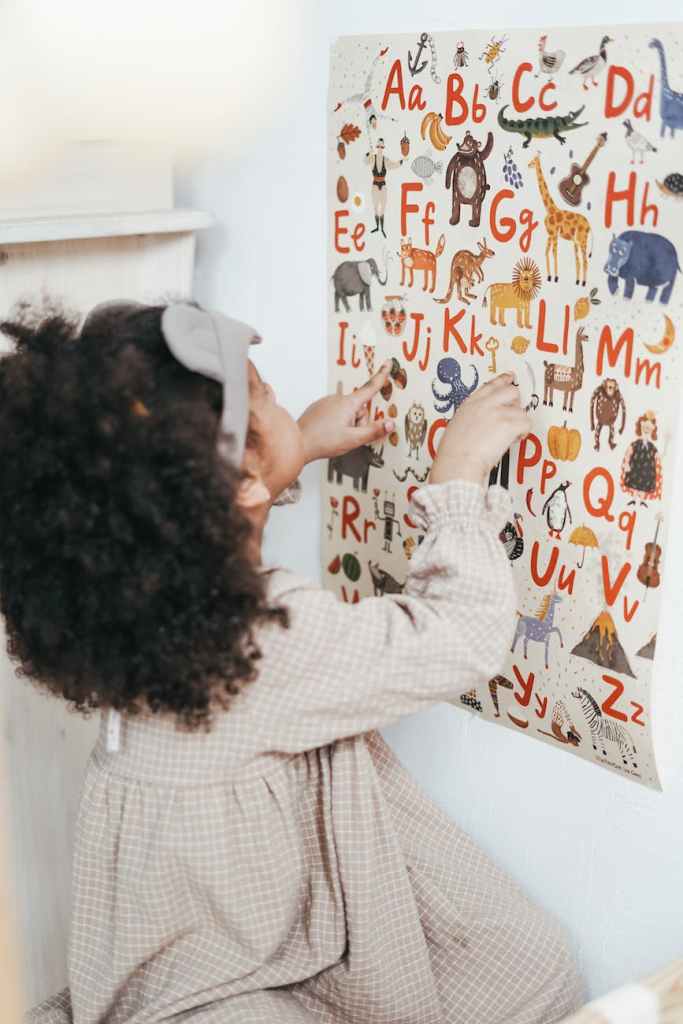



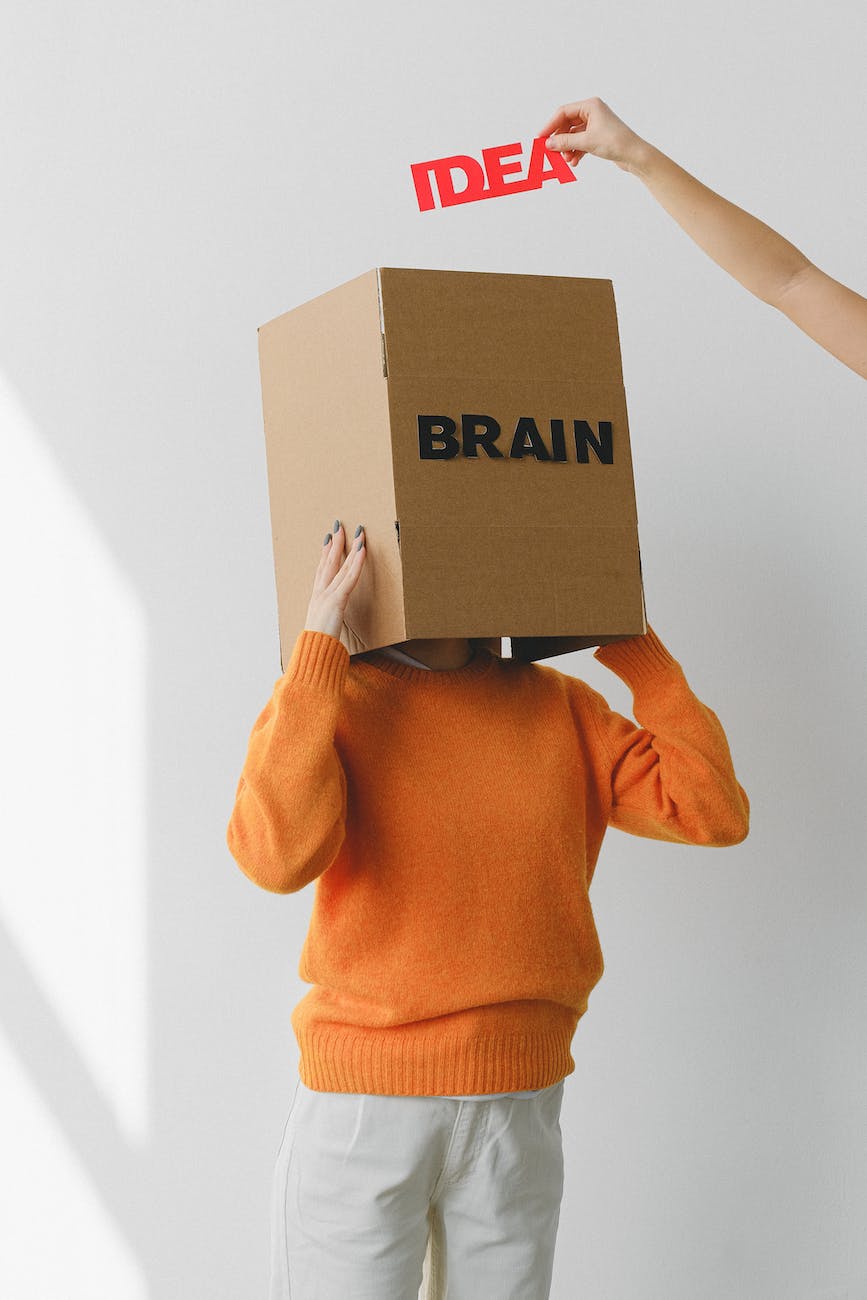

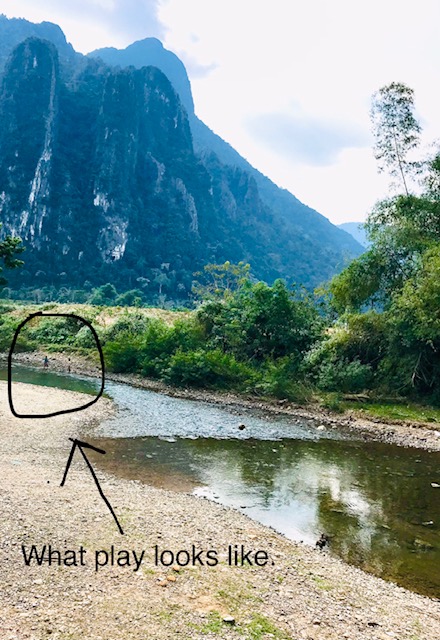

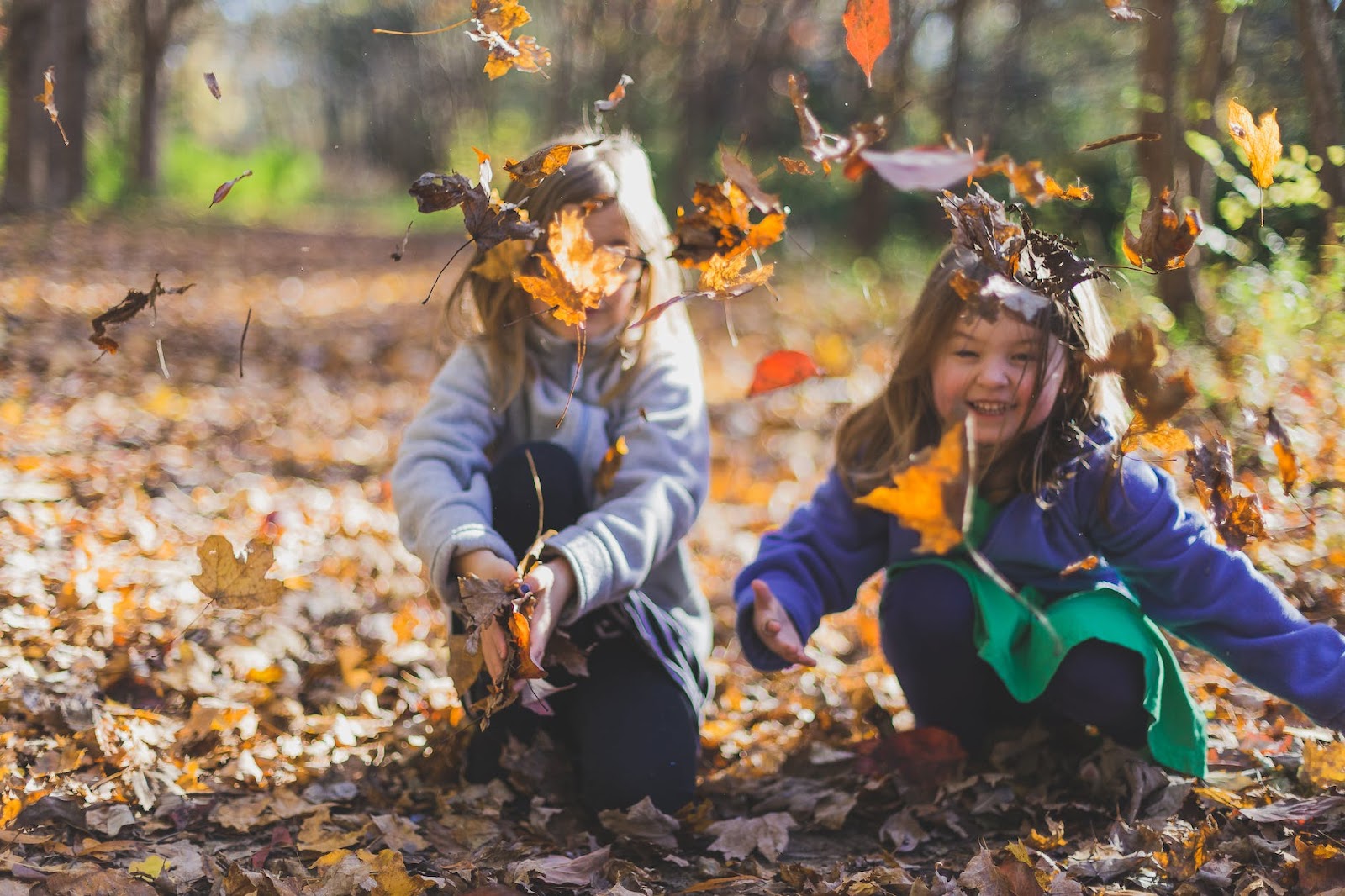
 Photo by Tatiana Syrikova on

 From the Playground