Calling for a new Prescription: Playtime

Children should at least get 3 hours a day outside to play not in front of screens or constantly listening to lectures. (Yes screens when used appropriately and lectures each have their own respective places). However, I (we) am/are calling for some tune ups in our public school schedules as well as curriculums. The amount of children in our society who lose focus, have increased behavioral problems, diagnoses for all of these “labels” is truly astronomical. Our school is a microcosm of what is happening nationally. Every year should not get more challenging for a school and its teachers / administrators / leadership. We need to rise to this challenge and return to basics. Do you remember playing as a child? At home and at the schoolyard? How much time did you have? How about the games you played in your childhood? Tag, freeze tag, races, hide and seek, Mr. wolf/fox, climbing trees, rolling all around, creative and sustained imaginative play … so much happens for children during this process of play. And, truthfully speaking, grown ups need a little folly in their lives, too as Erasmus well put it. Without it we are walking shells of a human. Children are showing us what they need. Some are loud about it and some are quiet about it. No one wants to sound, be or be remembered like the teacher (or parent) in Charlie Brown.

We are society and can change it. We know and are aware as educators about true and real life child development. The stages we all learned about and went through ourselves as children: Sensorimotor, pre-operational, concrete and formal. We need more playtime not more screen time / not more memorization/rote learning not curriculum that is abstract and out of touch with real children and how they learn. When it comes to testing and what a child “knows” we need both objective and subjective. We are all human. We need brain breaks. “Coffee breaks” for grown ups and “Energy” breaks for children.

We do not need more regulations or checklists…teachers, families and our schools are communities of “life-long”-curious-engaged learning. Should feel joy and fun coupled with respect, responsibility and a life-long readiness to learn and have curiosity. We all want what is best for our children / our future. Three hours of focusing on “school work” without a brain break knowing humans tend to lose focus most easily (in five minutes) especially when they are tired, stressed, experiencing distractions in their environment, performing repetitive tasks, or when dealing with complex information for extended periods of time. It is a lot we are requiring of our children. We have to be the change we wish to see in this world as Gandhi put it.

There truly needs to be a tune up. As a community school we can be a model for what real life / engaged learning embodies, looks and feels like. Children (truly, all of us) learn by doing and being active, engaged participants not passive observers. Using what they learn to apply it in real life / challenges is the best gift that we can give and bestow upon our children/our future who we pass the mic too. Here are several articles that I hope inspire you.

https://outwardbound.org/blog/how-much-outside-time-a-day-is-recommended-for-kids/


https://hechingerreport.org/want-resilient-and-well-adjusted-kids-let-them-play/


https://www.healthychildren.org/English/family-life/power-of-play/Pages/the-power-of-play-how-fun-and-games-help-children-thrive.aspx

Ps. Feel free to share this with your schools. Peace, love, joy, compassion and light. Your way, always.

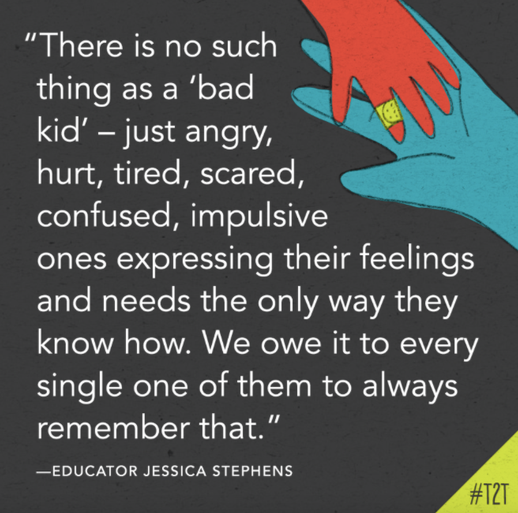
No Such thing as a Bad Kid…Remember that!

Instead of asking: “What’s wrong with him or her?” Ask, “What happened to him or her?” This will help you guide and have a better relationship with the children and grown ups in your life.

In a society that is in a rush to label, diagnose fix and break, be the exact opposite, be the one who slows down to notice, show compassion and listen. Just be there through the tears, through the ups and the downs. Notice and be present. Love.

We are society and we can in fact, choose love, consistency and conversations where we listen more and talk less. Slow down, listen to what children are showing and sharing. You will find out exactly what they need, don’t need and in return what you need and what you don’t need.

Slow down. Turtles have a lot to teach us in this way. Not the ninja turtles but the ones who hold up traffic as they cross the street. Taking their time. One turtle paw at a time. One paw in front of the other. There are times to be a cheetah and there are times to be a turtle. Choose wisely.

99 Books of Pages on the Walls: Top Ten Children’s Fall Books to Fall into

Hello Fall. How I’ve missed you. I love the Fall (the book by Albert Camus) But especially, the season. Goodbye Summer. The leaves are falling down. Red, Yellow, Orange and Brown,…the leaves are falling down. Goodbye Summer. Hello Fall. The crisp is not only in the crunch of the leaves but also in the air. Chilly-Crisp the kind of weather love to read a book in.

Here are my top 10 books for children for this season followed by a reading challenge. Comment yours below if you’d like.

  1. I Like Pumpkins by Jerry Smath
  2. Where the Wild Things Are by Mercer Meyer
  3. Abiyoyo by Pete Seeger (all seasons really!)
  4. Happy Halloween Biscuit by Alyssa Satin Capucilli
  5. Leaf Man by Lois Ehlert
  6. Goodbye Summer, Hello Autumn by Kenard Pak
  7. The Scarecrow by Beth Ferry
  8. Too Many Pumpkins by Linda White
  9. The Leaf Thief by Alice Hemming
  10. The Giant Carrot by Jan Peck

Fall Book Challenge to Fall into. Get your Read on….

  1. A book with Fall colors red, yellow, orange and brown (on the front cover and inside).
  2. A book about a ghost, scarecrow, giant, witch or monster.
  3. A book about fall foods.
  4. A book about leaves.
  5. A book featuring fall songs (bonus: sing together!)
  6. A book about pumpkins and gourds
  7. A book showing the change of seasons
  8. A chapter book featuring any or all of the challenges 😉

****Heads up: Many of the books on the challenge are listed in the top ten. 🙂 Happy Reading! Love, light and change your way.

The Only Thing We Should Scream is Love: How to Keep Your Cool When Your Child is Losing It

“The only thing we should scream into the world is love” — Jill Telford 

Photo by Phil Nguyen on Pexels.com

Imagine you and your family are out at a pool. Your child is having a blast to the point his fingers are wrinkled from the water. The sun is shining and sunscreen was a cinch to apply because the spray kind was created. You’ve all been out in the sun for about two hours. You make the call to head home. Your child says, “Five more minutes, pleeeeease”. You say, “Ok”.  Five minutes pass and you say alright let’s go but he wants to negotiate another five. You say no it’s time to go. You see water on his face that is not from the pool but his tears. He starts crying that he wants to stay. He runs away, yelling he doesn’t want to leave and throws himself on the grass. You carry him to the car feeling defeated and deflated.

Everything pretty much a toddler and preschooler does is developmentally appropriate including many of the following challenging behaviors:

  • Ignoring you
  • Yelling
  • Throwing food, etc.
  • Spitting
  • Not Sharing
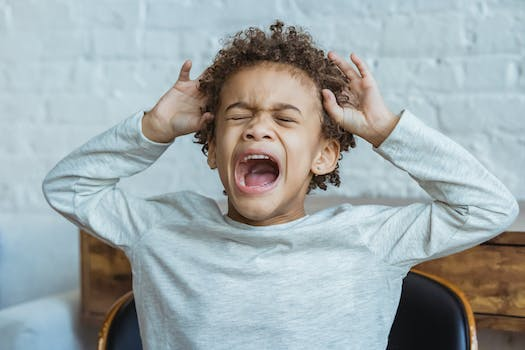
  • Tantruming
  • Not “sitting still”
  • Not “listening”
  • Hitting
  • Biting

This happens as children grow and learn about this brand new world. While we’ve been here for decades, they have been here for a few years. They don’t have the plethora of experiences that we have. Think about that. Our brain is fully developed while their brain is still growing. What they do and how they act during this time is not a reflection of who you are as a parent. They are not “bad”.  Neither are you as a parent “bad” at parenting. 

In those moments, they need you more than ever to be still with them. Give yourself and your child space as they navigate big feelings. It’s hard to label how upset they are that they have to leave. When it gets calm be present with them and re-enact the scenario and what would be done differently next time. Label what you saw and validate feelings including your own. Give reasons why. Keep it simple, direct and clear. Keep calm and carry on.

Next time you find yourself in the middle of a meltdown or tantrum with your children: give space, follow through on what you said, be there when they are ready to talk, label what you saw and use it as a teachable moment for what to do differently next time. Hug them, tell them you love them but not the behavior. Give yourself grace as their parent. You got this.  

Ps. Need more tips: here is a helpful article featured on Understood

https://www.understood.org/en/articles/taming-tantrums-vs-managing-meltdowns

An Act of Care: How Grown Ups Support Developmental Trajectories of Children

“If you can’t run, walk. If you can’t walk, crawl.” — MLK

If you can’t crawl, roll. If you can’t roll then get that tummy time in.  This is the story of the stages of development and how children need caring grown ups to nurture our babies so they grow into their fullest potential. This is what to expect when you’re expecting. This is how we care for and nurture children after their basic needs of nutrition, toileting and shelter have been met. Early childhood development is impacted heavily by the mental health of the people who care for them even while they are in the womb. Care is solely based on three actions caring grown ups give: love, safety and consistency. During the early years of life, the brain is constantly and consistently growing and care should coincide with that growth. Grown ups have a mission to foster security, love and safety starting at birth which leads to toddlers establishing a strong sense of self and self-worth. Children not only want safety, love and consistency but they also need it.

Being able to build and sustain healthy relationships to consistently meet children where they are in order to secure a healthy attachment depends on the wholeness of the grown up who is caring for children.  Are those who are caring for children well and healthy? A great question for grown ups to ask themselves is: “How am I feeling?” “What can I do about?”

In reality, a “healthy head start” is not always an option for babies. This is where early intervention comes in as a plan b if the family unit is broken. Early intervention such as head start, home cares and preschool improves the outlook and success of children growing into healthy and thriving adults. Caring grown ups help build a strong foundation also known as the brain. It also aids in breaking a family generational cycle of poverty. Need support?

Here are some resources and ways to support infants and toddlers in the first three years of life: 

CDC’s Developmental Milestones:

https://www.cdc.gov/ncbddd/actearly/milestones/index.html

Activities for bonding and learning from birth through 12 months:

CDC’s Positive Parenting Tips from Birth through Teenager Years *Bonus with activities*

https://www.cdc.gov/ncbddd/childdevelopment/positiveparenting/index.html

Why the Early Years Matter and How to Support Children from Birth through Five and Beyond

Do you remember your early childhood? How did you experience it? What three things came to mind? Did anything not come to mind?

Birth through five years are essential in building a foundation for life and that is where an early learning program comes in. An imprint is left for lifelong learning. Babies, toddlers and preschoolers are born ready to take in the love of their new people, environment, and information. When a child is born they are “making one million neural connections per second” according to Zero to Three.

These connections are made strong by daily continuous and consistent positive experiences and routines. Positive experiences correlate to positive outcomes in the long run of a marathon in a child’s life. A child will learn to trust or distrust people based on their early experiences in childhood. Most of all, grown ups support children as they gain the foundation needed for thriving in their life after childhood. 

How do we do this? How do we support children? It’s as easy as 1, 2, 3 and A, B, C as the Jackson 5 sang about. Here is an awesome resource that gives age-by-age tips, strategies and activities for children as you help them learn and grow. 

https://www.pbs.org/parents/authors/zero-to-three

It focuses on the whole child centering on emotions and self-awareness, social skills, character, literacy, math, science and the creative arts. 

So, what three things did you think about when it came to how you experienced your childhood? Our three are play, love and care for self, others and the environment. List the top three things that remind you of your childhood. Share in the comments below. 

Meet children where they are in life’s journey. Most of all, care and inspire them to care and the rest handles itself. 

A Bad Child? No Such Thing. Busting the Myth of the Bad Child.

You’re in the store. You hear, “Mommy, I want that.” You peer down to see your child pointing to a brightly colored stuffed elephant that you know he has more than you can count at home. You whisper, “No, not right now you have some at home.” He urges, begs and pleads. You don’t cave in. You stand your ground. Then to your surprise (or perhaps, not to your surprise) as it’s been boiling you see your 3 year old start to cry. He may scream. He may even throw himself to the floor. 

You as the grown up can’t run or hide. What do you do?

During childhood, young children are experiencing a vast array of emotions: big and small, discovering new places and self as they change and grow. As they take in the brand new world around them, they could get easily frustrated especially when they are not able to fully say how they feel or fully articulate their needs. As a result, a child may show this exasperation and big emotions through what grown ups see as challenging behaviors not a bad child but a challenge. Even adults could reach a point or limit of not being able to self-regulate. Imagine how children feel as everything is brand new especially as they grow into themselves.

According to NAEYC, challenging behaviors often emerge in the second year of life. Why? Toddlers are unable to fully label how they are feeling as well as their needs as they are still developing language skills. So, a child will use nonverbal possibly biting or verbal: crying to get their needs met. 

Here are some research backed strategies to guide children to more positive outcomes that may prevent leaving the store in gallons of tears and energy. 

  • Avoid common triggers or situations that cause challenging behavior: Prepare in advance for activities or store trips. Observation is key here. If you know when you go to the store, he will see a fluffy bright elephant that he will beg for, and prepare one he already has to take with him. Bonus: let him choose which one he wants to take. In the moment at the store: it may not be the “want” of the toy but the “want” of a comforting item that seeing that bright elephant reminds him of.  Identifying patterns in timing, routine, anticipated outcomes or root causes of challenging behaviors can help families better support their child. 
  • Establish predictable and consistent routines and behaviors: Children and grown ups thrive in predictable and consistent routines. It feels safe to know what is coming next. Model kindness and empathy with others and yourself. Your child will notice and show the same. Model how to take care of others, the environment and the self. Keep a consistent and predictable schedule. Have cereal together. Breathe and meditate together. Show and share a calm, supportive, consistent and loving environment.  If ever upset, model that you will need a moment to calm down, breathe and return when ready. Children learn by what they observe and experience. If you curse, your child will. If you’re calm, your child will be. Families are successful by being consistent through predictable routines, setting limits and modeling care and compassion through smiles, intentional verbal, nonverbal praise and action. 
  • Notice and talk about positive actions during the day: Every day is a fresh and new day to get it right or learn from mistakes. Families have the potential to promote positive behaviors throughout the day, not just when challenging behaviors emerge. Catch children’s positive actions and comment on them. Notice other people’s actions too and comment out loud in front of your child about them. For example, wow without Kelly, our mailperson we would never get postcards from Grandma or when at a restaurant, comment on the service. For example, our waiter is so kind and without him we would not be able to order food. Notice and comment on the helpers of our world. Without each and every person’s kindness, we would have a mean and disturbed kind of world.  

Hopefully, these tips help so that next time you find yourself somewhere such as a store, it goes more smoothly and there are no screams or tantrums. Screaming love instead of frustration. Here’s to pinpointing and solving those challenging behaviors. Cheers! Remember, you got this!

Code the Life You Want

3:08 am. How did we get here? I stretch and I yawn into the morning. Into the new day as I give thanks and am filled with gratitude to see another day. During the pandemic, I was deeply moved and inspired to move. To change. To dig deep within myself. I just needed a shovel. During the pandemic, we went virtual as we taught and learned online.

Some grown up students loved it and some did not. Some children loved it and some did not. For instance, I had a student who loved typing on the keyboard. He inspired me to dig deeper within myself. He gave me a shovel without even knowing it. While many times, I push and cheer others on, deep down I knew it was time to push and cheer on myself as well.

I noticed something. Literacy in action as he typed. We were singing Dem Bones and he started typing the sounds of the song out. Not because I told him to but because he wanted to.

What do we do in a world where computers and technology are a part of it. We embrace it and work alongside of it, learn to work with it and even create it. As I am learning coding now, I think about the past languages I learned and recognize coding as a language. Another language to communicate in.

Commas and quite frankly, punctuation matter in the code. You miss it or make a mistake then the code will not work. It will be null and void.

As we started returning to “normal” I didn’t want the old normal. I craved a new normal. So, here I am coding, creating and writing the life I want. The life I need. One that is far from normal. Love and light leads me. We are life. It is now almost 4:00 am on a Tuesday and this will be reaching you at 8:26am. on May 26. Happy reading. Happy living. You are life. Remember that.