5,4,3,2,1 — Blast Off! Get Going on What You’re Meant to Do and Whatever that is: “Be a Good One.”

“I know what I want to do, and it makes sense to get going”. — Warren Buffet

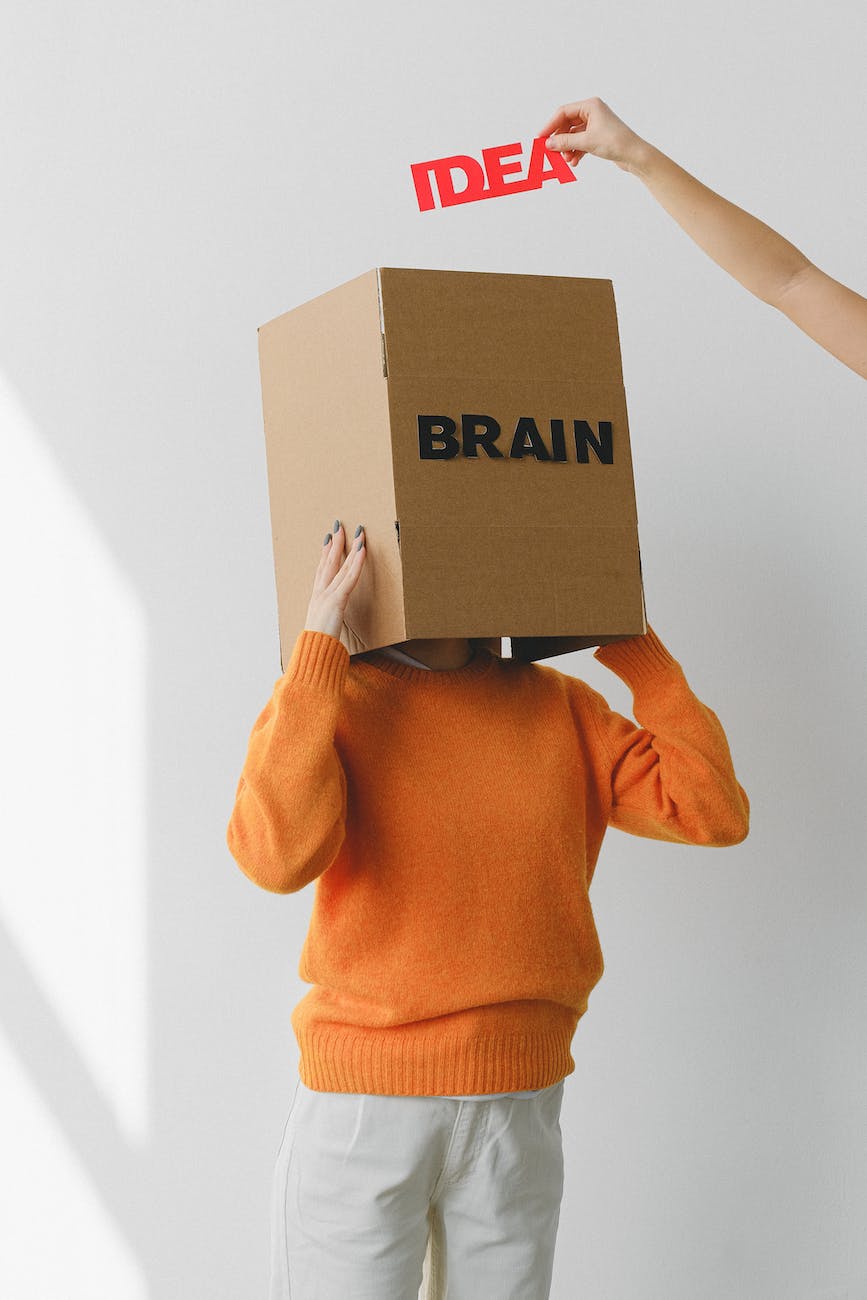
Children know who they are and what they love to do from an early age. Families, educators and the community also discover what children are passionate about especially by paying close attention while being astute observers. When children arrive at school they get going in on the things they care about all while living out the mantra: being in the present moment. Something most of us could learn a lot from. While being in the present an idea enters the brain also know as a spark of joy that sends signals as what we’re supposed to be doing. An idea.

Photo by SHVETS production on Pexels.com

I had a student who had an idea. He started building a truck. More specifically, a cement mixer. In fact, he loved trucks. All kinds of trucks. His family was worried as he seemed obsessed with trucks and he didn’t like books so much. I mentioned that they just may have a builder on their hands. He gets distracted by what he cares about most because when there was a book about trucks he would study it research like and consumed by it ranging from non-fiction to Goodnight, Goodnight, Construction Site. When asked what he wanted to be when he grew up, he said a garbage truck so he could keep Earth clean. When we went to the library on Wednesdays for story time, instead of listening to the story he would instead gravitate towards the window to watch the construction workers work. He would be engrossed by the construction site across the street and name every single truck as well as what they were doing. I mentioned it to the storyteller and she prepared stories the following week in honor of my student and the site across the street. We also met the team who were building. My student’s eyes lit up and stood in awe as the team described what they were working on. He asked the most questions and even got to sit in the cement mixer he saw each Wednesday, the exact truck he was building. This came full circle and his family beams with pride as their son is an expert in building and mechanics. He drew and from what I see online still draws blueprints, creates and builds. 

Our ideas are unique to only us. No one else dreams the dreams we dream. It is vital to fulfill our mission. When a child is doing something they love they don’t have to be told or rewarded to do it. Even when they grow up it is the same as they do something they love. They do it because they want to be there. They do what they love and care about. That is the greatest gift. Are you honoring your child and your own inner child?

This is where intrinsic vs. extrinsic motivation comes in. 

Children are intrinsically motivated to do the things they love to do. They don’t need awards or even praise. They just do. They get going. 

So what is it that your child wants to get going on? How about you?  Just do it.

The Gift of Play: Everybody Needs It

Everybody needs a little love in their lives but you know what else everybody needs? Play.

You can discover more about a person in an hour of play than in a year of conversation. —Plato

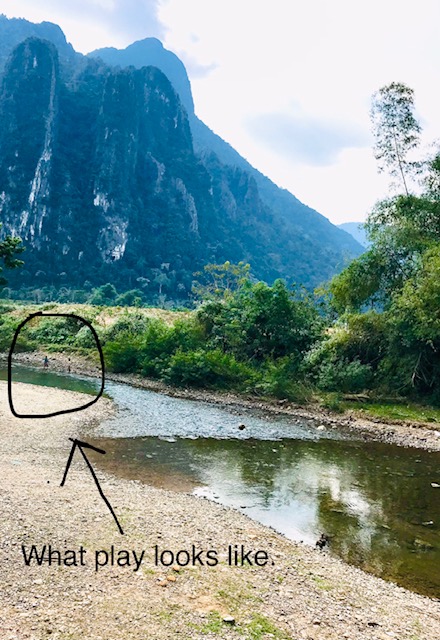
While in Vang Vieng, Laos, we happened to catch children playing from a far distance. No grown ups present. They climbed through tree roots, explored water, caught fish and laughed a lot. They waded water in the stream made their way out and found a large paint roller and rolled it all around in the dirt. I smiled and reminisced as my nostalgic childhood materialized.

“That’s what play looks and feels like. That’s honoring childhood.” My partner and I started sharing about our childhoods. How we were fortunate that ours looked like the childhood the children were playing in right before our very eyes. Childhood is finite and infinite at the same time. It lives on.

No fences, no dittos, no rules. Freedom. To feel and play. True play gives us a push into being in our body and mind. Everything is connected: spatial awareness to making connections. 

Play gives children practice to what they are learning and observing. It works for grown ups too in life, family and business. Want to learn more about your colleagues in less time? Keep it simple. Kick the typical “meeting” and get out there and play. 

Play Opens Doors

No matter where children and grown ups live or what they’re overcoming, play is essential.

It opens doors and shows us what we’re capable of and what we’re passionate about. It shows us who we are and are meant to be. We all are competent, capable and creative human beings. From birth until we die, we have to play in our purpose.

Play Promotes Collaboration

Listening and talking. Everyone plays a part in it. From role play / interacting with others to make believe / symbolic thinking. Even without someone else…being able to collaborate with yourself in your own world is the art of meditation. Play is meditation.

Play Gives Grace to Fail and Try, Try Again

Riding a bike to kicking a ball. You ride, you crash. You kick, you miss. You try again.

What did you love to play as a child? As an adult? Did it change? Why? 

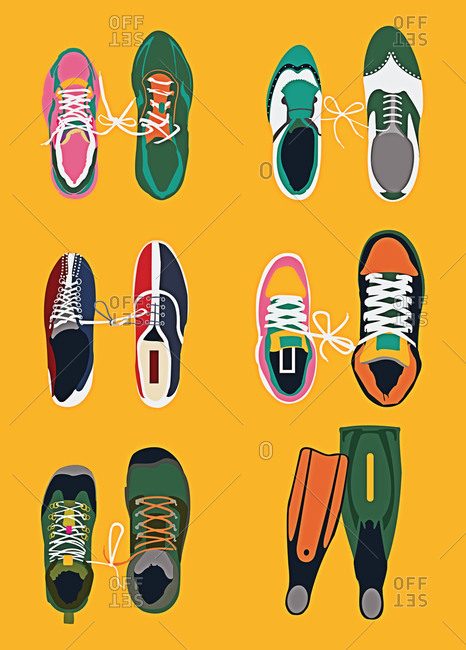
This is What Happens While Wearing Two Different Shoes

You could tell a lot about a person by how they handle certain things in life like accidents, mistakes, rainy days, spilled milk and so on and so forth. The ultimate and most obvious timeless question to ask is could they laugh at themselves in moments like that?

Throughout the pandemic and especially during the height of it all, a student of mine has been working at McDonalds while also attending college and caring for her young son (who is also doing elementary virtual class).

No matter how tired and exhausted and scary the pandemic was and is — She still rises and goes to work.

Each and everyday she rose and (still rises) at 5:30 am, left and arrived to work at 7:00 am where her manager took her temperature, scanned and looked her over. On this particular morning worth mentioning, he glanced down and pointed at her shoes.

She looked down and when she looked down she saw two completely different colors!

She took another look. She went to work with mismatched shoes. One shoe was a jet matte metallic black and the other one, a silver neon gray slip on.

Her manager told her to go home and change them.

She went home, changed her shoes and went back to work. Again, her manager pointed down to her mismatched shoes. Feeling exhausted and defeated but with a second wind, she said, “I don’t care. I feel like wearing them just like this today. Take me as I am or let me go.”

She said, “I feel so small, I feel like a bug or an ant. Most times — I don’t even want to wake up but on this day I laughed until I cried myself and felt better.”

I told her 2 things. 1. Keep laughing and 2. Keep laughing.

You see, this life is too precious than to worry about matching socks or shoes plus it’s Halloween and second, ants have superhuman strength.

When you “feel” like no one and nobody notices, trust the process and know that you can and literally are carrying a weight 100 times your mass just like the ant. You are rare and your very purpose is to be here. We are somehow chosen and we don’t even know who, what, when, where, why and how our stones will ripple, wreck, melt, shift and shake up the world.

Time is too precious than to spend our precious energy on matching our socks or our shoes or our feelings to match what society thinks we should be or act or feel.

Just be yourself.

Who are you? Who are you in a process of becoming? What’s your reason? How are you getting there?

Walk in whatever fits you best. Walk in that.

Walk that well.

Ego Sum. Tu Es.

Ego sum. I am. I am many things. You are. You are many things too.

I am a teacher and have been teaching for a decade. During my ten years, I have witnessed and experienced so much turnover in this field. Most of all, our children and families experience it. It feels like salt to an open wound. 

We leave due to financial, most of all due to lack of support and freedom to do the right thing for our students. Our children. I hear the following phrase often, “I close the door and do what’s developmentally appropriate for my students.” What does this mean? I dare you to read 3 books: Developmentally Appropriate Practice and Much More than the ABCs and the fable The Animal School written in 1940 BUT still applicable to today and if I have time I would love to read it. We’re so busy readying our children for the next thing that we forget to meet them right where they are. We need to ask, “Are we ready for them? Are we doing the right thing for children by putting our research into action?” 

An over reliance on test scores and teaching to a test is burning teachers and children out. How is it that standardized testing is linked to funding and performance? Relying solely on data and scores all the while telling our students you are more than a test. Meanwhile at private schools such as Sidwell Friends…project based and expeditionary learning are taking place. The right thing happens. I ask when you choose a school do you look at scores? Or do you walk inside to “get a feel” for the climate and culture. Instead of asking schools for our scores ask us how we’re feeling. Nationally: How are our schools feeling? What are our children showing us? 

Our schools are sick. This is an egregious problem! 

There is an article published by the Learning Policy Institute for policy recommendations.

To stem teacher turnover, federal, state, and district policymakers should consider improving the key factors associated with turnover: compensation, teacher preparation and support, and teaching conditions. Click the link below for some of those recommendations:

https://learningpolicyinstitute.org/product/teacher-turnover-report

I graduated high school in 2004 and that’s when the PSSA was rolled out in Pennsylvania. We were like guinea pigs. We were the first class where it would count. I was already accepted into college. I scored above average on English and writing but scored below basic in Math. I took the math part 3 times. I went to tutoring everyday. As a result, I would not get a seal on my diploma. My math teacher tried to help me cheat and I said, “No, that test is showing my strengths and it is not math!” She pleaded. I never changed my answers and it turned into a huge dilemma for my school as I threatened to call the news stations. I was adamant that that showed my abilities. I reflect on this thinking, if changing answers and fudging scores happened then then it most certainly is happening now. 

It is not okay and we are a part of the system. We need change. Change happens from within but we need better and effective policies. Teachers would stay and not quit when listened to. Children and families would want to go to school if we did the right thing that is appropriate. Each and every child, family and school is different. It’s time we did the right thing. Teacher turn over would stop and I’m sure teachers long and gone would no longer be turning and rolling in their graves at this catastrophe and what I believe is a national crises.

Teaching is an art form. So is learning especially life-long learning.

There are a lot of factors contributing to teacher attrition but by far the three major ones as mentioned are testing, fringing on teacher autonomy (creativity) and devaluing education. At some point we lost our way or have been lost and now are finally waking up. 

There is a bigger picture occurring. We are pushing children to get ready for the next thing meanwhile failing to meet them where they are and supporting them during their process of the next. Ever since NCLB and state standards and all of this testing. I feel and know this to be true: children are showing us and have been showing us all along what they need. We need to listen. Why can’t we have a style of learning and teaching that meets all.

Collaboration, connection, creativity and caring. When we care and children care then the rest handles itself. Instead emphasizing tests or scores, I want children to focus on connecting with another on a project that they care about. Find and issue and create a solution. There is so much learning in that one project alone that takes place and connects all subjects. Most of all, it connects our children.  It connects us to make an impact on our world.

Rock, Paper, Scissors. Sticks and Stones.

Rocks literally rock. Rocks like boxes can become anything you want. In our preschool classroom we have been really into rocks. Actually even outside of our classroom, children have been collecting and using rocks in symbolic ways. Here are all of the ways we have been using rocks.
1. Collecting them which results in sorting, measuring, how much space we need, sizes of rocks and boxes needed to store them
2. Making up stories as we use rocks in symbolic ways representing the characters and props (i.e. building a bridge and re-enacting/retelling the stoy of the three billy goats gruff. We used small, medium and large stones to symbolize the sizes of the goats and one unique stone to represent the troll.
3. Make houses and caves out of them
4. Make shelves
5. Make flooring
6. Paint them and leave them in your neighborhood for others to find
7. Skip them over water
8. Build with them
9. Little grave stones for dead creatures from birds to bees and so many more!
10. A Rock Band (great polay on words)
11. Rolling Stones literally rolling them or rocking with them
Happy “rock”ing out.

Let Your Voice Ring. Sing Everywhere. Even if You’re Off Key. 

I remember singing in the car with my older sister during my formative years. Janet boomed from our car speakers: “Thats the way, thats the way, thats the way love goes.” We would sing our hearts out. I reminisced about my childhood memories of singing a lot during my last night drive with my other sister and we sang a lot during our road trip.

When is the last time you sang in the car? In the shower? With your family? Singing has endless benefits for our young and old. An Alzheimer’s patient may not remember their name but you know what they can remember? They can remember their favorite song!

Singing in the early education classroom is one of the keys for brain plasticity and growth. During the first five years of life the most connections (think synapses) are made out of the entire lifespan.  Every year of a child’s life is precious, but when it comes to development, the first 8 are the most important. This is when a child becomes the person they are going to be. It is when they learn appropriate behavior, boundaries, empathy and many other important social skills that will remain with them for life. Guess what else will stay with a child for life? Their favorite jams!

Babies are born with more synapses than adults. In a child’s early development stages, the speed of the synapse formation is the greatest from birth until 18 months of age. From 18 months until 3 years of age during the process of cognitive development in kids, synapses continue to form and expand. The number of synapses reaches about 1,000 trillion at this age and because of that a toddler’s brain is twice as active as an adult’s brain. This is also the reason why toddlers enjoy heavy outdoor activities such as running, jumping and climbing. From 6 to 9 years of age in kids’ development stage, the brain reduces the number of synapses which are not used and they eventually die off.

So sing. Sing your heart out! Play Motown to Country. Most of all sing and dance to your favorite songs and ask families for their favorites. Home school connection is powerful. Even change the lyrics to the songs.

Here are 7 benefits of singing. For more benefits click: https://takelessons.com/live/singing/health-benefits-of-singing

  1. Singing creates a better sense of well being and causes us sensations of feeling good.
  2. Improves concentration, alertness and memory.
  3. Singing strengthens the immune system. That’s right it’s good for our health like an apple. A song a day keeps the doctor away.
  4. Singing is in fact exercise
  5. It helps with sleeping well and getting a good night’s Zzz.
  6. It lowers stress levels
  7. It’s a natural anti-depressant

So, turn the speaker up and sing like no one’s listening or watching!

We’re Bringing Play Back..Yep.

Hello there,

We are preschool educators. After a discussion of how children learn and recognizing our many kinds of learners, we narrowed in on, noticed and talked a lot about recess and recognized the importance coupled by the lack of it. We call recess by another name. For us, recess goes by the name of play.

Often we inform our families to advocate for their child and the kind of learner they are as they grow, move on and become kindergartners. We do this in order for their new school community to be ready. We now realize how we need to take our own advice. So here goes.

Are you ready for our students? Our children will ask you questions: lots of them. Get ready. See, please understand we allowed and followed their lead. We facilitated and encouraged our students to solve many problems socially, cognitively, emotionally, physically, mathematically, creatively, linguistically through play. Not just any kind of play but intentional and meaningful play. We weren’t focused on getting them “ready” because we know you are ready for them. We hope and hold on to that.

As mentioned, we all learn differently and we believe it is a process and are looking to connect and build a relationship with you as we have a lot to learn from one another. We want to connect in order to facilitate and help bring recess and play back to our community. Back to your school. We know it won’t be easy.

However, it will be worth it for all. Our children are showing and sharing with us what they need, it’s time we listen.

Let’s talk and bring back recess.

Preschool Educators

a.k.a TPA: The Play Alliance

I AM a TEACHER. A Letter From Your Early Childhood Educators

198E4AED-2A49-44E1-B4C3-B541220137C8We need your help. Imagine, we’re playing basketball. We’re on the same team and my head is up and I’m looking to pass the ball as I dribble up the court. I need to pass the ball to you. Likewise, pass it back. Back and forth with a series of exchanges which is what we want to have, a good conversation. A conversation that will create an opportunity to score and most of all, solve something bigger together.

So here goes, most of you know we are not daycare workers. We are teachers. We even further distinguish ourselves as an integral part of the life-long learning process as we specialize in early childhood. We’re not elementary, middle school or secondary teachers. We are Early childhood teachers. NAEYC also pushes this with a major initiative called Power to the Profession found here: www.naeyc.org

We are Reggio Inspired teachers and we need help in closing the misunderstanding of who we are in education. We are teachers. We are early childhood educators.

Children learn best through their everyday experiences with the people they love and trust, and when the learning is fun. We, the teachers at TCS, specialize in this. We know how to meet children where they are and help them to where they are going.

A child’s brain undergoes an amazing period of development from birth to five, producing more than a million neural connections each second.

Moreover, the development of the brain is influenced by many factors, including a child’s relationships, experiences and environment. More info here: https://www.zerotothree.org/espanol

We, you and our communities are connected on the same page and goal of educating our children. We want them to be caring citizens of or world. We want them to be better than us. We want all children to be better than previous generations, no matter where they are from. Zip codes shouldn’t matter when it comes to access to high quality care and learning as all children matter.

There is a major wealth, educational and opportunity gap in our country and do we expect you to fix it? Can we fix it right now? No, but we need to talk about it. We need to start there. Reggio Emilia was founded in social justice. History echoes and now is our time to change and change happens from within a society and systems. We are society. We can lead and start doing the right thing especially since we have the resources.

Reggio Emilia came about during the post-World War II era in Italy, the “…desire to bring change and create anew” accompanied with great economic and social development, including in education.

We are calling for action on three things understanding that we are teachers, closing the wealth and educational achievement gap and most of all, what we teach children: taking care of each other.

With love,

The Play Alliance

#Preschoolisforever #tpa #pta #theplayalliance #thetpa #thepta #teachers #educators #children #families #firstweekofschool

Forget About It: Testing and Data Expires and Eventually We Do Too. Encourage Children to Be Caring Citizens

While sharing who we were during a writing class I teach during the evening, one of my grown up students who is a Dad mentioned his three year old daughter Shelly, who is having a not so good time in school. He said, “In fact, I am having a better time than Shelly and recognize the importance of hands on [non-sedentary] learning even as an adult.” Shelly’s teachers keep pushing her to write her name and to read. Shelly does not want to go to “school”. My student said he doesn’t care if she can spell her name or not. However, a lot of the families in the school’s culture have unrealistic expectations of their children and want them to spell and read by the magic number of 5. Where does this number come from?

Where do we get our ideas from? Why are we pushing our thoughts and our desires of what children should be able to do? We keep pushing for “readiness”. We keep comparing and contrasting children. We even compare and contrast ourselves. Mediocrity. Ludicrous.

Why? I hear it and listen to the uncertainty as a families voice and tone will tremble as they ask: “Should I be worried that my child is not drawing and writing like the kid who is?”

No, we have nothing to worry about. Play the song Don’t Worry About a Thing and channel Bob Marley folks. Each and every child (and you know this especially if you have siblings!) learn and progress at different stages during a lifespan. We need to let that happen and not force or push children when the interest may not be there. We only project our fears onto them. I model my evening class after our preschool class pushing the model of a Reggio and creative inspired way of learning and being for my grown up students too. They love it. People love to think. People love creativity and challenges NOT busy work. I’m not on this Earth to waste anyone’s time including my own. Even when people don’t think they like thinking: they do. We ask questions, work together, draw, make mistakes, go into the community and most of all think creatively. The box doesn’t even exist in our classroom. From preschool through death as educators, families, communities we need to destroy the box and rebuild something better together. One major take away from this blog is destroy the box.

More than ever before we are driven by data. Data kept in boxes. Unfortunately, it gives a fragmented and skewed view of our children’s abilities but is tied to…funding. Children who do not have a voice are left behind and so are amazing educators, families and communities. We are all connected. What happens in a classroom, community and family is immeasurable. Intuitively, we want what is best. Somehow we got lost in the sauce wanting our child to be the best as opposed to doing their best. This is not the purpose of life long learning. Making mistakes is what makes us. Failure and learning from it. Accidents happen. This is our purpose, truly. Why are we pushing children to read by the age of five when we know these skills take time from birth through third grade to develop? Anybody out there listening please this is an SOS! Help our children, families, educators and communities get this. Why are our politicians pushing jargon and buzz words without reading it for themselves?

Don’t knock at my door and ask for my vote and say, “I want every child to read by the age of five because I did”. This is ludicrous. Why are we saying how math and reading are so important but we are not reading about reading and math and HOW TO MAKE IT DEVELOPMENTALLY APPROPRIATE for children. Here’s a buzz word that is misunderstood so read about it. It’s called PLAY. Playing to learn. We need to learn to play again grown ups. Check out www.naeyc.org. For Pete’s sake, just google the word play. I don’t want our children to read to read, I want them to read to understand. I want them to love and care about writing, drawing and reading and then the rest will handle itself.

Speaking of play don’t forget the 10th Annual Play Day: http://letsplayamerica.org/upcoming-events/

And speaking of reading awesome books by amazing authors go to: https://www.loc.gov/bookfest/ to check out when the National Book Festival is to meet your favorite and your children’s favorite authors!

Written with love. Lots of it!

Jill Telford is an artist, advocate, storyteller, educator and creator of children’s books. More of her work can be found at http://amazon.com/author/jilltelford

@artbookstories @jill.telford

Treating Prisoners & Children the Same Way: With No Rights or Understanding.


F24F90DD-43CA-44D3-AD21-837DDA0E2057While they say you can tell a lot about a country by how it treats it’s prisoners. I believe the same can be said for how it treats it’s children. How are our children learning? What is our investment in education? Where is the money going? What is our ROI on our current rate of investment? Students often hear: “Stand single file. Be quiet. Shh. Criss Cross Applesauce. Don’t talk. Listen and Speak. Look at me when I talk to you. You are detained in detention, suspended or expelled for not being in uniform or for saying the word fuck.” (Meanwhile, they heard it from somewhere and you know just how language incites us!)

Twenty five to life. Counting up the years it takes to complete both school or jail just as business people are counting up the seats of illiterate students in a third grade classroom to determine whether or not to put up another jail in the community. Thats right some use illiteracy rates to build and justify a jail.  Jail versus school? Can you tell the difference between the two? We need to end the school to prison pipeline once and for all. I can throw statistic after statistic. I can get the latest data. I can show you the books. I can show you that expulsion and suspension DOES NOT WORK. Removing a student does not fix a problem a student made. Suspension and expulsion also does not give students a way to fix or redeem themselves. Moreover, why are we expelling and suspending anyway? What are the reasons? Rules or power struggles? What really works is mutual understanding or working to understand. It’s time to stop researching our children. It’s time to put action where our words are. It’s time to use gifts God gave us to work with our children not against them.

Intuitively, socially and emotionally we are letting our youth down. The Animal School Fable shows the unrealistic expectations we place on our students. And what can actually occur when we focus on our strengths. Curious about some of the lessons from the fable?  http://www.leadgrowdevelop.com/lessons-learned-animal-school-fable-strengths-weaknesses-5minmotivation/

I was also reading a classic entitled The Seven Habits of Highly Effective People and there is a part that got me deeply thinking about our approach and how children learn and respond to us.

Here are some tips to be your child’s champion #ECEwins and advocate for their learning style:

  • Write a letter to your child’s new teacher/school describing who your child is and how they learn. Email or comment below for a sample letter.
  • Show up and observe in the classroom
  • Tour the schools and take your child with you
  • Partner and work together
  • If you don’t get into the place of choice then advocate for ideas not solely based on how you were raised or what “worked” for you but based on DAP (acronym for Developmentally Appropriate Practice) and research of what works for children
  • Remember and repeat you were once a child too
  • Children show us what they need so, let’s listen and respond accordingly
  • Wake up and treat others how you want to be treated: be a role model

Jill Telford is an artist, advocate, storyteller, educator and creator of children’s books. More of her work can be found at http://amazon.com/author/jilltelford

@artbookstories @jill.telford