At some point in time, we were all children. Having and or teaching children reminds you of that fact. Sark wrote and tapped into how to really love a child and in turn teaches us how to love ourselves. All of us are miracles. Keeping the gleam and joy and most of all: LOVE.
How to really love anyone including the self comes down to being present not only the presents. One of my favorite books entitled: The Five Love Languages by Gary Chapman delves into how to love someone as it is so aptly titled the languages of love.
How do you show someone you love them? Find out their love language(s). Is it acts of service, quality time, physical touch, verbal affirmation and/or gift giving?
And, speak their love language with action and speak your own through action. Celebrate them. Celebrate you. Celebrate Earth. Walt Whitman: I celebrate myself, and sing myself, And what I assume you shall assume, For every atom belonging to me as good belongs to you. https://www.poetryfoundation.org/poems/45477/song-of-myself-1892-version
Children should at least get 3 hours a day outside to play not in front of screens or constantly listening to lectures. (Yes screens when used appropriately and lectures each have their own respective places). However, I (we) am/are calling for some tune ups in our public school schedules as well as curriculums. The amount of children in our society who lose focus, have increased behavioral problems, diagnoses for all of these “labels” is truly astronomical. Our school is a microcosm of what is happening nationally. Every year should not get more challenging for a school and its teachers / administrators / leadership. We need to rise to this challenge and return to basics. Do you remember playing as a child? At home and at the schoolyard? How much time did you have? How about the games you played in your childhood? Tag, freeze tag, races, hide and seek, Mr. wolf/fox, climbing trees, rolling all around, creative and sustained imaginative play … so much happens for children during this process of play. And, truthfully speaking, grown ups need a little folly in their lives, too as Erasmus well put it. Without it we are walking shells of a human. Children are showing us what they need. Some are loud about it and some are quiet about it. No one wants to sound, be or be remembered like the teacher (or parent) in Charlie Brown.
We are society and can change it. We know and are aware as educators about true and real life child development. The stages we all learned about and went through ourselves as children: Sensorimotor, pre-operational, concrete and formal. We need more playtime not more screen time / not more memorization/rote learning not curriculum that is abstract and out of touch with real children and how they learn. When it comes to testing and what a child “knows” we need both objective and subjective. We are all human. We need brain breaks. “Coffee breaks” for grown ups and “Energy” breaks for children.
We do not need more regulations or checklists…teachers, families and our schools are communities of “life-long”-curious-engaged learning. Should feel joy and fun coupled with respect, responsibility and a life-long readiness to learn and have curiosity. We all want what is best for our children / our future. Three hours of focusing on “school work” without a brain break knowing humans tend to lose focus most easily (in five minutes) especially when they are tired, stressed, experiencing distractions in their environment, performing repetitive tasks, or when dealing with complex information for extended periods of time. It is a lot we are requiring of our children. We have to be the change we wish to see in this world as Gandhi put it.
There truly needs to be a tune up. As a community school we can be a model for what real life / engaged learning embodies, looks and feels like. Children (truly, all of us) learn by doing and being active, engaged participants not passive observers. Using what they learn to apply it in real life / challenges is the best gift that we can give and bestow upon our children/our future who we pass the mic too. Here are several articles that I hope inspire you.
Before you buy a bunch of stuff for people for holidays or birthdays…ask them what kind of gift do they want or need? What do you want to give?
Do they need the gift of quality time? Do they need the gift of service? Do they need some affirmation? Do they need to dance? Do they need a meaningful gift?
Keep it simple and ask what they need. Listen carefully.
Do they need any help?
Do they need someone to listen over a cup of cocoa coffee tea?
Maybe they need a kid free night.
If it’s for a child…could it be something they really want to do?
Maybe they could use a home cooked meal.
Maybe they don’t know what to ask for or are too embarrassed to ask.
Maybe you can be the one who gives them what they need instead buying more stuff.
Maybe make something for them.
In fact, I wrote a book about this theme of too much stuff entitled:
It encourages donating stuff you no longer need or use. It also uses personification to bring humor to having too much stuff! We cannot take all of these things when we level up aka when we die. So, again, let’s ask: “presents or presence?”
Instead of asking: “What’s wrong with him or her?” Ask, “What happened to him or her?” This will help you guide and have a better relationship with the children and grown ups in your life.
In a society that is in a rush to label, diagnose fix and break, be the exact opposite, be the one who slows down to notice, show compassion and listen. Just be there through the tears, through the ups and the downs. Notice and be present. Love.
We are society and we can in fact, choose love, consistency and conversations where we listen more and talk less. Slow down, listen to what children are showing and sharing. You will find out exactly what they need, don’t need and in return what you need and what you don’t need.
Slow down. Turtles have a lot to teach us in this way. Not the ninja turtles but the ones who hold up traffic as they cross the street. Taking their time. One turtle paw at a time. One paw in front of the other. There are times to be a cheetah and there are times to be a turtle. Choose wisely.
“I know what I want to do, and it makes sense to get going”. — Warren Buffet
Children know who they are and what they love to do from an early age. Families, educators and the community also discover what children are passionate about especially by paying close attention while being astute observers. When children arrive at school they get going in on the things they care about all while living out the mantra: being in the present moment. Something most of us could learn a lot from. While being in the present an idea enters the brain also know as a spark of joy that sends signals as what we’re supposed to be doing. An idea.
I had a student who had an idea. He started building a truck. More specifically, a cement mixer. In fact, he loved trucks. All kinds of trucks. His family was worried as he seemed obsessed with trucks and he didn’t like books so much. I mentioned that they just may have a builder on their hands. He gets distracted by what he cares about most because when there was a book about trucks he would study it research like and consumed by it ranging from non-fiction to Goodnight, Goodnight, Construction Site. When asked what he wanted to be when he grew up, he said a garbage truck so he could keep Earth clean. When we went to the library on Wednesdays for story time, instead of listening to the story he would instead gravitate towards the window to watch the construction workers work. He would be engrossed by the construction site across the street and name every single truck as well as what they were doing. I mentioned it to the storyteller and she prepared stories the following week in honor of my student and the site across the street. We also met the team who were building. My student’s eyes lit up and stood in awe as the team described what they were working on. He asked the most questions and even got to sit in the cement mixer he saw each Wednesday, the exact truck he was building. This came full circle and his family beams with pride as their son is an expert in building and mechanics. He drew and from what I see online still draws blueprints, creates and builds.
Our ideas are unique to only us. No one else dreams the dreams we dream. It is vital to fulfill our mission. When a child is doing something they love they don’t have to be told or rewarded to do it. Even when they grow up it is the same as they do something they love. They do it because they want to be there. They do what they love and care about. That is the greatest gift. Are you honoring your child and your own inner child?
This is where intrinsic vs. extrinsic motivation comes in.
Children are intrinsically motivated to do the things they love to do. They don’t need awards or even praise. They just do. They get going.
So what is it that your child wants to get going on? How about you? Just do it.
3:08 am. How did we get here? I stretch and I yawn into the morning. Into the new day as I give thanks and am filled with gratitude to see another day. During the pandemic, I was deeply moved and inspired to move. To change. To dig deep within myself. I just needed a shovel. During the pandemic, we went virtual as we taught and learned online.
Some grown up students loved it and some did not. Some children loved it and some did not. For instance, I had a student who loved typing on the keyboard. He inspired me to dig deeper within myself. He gave me a shovel without even knowing it. While many times, I push and cheer others on, deep down I knew it was time to push and cheer on myself as well.
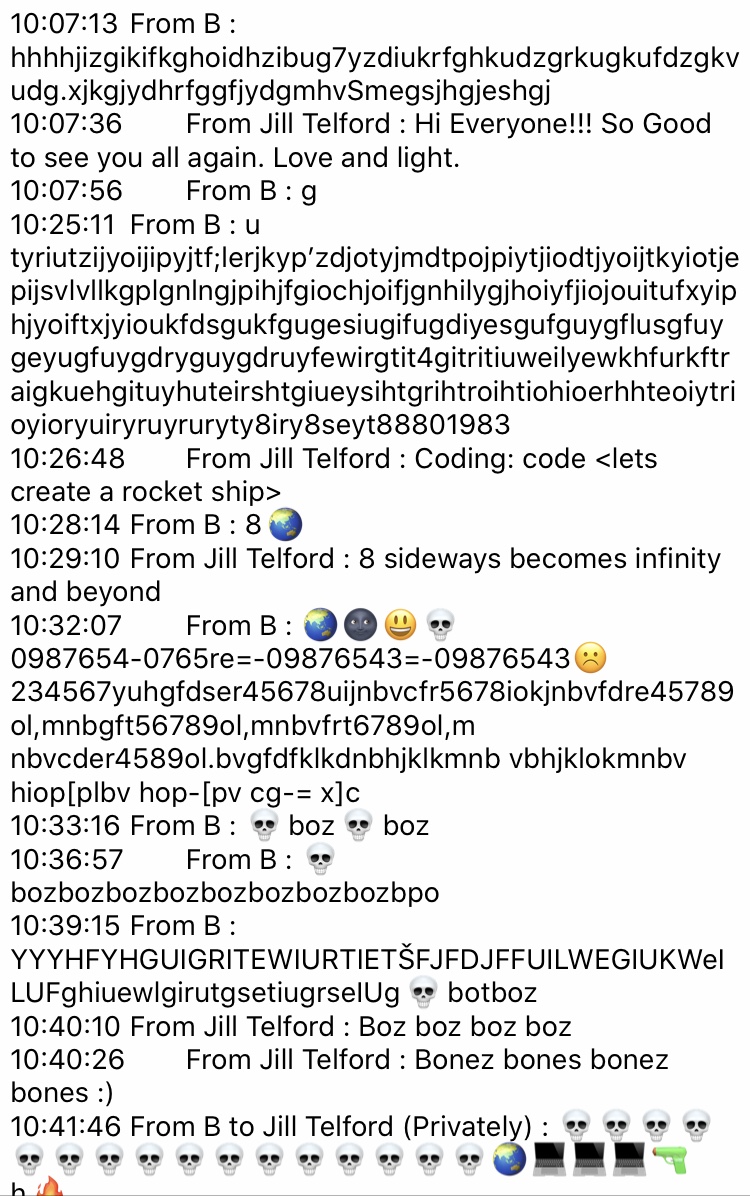
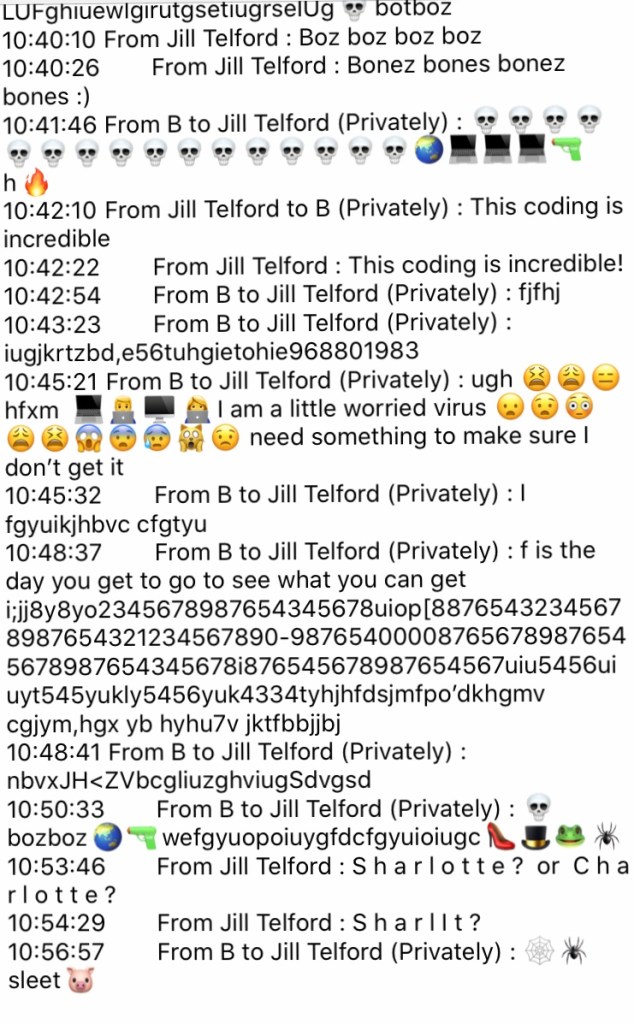
I noticed something. Literacy in action as he typed. We were singing Dem Bones and he started typing the sounds of the song out. Not because I told him to but because he wanted to.
What do we do in a world where computers and technology are a part of it. We embrace it and work alongside of it, learn to work with it and even create it. As I am learning coding now, I think about the past languages I learned and recognize coding as a language. Another language to communicate in.
Commas and quite frankly, punctuation matter in the code. You miss it or make a mistake then the code will not work. It will be null and void.
As we started returning to “normal” I didn’t want the old normal. I craved a new normal. So, here I am coding, creating and writing the life I want. The life I need. One that is far from normal. Love and light leads me. We are life. It is now almost 4:00 am on a Tuesday and this will be reaching you at 8:26am. on May 26. Happy reading. Happy living. You are life. Remember that.
You are powerful. We are powerful. Most of all, together our collective voice screams our power and our courage. Where does this kind of powerful energy come from? And, where does it live and manifest itself? I get to see it manifest in the stories of our students from children to grown ups. Who we are and who we are in a process of becoming is just as important as Maslow’s hierarchy of needs.
By telling our stories we create powerful connections. How do you show and share your story? How is your voice heard? Where does your voice resonate the loudest? The softest? Seriously think and reflect on this. Is it through poetry? Spoken word? Is it in art? Is it found in a conversation? We recognize through our stories and our lives just how connected we are and that we are all in a process of becoming. None of us really know anything and when we think we do, change occurs and to grow we must grow and go with the change. This is how we grow and evolve. This is how we become. This is how we create our real and authentic identities. Tupac Shakur said, “I am coming out 100% real and I’m not compromising anything.”
We are found in a single sentence. We are found in a line drawn and extended magnified or minimized like an MC Escher sketch. “Every line means something,” said Basquait. If every line means something in a drawing, then that also means every curve, every freckle each and every part of us means something too. Every “line” in this life means something. Each action or inaction affects all of us even when we don’t think it does, it does.
What’s your story? Who are you? Why are you here? How do you want to make your vision a reality and your voice resonate and connect? What are you doing right now to make your vision come to fruition? Where are you? When will you share your story — your voice?
We’re all waiting for you to become you and even when you become you, you will still change and grow. You will get growing pains and experience hurts. What will you do with it all? You will change. You will evolve. We are all in a never-ending process of becoming. Over and over and over again.
Leveling up or leveling down and around like a run on sentence or drawn out lines. We never come to a complete end and when we think we have reached the end we are reminded again and again that we are only just beginning.
Show me your friends and I’ll show you your soul. Who are you surrounded by? How are you feeling? Are you inspired? Are you drained? Are you anxious? Are people talking about ideas or about other people? That is the question. And, when people answer…when people show you who they are, believe them. No judgment. Accept it but don’t you ever settle.
Our life’s work is what and where we go each and every day. Most of all, it is who we spend the most time with. I am grateful to be an educator and life long learner. It is a major part of who I am. We are in a constant process of becoming. Constant change. Each morning is a new morning and a new day. I yawn. I wake up. I stretch. I meditate. I breathe. I remember who I was, who I am and who I am in a process of becoming. I get to see who children were, are and are in a process of becoming. I get to see who families were, are and in a process of becoming.
I learned a lesson, a major valuable lesson this year during the Coronavirus. If you don’t like something, say it even if your voice trembles. Speak up even as old trauma reopens because you’ve been triggered by someone’s behavior. Always stand up for those who are not present in the room even when you’re afraid to. Follow your gut. Your instinct. It will never ever steer you wrong. Ever. We are always in a process of becoming never reaching the final product. Movement is life.
I am thankful. I am grateful for all that I have experienced. I learned a lot and will continue to. I forgive but I don’t forget. I use it to propel even further holding hands of others on the same route.
Healing from Trauma:
Time: Give yourself time and hugs
Journal: Write a lot
Journal: Create an art journal *Bonus: Paint some canvases/cardboard and give it away!
Write a letter *your choice to send it or not*
Reach out to those who care about you
No need to respond to toxicity: Let it go, let it go, let it goooo!
Cut out negative+toxic relationships
Stop making excuses for people and hold them accountable. If they don’t change. You leave. Let it Burn as Usher would say lol
Ego sum. I am. I am many things. You are. You are many things too.
I am a teacher and have been teaching for a decade. During my ten years, I have witnessed and experienced so much turnover in this field. Most of all, our children and families experience it. It feels like salt to an open wound.
We leave due to financial, most of all due to lack of support and freedom to do the right thing for our students. Our children. I hear the following phrase often, “I close the door and do what’s developmentally appropriate for my students.” What does this mean? I dare you to read 3 books: Developmentally Appropriate Practice and Much More than the ABCs and the fable The Animal School written in 1940 BUT still applicable to today and if I have time I would love to read it. We’re so busy readying our children for the next thing that we forget to meet them right where they are. We need to ask, “Are we ready for them? Are we doing the right thing for children by putting our research into action?”
An over reliance on test scores and teaching to a test is burning teachers and children out. How is it that standardized testing is linked to funding and performance? Relying solely on data and scores all the while telling our students you are more than a test. Meanwhile at private schools such as Sidwell Friends…project based and expeditionary learning are taking place. The right thing happens. I ask when you choose a school do you look at scores? Or do you walk inside to “get a feel” for the climate and culture. Instead of asking schools for our scores ask us how we’re feeling. Nationally: How are our schools feeling? What are our children showing us?
Our schools are sick. This is an egregious problem!
There is an article published by the Learning Policy Institute for policy recommendations.
To stem teacher turnover, federal, state, and district policymakers should consider improving the key factors associated with turnover: compensation, teacher preparation and support, and teaching conditions. Click the link below for some of those recommendations:
I graduated high school in 2004 and that’s when the PSSA was rolled out in Pennsylvania. We were like guinea pigs. We were the first class where it would count. I was already accepted into college. I scored above average on English and writing but scored below basic in Math. I took the math part 3 times. I went to tutoring everyday. As a result, I would not get a seal on my diploma. My math teacher tried to help me cheat and I said, “No, that test is showing my strengths and it is not math!” She pleaded. I never changed my answers and it turned into a huge dilemma for my school as I threatened to call the news stations. I was adamant that that showed my abilities. I reflect on this thinking, if changing answers and fudging scores happened then then it most certainly is happening now.
It is not okay and we are a part of the system. We need change. Change happens from within but we need better and effective policies. Teachers would stay and not quit when listened to. Children and families would want to go to school if we did the right thing that is appropriate. Each and every child, family and school is different. It’s time we did the right thing. Teacher turn over would stop and I’m sure teachers long and gone would no longer be turning and rolling in their graves at this catastrophe and what I believe is a national crises.
Teaching is an art form. So is learning especially life-long learning.
There are a lot of factors contributing to teacher attrition but by far the three major ones as mentioned are testing, fringing on teacher autonomy (creativity) and devaluing education. At some point we lost our way or have been lost and now are finally waking up.
There is a bigger picture occurring. We are pushing children to get ready for the next thing meanwhile failing to meet them where they are and supporting them during their process of the next. Ever since NCLB and state standards and all of this testing. I feel and know this to be true: children are showing us and have been showing us all along what they need. We need to listen. Why can’t we have a style of learning and teaching that meets all.
Collaboration, connection, creativity and caring. When we care and children care then the rest handles itself. Instead emphasizing tests or scores, I want children to focus on connecting with another on a project that they care about. Find and issue and create a solution. There is so much learning in that one project alone that takes place and connects all subjects. Most of all, it connects our children. It connects us to make an impact on our world.
Wait. Will we be happier? Who loves zooming? Is it trueeee? I do, I do, I do, I do, ooooo in the reminiscent Kenan and Kel series when asked if he loves orange soda. Is zooming good for us? While yes, it keeps us connected does it aid in burnout and result in frustration? Is in-person real life interaction(ing) better than zooming?
Yes and no. Yes, as teachers, we see real life home environments and children in their first and most important learning environment. Then no, as we know children’s learning is play and hands on learning in the real natural world. However, technology is a part of our real natural world now isn’t it?
As an advocate for literacy, I must admit and say that I am now an advocate of digital literacy for children especially as they are growing and will turn into grown ups who need to be prepared for professions not even created yet and jobs that they indeed will make up themselves. Our future coders and developers must have the capacity of critical and creative thinking which is opened up through natural world and online digital learning.
Being able to see digital literacy and book literacy is incredible. Some students are using the chat feature to type and sound out words. Some are hacking banking systems. Seeing the stages of emergent reading and writing online is incredible aka as drawing.
Learning to Write and Draw happens in stages and now think of the following stages digitally accompanied by text and emojis.
Stage 1: Random Scribbling (15 months to 2½ years)
Stage 2: Controlled Scribbling (2 years to 3 years)
Stage 3: Lines and Patterns (2½ years to 3½ years)
Stage 4: Pictures of Objects or People (3 years to 5 years)
Stage 5: Letter and Word Practice (3 to 5 years)
Thank you to Zero to 3 for the above stages! For more go to:
*Please also click on, see and take a closer look at the images above. My student sounded out Charlotte from Charlotte’s web as “sleet” and used emojis as symbols from the story. My student also did so much more up there. Coding. Lot’s and lot’s of coding.
If we use technology in meaningful ways our students will grow in book literacy and digital literacy simultaneously. Using technology in meaningful ways is necessary for children’s growth and development as they grow through the stages of life. They can use it to tell their stories and that is powerful in itself.
So, what else can you do to encourage children’s literacy aka the process of art and writing skills *creative and critical thinking*? Let’s add to the list: emails, messaging, creating videos, drawing digitally, podcasts, chatting, zooming and coding as these are all a part of our real lives. If we know children imitate us and watch as we do not as we say then let’s embrace it in meaningful and appropriate ways.










 From the Playground