The Only Thing We Should Scream is Love: How to Keep Your Cool When Your Child is Losing It

“The only thing we should scream into the world is love” — Jill Telford 

Photo by Phil Nguyen on Pexels.com

Imagine you and your family are out at a pool. Your child is having a blast to the point his fingers are wrinkled from the water. The sun is shining and sunscreen was a cinch to apply because the spray kind was created. You’ve all been out in the sun for about two hours. You make the call to head home. Your child says, “Five more minutes, pleeeeease”. You say, “Ok”.  Five minutes pass and you say alright let’s go but he wants to negotiate another five. You say no it’s time to go. You see water on his face that is not from the pool but his tears. He starts crying that he wants to stay. He runs away, yelling he doesn’t want to leave and throws himself on the grass. You carry him to the car feeling defeated and deflated.

Everything pretty much a toddler and preschooler does is developmentally appropriate including many of the following challenging behaviors:

  • Ignoring you
  • Yelling
  • Throwing food, etc.
  • Spitting
  • Not Sharing
  • Tantruming
  • Not “sitting still”
  • Not “listening”
  • Hitting
  • Biting

This happens as children grow and learn about this brand new world. While we’ve been here for decades, they have been here for a few years. They don’t have the plethora of experiences that we have. Think about that. Our brain is fully developed while their brain is still growing. What they do and how they act during this time is not a reflection of who you are as a parent. They are not “bad”.  Neither are you as a parent “bad” at parenting. 

In those moments, they need you more than ever to be still with them. Give yourself and your child space as they navigate big feelings. It’s hard to label how upset they are that they have to leave. When it gets calm be present with them and re-enact the scenario and what would be done differently next time. Label what you saw and validate feelings including your own. Give reasons why. Keep it simple, direct and clear. Keep calm and carry on.

Next time you find yourself in the middle of a meltdown or tantrum with your children: give space, follow through on what you said, be there when they are ready to talk, label what you saw and use it as a teachable moment for what to do differently next time. Hug them, tell them you love them but not the behavior. Give yourself grace as their parent. You got this.  

Ps. Need more tips: here is a helpful article featured on Understood

https://www.understood.org/en/articles/taming-tantrums-vs-managing-meltdowns

An Act of Care: How Grown Ups Support Developmental Trajectories of Children

“If you can’t run, walk. If you can’t walk, crawl.” — MLK

If you can’t crawl, roll. If you can’t roll then get that tummy time in.  This is the story of the stages of development and how children need caring grown ups to nurture our babies so they grow into their fullest potential. This is what to expect when you’re expecting. This is how we care for and nurture children after their basic needs of nutrition, toileting and shelter have been met. Early childhood development is impacted heavily by the mental health of the people who care for them even while they are in the womb. Care is solely based on three actions caring grown ups give: love, safety and consistency. During the early years of life, the brain is constantly and consistently growing and care should coincide with that growth. Grown ups have a mission to foster security, love and safety starting at birth which leads to toddlers establishing a strong sense of self and self-worth. Children not only want safety, love and consistency but they also need it.

Being able to build and sustain healthy relationships to consistently meet children where they are in order to secure a healthy attachment depends on the wholeness of the grown up who is caring for children.  Are those who are caring for children well and healthy? A great question for grown ups to ask themselves is: “How am I feeling?” “What can I do about?”

In reality, a “healthy head start” is not always an option for babies. This is where early intervention comes in as a plan b if the family unit is broken. Early intervention such as head start, home cares and preschool improves the outlook and success of children growing into healthy and thriving adults. Caring grown ups help build a strong foundation also known as the brain. It also aids in breaking a family generational cycle of poverty. Need support?

Here are some resources and ways to support infants and toddlers in the first three years of life: 

CDC’s Developmental Milestones:

https://www.cdc.gov/ncbddd/actearly/milestones/index.html

Activities for bonding and learning from birth through 12 months:

CDC’s Positive Parenting Tips from Birth through Teenager Years *Bonus with activities*

https://www.cdc.gov/ncbddd/childdevelopment/positiveparenting/index.html

5,4,3,2,1 — Blast Off! Get Going on What You’re Meant to Do and Whatever that is: “Be a Good One.”

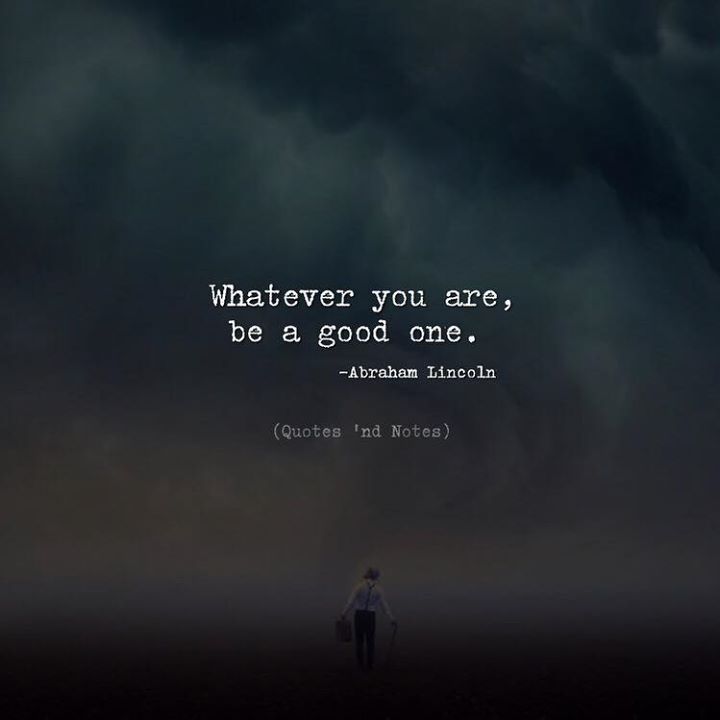
“I know what I want to do, and it makes sense to get going”. — Warren Buffet

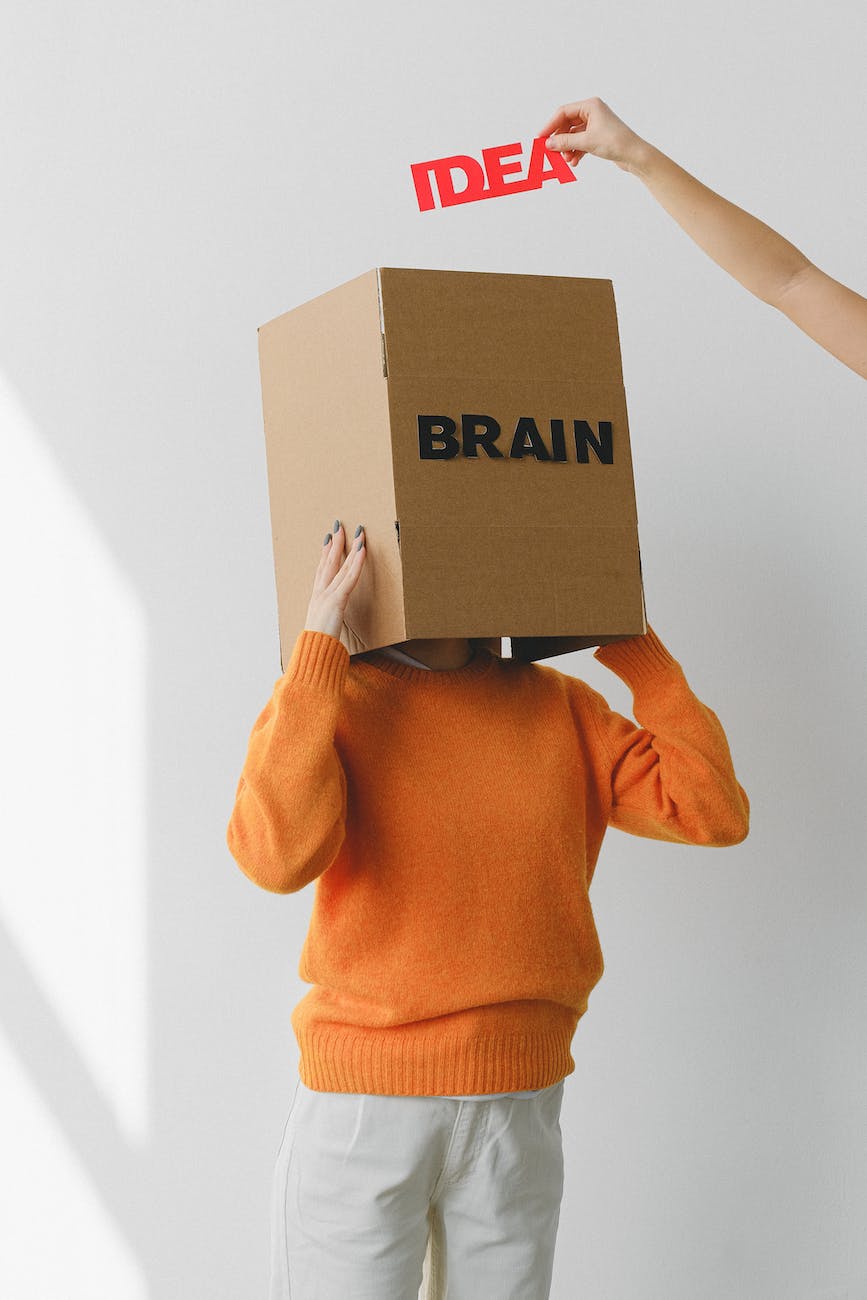
Children know who they are and what they love to do from an early age. Families, educators and the community also discover what children are passionate about especially by paying close attention while being astute observers. When children arrive at school they get going in on the things they care about all while living out the mantra: being in the present moment. Something most of us could learn a lot from. While being in the present an idea enters the brain also know as a spark of joy that sends signals as what we’re supposed to be doing. An idea.

Photo by SHVETS production on Pexels.com

I had a student who had an idea. He started building a truck. More specifically, a cement mixer. In fact, he loved trucks. All kinds of trucks. His family was worried as he seemed obsessed with trucks and he didn’t like books so much. I mentioned that they just may have a builder on their hands. He gets distracted by what he cares about most because when there was a book about trucks he would study it research like and consumed by it ranging from non-fiction to Goodnight, Goodnight, Construction Site. When asked what he wanted to be when he grew up, he said a garbage truck so he could keep Earth clean. When we went to the library on Wednesdays for story time, instead of listening to the story he would instead gravitate towards the window to watch the construction workers work. He would be engrossed by the construction site across the street and name every single truck as well as what they were doing. I mentioned it to the storyteller and she prepared stories the following week in honor of my student and the site across the street. We also met the team who were building. My student’s eyes lit up and stood in awe as the team described what they were working on. He asked the most questions and even got to sit in the cement mixer he saw each Wednesday, the exact truck he was building. This came full circle and his family beams with pride as their son is an expert in building and mechanics. He drew and from what I see online still draws blueprints, creates and builds. 

Our ideas are unique to only us. No one else dreams the dreams we dream. It is vital to fulfill our mission. When a child is doing something they love they don’t have to be told or rewarded to do it. Even when they grow up it is the same as they do something they love. They do it because they want to be there. They do what they love and care about. That is the greatest gift. Are you honoring your child and your own inner child?

This is where intrinsic vs. extrinsic motivation comes in. 

Children are intrinsically motivated to do the things they love to do. They don’t need awards or even praise. They just do. They get going. 

So what is it that your child wants to get going on? How about you?  Just do it.

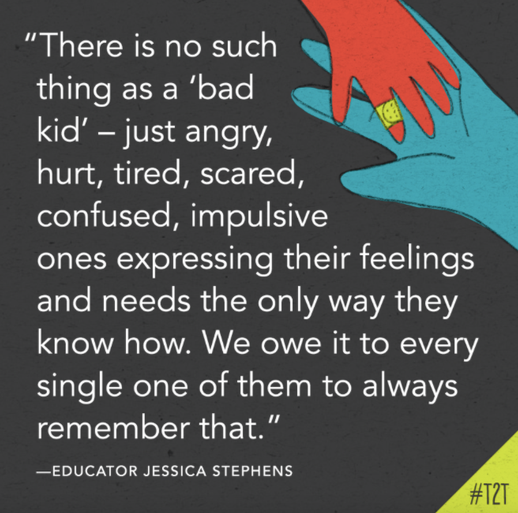
A Bad Child? No Such Thing. Busting the Myth of the Bad Child.

You’re in the store. You hear, “Mommy, I want that.” You peer down to see your child pointing to a brightly colored stuffed elephant that you know he has more than you can count at home. You whisper, “No, not right now you have some at home.” He urges, begs and pleads. You don’t cave in. You stand your ground. Then to your surprise (or perhaps, not to your surprise) as it’s been boiling you see your 3 year old start to cry. He may scream. He may even throw himself to the floor. 

You as the grown up can’t run or hide. What do you do?

During childhood, young children are experiencing a vast array of emotions: big and small, discovering new places and self as they change and grow. As they take in the brand new world around them, they could get easily frustrated especially when they are not able to fully say how they feel or fully articulate their needs. As a result, a child may show this exasperation and big emotions through what grown ups see as challenging behaviors not a bad child but a challenge. Even adults could reach a point or limit of not being able to self-regulate. Imagine how children feel as everything is brand new especially as they grow into themselves.

According to NAEYC, challenging behaviors often emerge in the second year of life. Why? Toddlers are unable to fully label how they are feeling as well as their needs as they are still developing language skills. So, a child will use nonverbal possibly biting or verbal: crying to get their needs met. 

Here are some research backed strategies to guide children to more positive outcomes that may prevent leaving the store in gallons of tears and energy. 

  • Avoid common triggers or situations that cause challenging behavior: Prepare in advance for activities or store trips. Observation is key here. If you know when you go to the store, he will see a fluffy bright elephant that he will beg for, and prepare one he already has to take with him. Bonus: let him choose which one he wants to take. In the moment at the store: it may not be the “want” of the toy but the “want” of a comforting item that seeing that bright elephant reminds him of.  Identifying patterns in timing, routine, anticipated outcomes or root causes of challenging behaviors can help families better support their child. 
  • Establish predictable and consistent routines and behaviors: Children and grown ups thrive in predictable and consistent routines. It feels safe to know what is coming next. Model kindness and empathy with others and yourself. Your child will notice and show the same. Model how to take care of others, the environment and the self. Keep a consistent and predictable schedule. Have cereal together. Breathe and meditate together. Show and share a calm, supportive, consistent and loving environment.  If ever upset, model that you will need a moment to calm down, breathe and return when ready. Children learn by what they observe and experience. If you curse, your child will. If you’re calm, your child will be. Families are successful by being consistent through predictable routines, setting limits and modeling care and compassion through smiles, intentional verbal, nonverbal praise and action. 
  • Notice and talk about positive actions during the day: Every day is a fresh and new day to get it right or learn from mistakes. Families have the potential to promote positive behaviors throughout the day, not just when challenging behaviors emerge. Catch children’s positive actions and comment on them. Notice other people’s actions too and comment out loud in front of your child about them. For example, wow without Kelly, our mailperson we would never get postcards from Grandma or when at a restaurant, comment on the service. For example, our waiter is so kind and without him we would not be able to order food. Notice and comment on the helpers of our world. Without each and every person’s kindness, we would have a mean and disturbed kind of world.  

Hopefully, these tips help so that next time you find yourself somewhere such as a store, it goes more smoothly and there are no screams or tantrums. Screaming love instead of frustration. Here’s to pinpointing and solving those challenging behaviors. Cheers! Remember, you got this!

The Gift of Play: Everybody Needs It

Everybody needs a little love in their lives but you know what else everybody needs? Play.

You can discover more about a person in an hour of play than in a year of conversation. —Plato

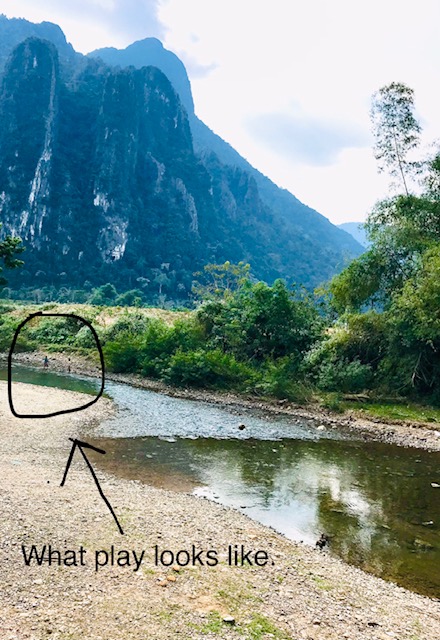
While in Vang Vieng, Laos, we happened to catch children playing from a far distance. No grown ups present. They climbed through tree roots, explored water, caught fish and laughed a lot. They waded water in the stream made their way out and found a large paint roller and rolled it all around in the dirt. I smiled and reminisced as my nostalgic childhood materialized.

“That’s what play looks and feels like. That’s honoring childhood.” My partner and I started sharing about our childhoods. How we were fortunate that ours looked like the childhood the children were playing in right before our very eyes. Childhood is finite and infinite at the same time. It lives on.

No fences, no dittos, no rules. Freedom. To feel and play. True play gives us a push into being in our body and mind. Everything is connected: spatial awareness to making connections. 

Play gives children practice to what they are learning and observing. It works for grown ups too in life, family and business. Want to learn more about your colleagues in less time? Keep it simple. Kick the typical “meeting” and get out there and play. 

Play Opens Doors

No matter where children and grown ups live or what they’re overcoming, play is essential.

It opens doors and shows us what we’re capable of and what we’re passionate about. It shows us who we are and are meant to be. We all are competent, capable and creative human beings. From birth until we die, we have to play in our purpose.

Play Promotes Collaboration

Listening and talking. Everyone plays a part in it. From role play / interacting with others to make believe / symbolic thinking. Even without someone else…being able to collaborate with yourself in your own world is the art of meditation. Play is meditation.

Play Gives Grace to Fail and Try, Try Again

Riding a bike to kicking a ball. You ride, you crash. You kick, you miss. You try again.

What did you love to play as a child? As an adult? Did it change? Why? 

What is Your Joy?

Recently, I was inspired by a reading from Plough‘s Daily Dig. An excerpt is below and it’s by Kahlil Gibran, a favorite author of mine who wrote The Prophet. In it Kahlil Gibran ponders joy.

Your joy is your sorrow unmasked. And the selfsame well from which your laughter rises was oftentimes filled with your tears. And how else can it be? The deeper that sorrow carves into your being, the more joy you can contain.…When you are joyous, look deep into your heart and you shall find it is only that which has given you sorrow that is giving you joy. Source: The Prophet

Photo by Bekka Mongeau on Pexels.com

What gives you pain gives you joy. I felt like I just caught joy holding hands with pain and it sunk in the pit of my stomach. Imagine you love running really fast, tripping and falling. The running culminated into an eventual trip and fall. However, you don’t stop running because it brings you joy…and sorrow.

Lemons to Lemonade.

Failing. Falling. Rising. People say failure is not an option but in fact, it is. Failure holds hands with success. We fall, we rise. The sun sets and rises.

We live, we die.

We laugh, we cry.

We hurt, we heal.

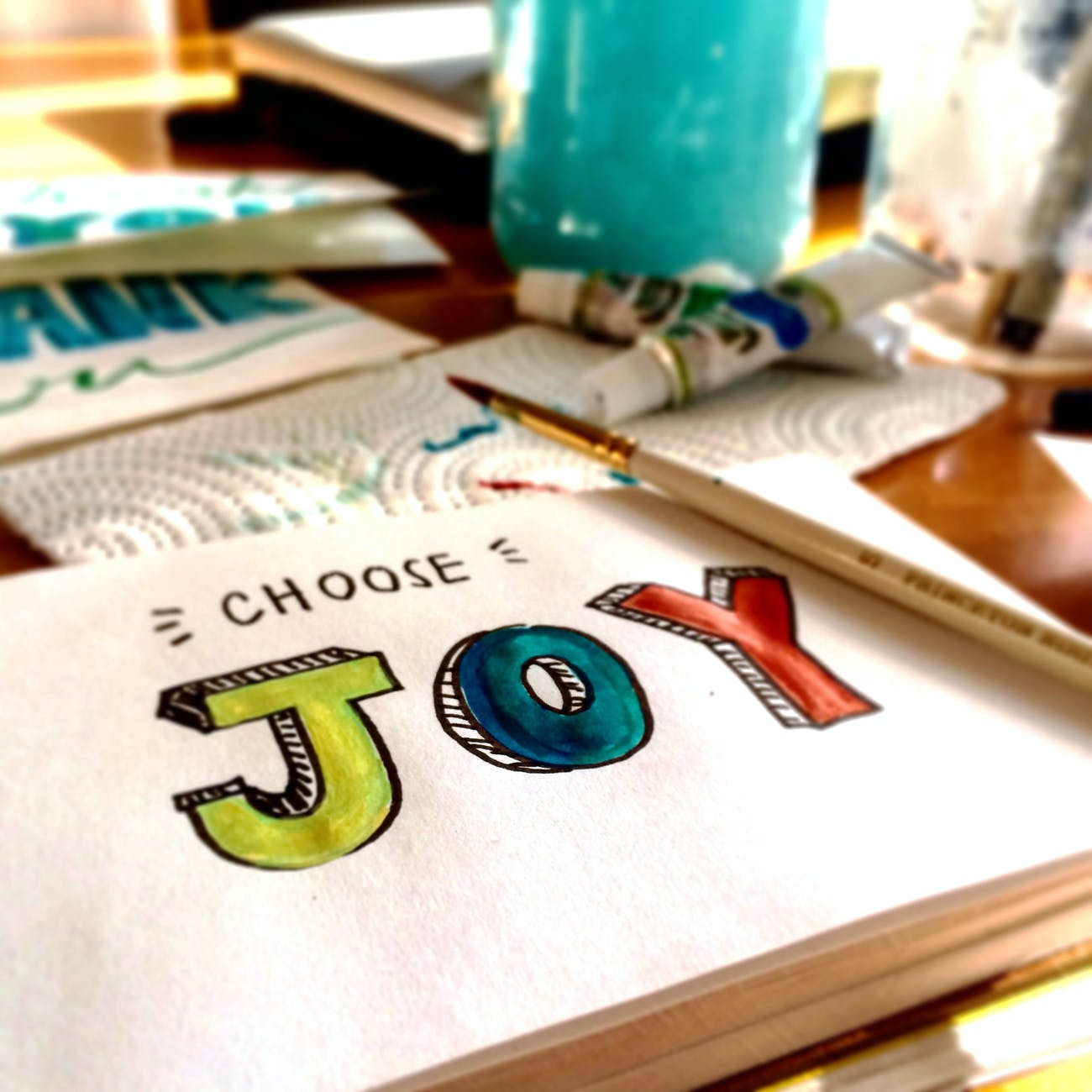
Life is ugly. Life is beautiful. So what is it? What is your joy? Choose wisely.

Ps. A poem / Almonds and Joy Just Because

Here are some almonds and joy, just because.

They said it is a stork bite.

Where her birthmark is behind her neck.

I smiled.

Tears rolling down like mounds of almonds.

Rolling them up and down a hill like Sisyphus with his rock.

What do I do with this sorrow, this pain, this grief, this hurt, all of this?

Bundle it up in a pretty blue and white wrapper.

Swaddle it up.

A bundle of joy. Almond Joy.

She is as tiny as one.

Signs Everywhere, Everywhere Signs

A cardinal flies by. Bright ruby red. Butterflies and hummingbirds dance across the sky right before my eyes. Morning doves sing. A quarter on the ground dated 1986. Changed by so many hands. Possibly fell off of an angel’s wings in the path I was meant to stumble upon it. I stand and walk among giants as none of us is as small as we think we are. A paradox of our times. Looking out a plane window, you would think and see just how small and potentially insignificant we really aren’t. Nothing is as it seems. Littles things are big things. Just watch and study ants at work.

Looking out a plane window, you would think and see just how small and potentially insignificant we really aren’t. Nothing is as it seems. Littles things are big things. Just watch and study ants at work.

Life all around us and beyond us. Beautiful, daring and fleeting life. Life in a single blade of grass life. Life in a single fingerprint life. Life in a single sip of coffee life. Life lies even in a pesky and stubborn weed in the garden that keeps reemerging life. It hurts to tug it out of the ground. Everything wants to live. We want to live another day. Another minute.

We emerge no matter the challenge or obstacle in the words of Tupac Shakur even from concrete. We breakthrough like the stars emerging from stardust life that we innately are. Where do we go after life? That question follows me each and everywhere I turn. Where do we go? Will we see each other again?

Life is found in a single minute. One single minute matters more than you think. I stare at the sky throughout the day just to stare at it no need to have a reason. The stars. The constellations. Connecting the dots to what all of this really means. We’re all deeply connected like an infinite constellation more than anyone could possibly ever realize or conceptualize.

The Power of Our Stories

You are powerful. We are powerful. Most of all, together our collective voice screams our power and our courage. Where does this kind of powerful energy come from? And, where does it live and manifest itself? I get to see it manifest in the stories of our students from children to grown ups.  Who we are and who we are in a process of becoming is just as important as Maslow’s hierarchy of needs.

By telling our stories we create powerful connections.  How do you show and share your story? How is your voice heard? Where does your voice resonate the loudest? The softest? Seriously think and reflect on this. Is it through poetry? Spoken word? Is it in art? Is it found in a conversation? We recognize through our stories and our lives just how connected we are and that we are all in a process of becoming. None of us really know anything and when we think we do, change occurs and to grow we must grow and go with the change. This is how we grow and evolve. This is how we become. This is how we create our real and authentic identities. Tupac Shakur said, “I am coming out 100% real and I’m not compromising anything.”

We are found in a single sentence. We are found in a line drawn and extended magnified or minimized like an MC Escher sketch. “Every line means something,” said Basquait.  If every line means something in a drawing, then that also means every curve, every freckle each and every part of us means something too. Every “line” in this life means something.  Each action or inaction affects all of us even when we don’t think it does, it does.

What’s your story? Who are you? Why are you here? How do you want to make your vision a reality and your voice resonate and connect? What are you doing right now to make your vision come to fruition? Where are you? When will you share your story — your voice?

We’re all waiting for you to become you and even when you become you, you will still change and grow. You will get growing pains and experience hurts. What will you do with it all? You will change. You will evolve.  We are all in a never-ending process of becoming.  Over and over and over again.

Leveling up or leveling down and around like a run on sentence or drawn out lines. We never come to a complete end and when we think we have reached the end we are reminded again and again that we are only just beginning.

Read more here: https://worldforumfoundation.org/2019/09/17/the-power-of-storytelling-jill-telford-united-states/

A Piece of Heart

I walked to my mailbox. I physically opened my quiet and subtle mailbox not my loud and pinging gmail inbox. No need to sign on or even click on anything. I opened my literal real 3D mailbox outside of my home and took out a piece of real mail. Real paper. Real ink. Real love. I am afraid of clowns but as I saw the clown nose with the stethoscope; my heart fluttered like a hummingbird and sang like one too! I screamed and danced love and gratitude. I opened the letter and read the words from none other than Patch Adams himself who deeply inspires and resonates like the same beating of a drum except its the same beating of a heart. I am grateful.

Don’t know who he is? Check out Robin Williams playing him in Patch Adams: https://www.youtube.com/watch?v=lZqGA1ldvYE

I am deeply moved and inspired by his genius and caring way of being. His message was to catch the sunrises and sunsets. He told me to read poetry by Emily Dickinson. He told me to write and make art. He said many times when we feel low and down that something is missing. That something could be and is the creative arts for our soul.

He listened as he read my letter. He knew what I was deeply missing as I was in the midst and mixture of a rat race not life. When we feel lost or “off”, a feeling of not being ourselves, of not feeling the essence of our being, we miss our core human way of being…our art, our creation, our time, our love…the greatest gift that we give ourselves and emit to the world.

We are merely working to survive not working to thrive. I jumped off the rat wheel, stopped running and racing. Instead I walked into love.

I can’t merely live to work. I work to live. Connection. Love. Life-long learning. L-o-v-e. Real love. Jump, slow down and walk into it. How do you show love to yourself? How do you show love to those around you and your environment?

Pockets Full of Dreams

Where is your happy place? I hope you have a few of them. As a life-long learner and dreamer, I have the opportunity to travel and live out my dreams of connecting with people from all over the world.

I remember sitting in my Junior year Spanish class when our teacher asked us to draw and dream in Spanish. This was difficult for me to dream in another language but I finally did. My dream then and now was to travel all around the world and connect with people. Deep down, I recognized the important impact of connecting cross-culturally. My dream was and still is all about connection: relationships / community. Something that social media or the meta verse just can’t create in real time or in real life. It may socially influence relationships in both negative and positive ways but it could never replace them or even construct a deep rooted one in real life. Human touch, human feeling, and human thought. It is mere cookie cutter from us…it mirrors our universe but could never fully be us.

We all crave connection. Back then I drew my dream and wrote it out in Spanish, it was a vision that I have the rare opportunity of living out today in real life. I love meeting people and creating long lasting connections that challenge our ways of being, our very existence. There was a time I didn’t know what I knew today. Yesterday is gone, tomorrow never came and today is what we’re living the best way we know how with what we know today.

“Quiero viajar por todo el mundo y conectarme con la gente”. More deeply I realize my dream was and still is about loving each other no matter where we’re from as we all are in a process of becoming. We all have pockets full of dreams and are in the process of realizing them little by little. We’re all walking in the dark and in the light. We’re all here doing what we have to do to fulfill our mission.

We’re all connected as we’re crawling, walking, galloping, skipping, running and flying each other home.