Stick Together Like Peanut Butter and Jelly: Walking, Working and Moving Together

stick

While there are many stories from preschool that resonate with me, none affect me more than being in the middle of our own classroom stories. The poem by Robert Fulghum  illustrates it best:

All I Really Need To Know I Learned In Kindergarten by Robert Fulghum

Most of what I really need

To know about how to live

And what to do and how to be

I learned in kindergarten.

Wisdom was not at the top

Of the graduate school mountain,

But there in the sandpile at Sunday school.

These are the things I learned:

Share everything.

Play fair.

Don’t hit people.

Put things back where you found them.

Clean up your own mess.

Don’t take things that aren’t yours.

Say you’re sorry when you hurt somebody.

Wash your hands before you eat.

Flush.

Warm cookies and cold milk are good for you.

Live a balanced life –

Learn some and think some

And draw and paint and sing and dance

And play and work everyday some.

Take a nap every afternoon.

When you go out into the world,

Watch out for traffic,

Hold hands and stick together.

Be aware of wonder.

From: https://www.goodreads.com/quotes/246075-these-are-the-things-i-learned-in-kindergarten-1-share

I learned these life lessons shared by Robert Fulghum even before Kindergarten. I learned these little life lessons in Head start where I started preschool. These are the same lessons that I now pass on in words and action almost two decades later in a preschool classroom and playground.

I work at being the kind of grown up I needed as I a child. Families do their best with what they know each and every generation. By walking, working and moving together we create a reciprocal relationship where the best kind of learning takes place: from one another.

Best of all, children rise up and pass it on. I was a child who rose up. Preschool changes trajectories. Preschool definitely changed mine. A group of people worked together with or without knowing the power of the early childhood education profession. Not to mention the power of tuning into Fred Rogers. http://www.fredrogerscenter.org/

However, that is for a whole other post. In the meantime, here are some of the lessons from Robert’s poem in real life action:

We share. We come up with questions and solutions. “When can I play with it?”, “Is there another one?” or “I’ll play, read or create something awesome in the meantime.”

We often play fair and when it doesn’t feel fair we talk about it. Racing faster than cheetahs teaches us a lot on the playground. “Is it fair to run before finishing the sentence: “Ready steady, go” or “On your marks, get set, go!”

A game of tag teaches us gentle touches without having to say, “Don’t hit.”  When frustrated we verbalize it. When we can’t we rip paper, pound and squeeze play dough, paint, hit a pillow, yell among so many more strategies.

When it comes to saying sorry, we go a bit deeper. We work to fix what we did and help our friends to feel better. We get to the root of the problem. “What happened?”, “Why”, “What can I do?” and “how?”

Our hands are very dry. You know why we keep lotion on standby.

We flush. When we don’t, we still flush. It’s called a courtesy flush. Because, we all forget sometimes.

Warm cookies are delicious especially when we followed the recipe but sometimes we go overboard with the amounts we shake in. We just can’t control our excitement for making these cookies right now! (Side note: Doesn’t have to even be cookies could be anything:  play dough, Oobleck or just putting it together to see what happens as we wonder what will happen as we test out our theories). If children getting excited about mixing flour and water doesn’t remind you to appreciate and marvel at the little things, I don’t know what will.

Robert covers living a balanced life in the poem itself. If you don’t see living a balanced life in action at your child’s school or at your work then it’s time to find a new one. Living a balanced life looks like the bolded words below and STILL applies to grown ups.

“Live a balanced life –

Learn some and think some

And draw and paint and sing and dance

And play and work everyday some.”

We take our naps. We sprinkle magical sleeping sprinkle dust after reading a few stories and making some up from our brains. It works…every time.

Most of all, we sing each and everyday.

When walking up the sidewalk, we sing. We sing: “Stick together like peanut butter jelly.”We think about what else could be as sticky. We change the words to gum, play dough, tape, duct tape, hummus, yogurt, glue and the list of words never end.  We hold hands. We look out for one another. We stick together. Not only do we watch out for traffic, we watch out for each other.

Jill Telford is an American artist, author, storyteller, educator and creator of children’s books. More of her work can be found:

http://amazon.com/author/jilltelford

@artbookstories @jill.telford


stick tog pic ford

Tis the Season: the Jolly and Not So Jolly of Times

With the results of the election, holidays and inauguration looming I am feeling tension and unlike myself lately.

I chalked it up to the full moon and it’s power of making waves. In fact, there has been a cataclysm of events making waves. Lately, I have been hanging on to hope and resiliency. I stare at a photo of 6 year old Ruby Bridges who endured and triumphed standing as a metaphor and reminder that “what doesn’t kill you does in fact make you stronger”.  At 6, Ruby Bridges showed a courage that resonates today. I had the opportunity of listening to Ruby Bridges speak in 2015 at the annual NAEYC conference. The kind of courage and poise she personifies and how it connects with us, children, families and educators will be written about in a later blog.

img_0078

Holidays are hard for many. For a lot of my own life, holidays were often off for me and awkward. There are empty chairs of those we miss and love. You feel the infinite loss and ache of missing loved ones. It is easier to send a gift and/or photo of smiling faces saying Happy Holidays. It is the thought that counts but what do we do for those who feel alone? How do we help others cope during grief or a sense of loss? What gifts can you give to the broken-hearted?

Here are gifts to give:

  • Gift of Memory: Take a moment to remember and honor the memory of a loved one by a hug, card or phone call. Although there is an empty chair at the table fill it with memories and honor their memory.
  • Gift of hope: We experience both sadness and joy. It’s deeply triggered by the holidays. Show up and offer to help those you care about. From the daily routines to collaging and scrap booking memories.
  • Gift of Love: Be in the moment with those who are still living. Show them you love them. If you are the one feeling sad tell them it is hard but stay hopeful.
  • Gift of friendship: Invite and include those who feel sad even if they may cancel or decline from shopping to having dinner.
  • Gift of Surprise and Spontaneity: Encourage doing something unusual such as a road trip or a flight to visit loved ones still here. Follow through.
  • Give the gift of time: Its about time well spent with those you love so spend it wisely. Spend some time whether over coffee, a movie, a stop by visit or something special to do together
  • Give the gift of food for the soul whether baked goods or a home cooked meal to enjoy together
  • The gift of listening: remember, it’s not not knowing what to say but listening and being there.

Looking for more gift ideas? Visit Sympathy Solutions at:

http://www.sympathysolutions.com/current-newsletter/10-things-you-can-do-for-someone-lost-loved-lone.html

Most of all, ensure to reach out, don’t expect someone who feels alone to reach out to you.

img_0077

Everyone Lies. Where Do We Draw the Line?

There are many reasons why we do or say things the way we do. The truth makes some of us uncomfortable. It is said “truth hurts”. However, it is always better for us to be 100% real with each other than to pretend. That is if we want to form long lasting relationships built on trust.

On the other hand, think about your day-to-day life. How often do you lie? How often do you think you are lied to? Call it lying or being untruthful, both are the same. A lie is a lie is a lie.

One of the biggest lessons to learn is to protect your heart. Share it but protect it. Deception and betrayal are real.

When you catch someone in the act of lying how do you feel? It’s easy and natural to feel betrayed, hurt, and/or angry.  How about when a child lies to you? The feelings echo the same sentiments.  But want the honest truth? It’s normal and typical to lie.

Everyone lies at some point; however, we do have the choice to be truthful.  When you want to get off the phone you may say something like: “I have to take this other call, it’s urgent” or “I have a meeting in five minutes”. How about minimizing something such as running a red light as you are pulled over for it. Why do we do this? In the depths of our being, we are hoping to get out of paying the ticket. Most of all, when we lie we want to get out of or away with something.

It all comes down to solving our problems realistically even if it hurts. Hurting is good if it is equivalent to growing pains.  We need to teach and guide children to face the problem and solve it, not find a way to get out of problems or find excuses for them.

We wonder why children lie. The answer is the same as why adults lie in general.

  • To avoid hurting someone else’s feelings- white lie
  • To avoid getting caught or getting in trouble- not so white lie
  • To get attention- white or not depends on the situation
  • To get out of doing something that we do not want to- white lie?
  • To lead separate lives- not white at all
  • To establish self identity or pretend identity- not white at all

When addressing lying with children, don’t make things complicated. Understand the underlying cause and address the root cause of it.

  • Be specific about the situation (Don’t beat around the bush)
  • Be simple, clear and direct
  • Assure them that honesty is valued and lying has more negative consequences than the mistakes themselves.
  • Don’t close up, always be open
  • Do not argue
  • Give a consequence if a natural one did not present itself
  • If you give a consequence, ensure it connects to what happened (for example, if she lied about doing her homework and instead played video games, state you will not be able to play your video games especially not until homework is complete)

We all have values. Many people talk about honesty but the reality is that many people lie. It’s a problem that can be solved by modeling honesty and integrity in every way of being. It is about walking the walk. Action speaks louder than words.  

In the meantime, we can teach and coach our children to show others who they really are with courage and integrity. We can teach them to own their mistakes and learn from them instead of covering them up or running away from them. This is the way we can make a change. Now and in the future.

Who Are You? Gender Roles and Identity in and Outside of the Classroom

When you were born what did you wear? Even before you were born what kinds of colors do you think were chosen for you? What did you play with? How did you play? Where did you play? Who did you play with? When did it change or not? Why? I looked at pictures when I was born. My very first photograph I was screaming in it inside of a pretty pink dress. Our gender and identity are chosen before we are even conceptualized.

I was inspired over a YouTube video I watched of a little girl who basically stood in a karate outfit before the camera in a clothing store as she started pointing out the differences between boy and girl clothing. She stated and showed the unfairness of gender bias and identity through clothes. She said, “Look at that on boy’s clothes it says think outside of the box, an adventure awaits and hero and now look at girl’s clothing it says Hey!, I’m fabulous and beautiful. She said boys are encouraged to go on adventures and think outside the box while girls are just meant to be pretty.

The little girl had a big idea, which got me thinking. She went on to move the boy clothes to the girl side. From birth to death our gender roles and identity exist.

Thinking about that picture and as I turned the pages of photo albums I watched as I grew into jeans and sweatshirts. I also saw how I wore prom dresses and heels I would not say pressured to but expected to wear at proms. However, I was comfortable in jeans and sneakers. I never liked playing with dolls or Barbies. I liked taking things apart and going on adventures. I also really liked the ninja turtles. Even what I chose to be for Halloween was not your average princess and fairy. I was a power ranger and I even went as death. Death and dead things fascinated me.

Both genders should be expected to be themselves. Their best selves.

When you see boys playing and caring for baby dolls don’t call him a girl or ask, “Why are you acting like a girl?” The little boy will grow into a father, uncle…a man who needs to know how to treat and care for babies. If a little boy cries do not tell him he is acting like a girl or a crybaby. Boys and girls are human beings with…feelings. Most importantly do not work to “toughen” a boy up. What does this even mean? Toughen him up for what? Unless he is going to be a fighter or boxer what does he have to be so tough about?

For boys and girls teach them that it is ok to be them selves. It is ok to cry. It is ok to have interests that may not be inside the box. It is ok to think and feel differently. It is ok to play with both genders. It is ok to wear any color you want. In fact wear your favorites.

By doing this you are teaching that it is ok to be different and that it is ok to be yourself. Here’s to being our best selves.

Easier Said Than Done

While talking with a good friend of mine she mentioned how a lot of the advice on our blog is “Easier said than done”. It couldn’t be truer. She said that most often she is yelling and losing her mind with her children. Children have so much energy and they test limits often.

I can’t imagine what it must be like to be a mom, work and keep your sanity. This saying got me thinking even more deeply. A lot of issues and solutions to problems centering around children, families and education are easier said than done. For instance, the mere idea of childhood readiness.

image

1989. I watched a Task force on Childhood Readiness. When some of us were 3 and 4 years old, others were fighting for our education. A Real Education. Leaders from the ECE field agreed that the need to articulate goals would lead to a trap of focusing in on testing…leading to putting more academics and pressure on children which is the wrong way to go. We know this is the wrong way to go. The focus does not need to be on school readiness or bureaucracy needs but needs of children and families. The point is to improve children’s success in school NOT SCHOOL READINESS. This idea to be ready is counterproductive. Schools should be ready for children not the other way around. We are asking the wrong question. Instead of asking “Are children ready?” We need to be asking, “Are we ready for them?” Empower families to ask their children’s new teachers’ their approach and encourage families to write letters to their new teachers about who and how their child(ren) learn.

Please watch the task force from 1989 here: https://www.c-span.org/video/?10241-1%2Fchildhood-readiness

image

But it is easier said than done. We are now in the year 2016. We are still talking about school readiness. The term makes me uncomfortable especially after studying Early Ed  more closely. Most importantly, after seeing how play, hands on learning and using developmentally appropriate practice work and help children learn. Making learning meaningful coupled by connecting it to children’s real lives is what Early Ed is about.

I would love to see real early education be a model for all learning. Differentiation, lifelong learning, play, joy for learning, reading favorite books, based on interests, connecting with families, community and individualized learning is key. Focusing only on academics is selling our children, families and ourselves short. We know better. There is so much experience coupled with research.

image


Tripled by all of the ECE leaders who came before us leading and paving the way of what a real education looks, sounds and feels like. It includes a focus and light on the whole child and family, learning through play, going outside, connecting with families and community, reading and re-reading books, making up stories, invented spelling, drawing, painting, sculpting and molding, creative arts, building, music, singing, sensory experiences, toys and games (invented ones too not only store bought), collections, being in the moment, cooking, science and discovery, dramatic play (acting, taking on roles) and so much more.   It’s keeping the lights on and magic of curiosity and learning alive for children.

We learn how to treat each other and we make promises of being safe, being kind, taking care of each other, our environment and having fun! We talk about our feelings and how to express them.

When families ask, “Why isn’t Jenny spelling her name?” We reassure them that children grow in various ways and give a gentle reminder to not compare Jenny to her friends. Jenny can plan and build three-dimensional buildings and draws her plan out. She also solves problems and helps others. She is kind and caring. She draws a lot. She asks us to write her name for her. Before you know it she will want to write her name all on her own. Right now she is processing, building and molding it all.  This is the foundation.

The positive outcomes of partnering and collaborating are endless. Through collaboration, strong relationships and engagement with families and children, we learn, grow, connect and empower one another by being a part of something much, much bigger than ourselves.

There were many before us and we owe it to them to keep on fighting the fight and being voices for children and families. For ourselves! We can’t give in or give up. We are here to serve as a reminder. When people ask what is happening, we need to help wake them up, inform and empower them and enable them to think and fight for their children.

Be the kind of a grown up you needed by your side as a child.

The Human Story

In every one of us there is a light.

A hope. A journey. There is a kind of understanding and a belief that we are connected.

image

Each and everyone of us has choices. The choice to be good or the choice to be bad. Or the choice to be a little bit of both. There is good and bad in all of us. That’s the truth. We all have the ability to learn from our accomplishments and mistakes as a result of the choices we make. This helps us grow or causes us not to. Some stay stagnant and then question how you changed and grew? We are all in a process of becoming. Every level of life we are growing, changing and becoming. In life, just like we have good days and bad days, we have good and bad people.

We never went wrong. There is only a constant battle between what is good and what is bad coupled with our perception of our choices within ourselves.

It is important not to spend time thinking about criticism that is untrue. It is also important not to take it personally. This is not an easy task and it needs a lot of practice for a long time. Everyone of us is on a journey. We take what we can from our individual journey and try our best to understand and learn from others’.

image

Recently, I (Jill) was a mascot and was drenched in sweat beneath the heavy fur costume. It was hot outside. Even hotter within that costume of fur. I wore it for an hour thinking of others who wear heavy costumes longer than that. I wondered “how do they live this life?” It’s so hot. Sweat. I felt all of the children’s happiness as they hugged, powed and hi fived me. There were two sides of it. It was hard work but it brought joy.

We do not know someone’s life or journey unless we walk in their shoes.

image

However, we are connected at the same time. We should spend time getting to know one another, not growing further apart. It is easy to judge and criticize others. Especially when you lack or have a hard time showing empathy. The easy way is to be self centered. This is not the way the world works.

Implicit bias has been the buzz word lately. If we know we all have implicit biases then we must face them and work to become better. How? This starts with talking with each other and not making assumptions. If you do assume, face your assumption and fear and work to know someone else. In the words of Maya Angelou: my friend we are more alike than we are unalike.

It’s not race, not religion, not gender, not sexual orientation, not these labels that separate us. It is ourselves. Love, courage and understanding work. We need to choose this as the rock to push up that hill together.

image

We are stronger when we work together.

Where Have We Went Wrong? Or Have We?

Turn on the news. Bomb. Turn the channel. A shot fired into someone else. Lives taken. Flick to another. Injustice. Time to turn the TV off and solve this.

There are way too many bad things happening around us. It is across the ocean, opposite side of the world and right here in our own backyard, front yards, alleyways and cities. We see and hear the news of hurt and killings on the front page of the newspaper, in social media and on each and every news channel. Sad, depressing and terrifying events. We even hear from those directly affected in unsafe neighborhoods.

We cannot ignore what is happening but we cannot keep hearing this disturbing news without doing something about it. Where have we gone wrong? I cannot help myself and ask “was this person loved? Cared for? What type of childhood did he or she have? How did the family miss the signs of violence? Mental illness? Did he or she grow up in violence? Ignorance? Maybe … maybe not.

Recently, I read a story about a four-year-old little girl who was abused and neglected. When the police asked her her name she responded with “Idiot”. How did this happen? When the neighbor was asked about her child playing there she said that her child stopped playing there after a while but never said why. She said families in their neighborhood stay to themselves and stay out of each other’s business.

Child abuse and neglect is everyone’s business. How we treat children is everyone’s business. They say you can tell a lot by how a country treats it’s prisoners…well I believe the same can be said for how we treat our children.

As families, teachers, country leaders, and citizens… we have a tremendous amount of responsibility for our youth, our future generation. This world belongs to all of us, all of them. We talk about conflict resolution, social interactions, healthy relationships, social roles and responsibilities. We talk about then a lot. Do we do enough to ensure our younger generations and people in general are learning, comprehending and being diligent? There are several things we must do over and over again. Tirelessly, relentlessly and repeatedly… Our children should know a few powerful unwritten rules

  • Violence is not the answer nor is it the solution to injustice.
  • Be proactive, observe and communicate.
  • Take direction, follow direction and do your part.
  • Be positive, stay positive even during injustice. Using words is more powerful than using fists and sarcasm.
  • Stand up for yourself and avoid confrontation as much as possible. If you have the need to defend yourself, do it within the frame of legality.
  •  Remove yourself from dangerous situations and surround yourself with positive, productive people.
  • Guide and help a friend in need. If you do not know how to help, ask someone. A teacher, a doctor, someone you can trust.
  • Do not give in when you come across adversity. Stand by what you believe in and respect others’ beliefs.
  • The most important thing is to stay alive. Cherish your life and protect it. Remember, self-expression and freedom are not an excuse to invade someone else’s space, disrespect others’ rights and roles.
  • Drop the “I don’t care, what is in it for me? Me for me” attitude. Become a community, be part of a community.
  • Do all of this regardless of religion, race, heritage. Unite for the common good. After all, we are all connected, we all need one another and we are all created as humans.

In all of this madness Fred Roger’s reminds us to “Look for the helpers…[there is good in this world]”. If you don’t see any in your neighborhood, become one.

Building Up Trust and Respect in Relationships

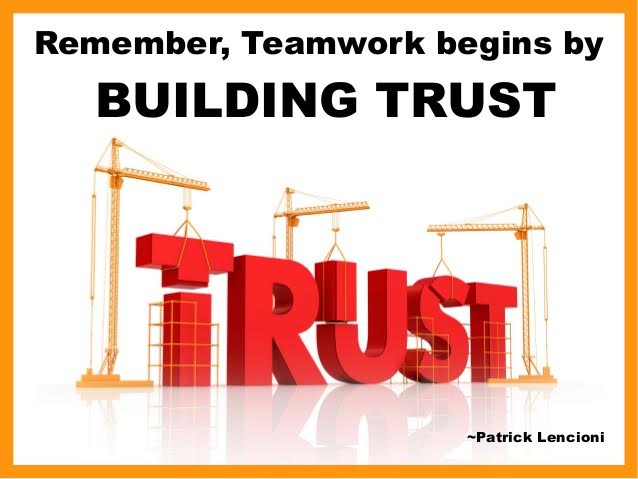
Often we talk about trust and respect and most often some tie these two terms to age and/or titles. Is this realistic?  Relationships are based on mutual understandings. The understanding of self, shared vision, mission, goals, and mutual respect and trust.

  • Teacher to Child
  • Child to Teacher
  • Teacher to Family
  • Family to Teacher
  • Family to Child
  • Child to Family
  • Human to Human
    … among all living things…

blog 17 trust

By nature we depend on relationships. We are hungry for interaction through conversations, play, arguments, misunderstandings. We are social beings. We recognize and overcome hardships to form positive and fruitful relationships and take steps to help someone through the process is our responsibility. Acknowledging individual and collective responsibility is one of the most crucial stepping stones of human life.

On Self Reflection:

How am I doing? Can I be better at what I am doing? Can I play a better role in my relationships? Do I make mistakes? Do I know what to do next? Who can I get help from? What can I improve about myself? Do I play a role in this relationship? What kind of role is it? Am I a positive influence for someone? Who is my role model? Am I a role model? This stage of self reflection and evaluation hurts us but it helps us grow. It makes us uncomfortable in a good way. For the betterment of ourselves and others around us. Any time we feel discomfort, we are growing. We are shifting and moving on to something.

As Maya Angelous once said: When you know better, you do better.

blog 17 trust 2

On Listening:

How many of us know what listening is? Believe me, not many. Many people think they are listening but all they do is hearing bunch of words, sometimes jumbled up together like a noise. This happens when you think you are listening to the person who is talking but you are actually busy forming your thoughts and comments so that you are ready to reply. The reality is you do not truly “hear” what the person is saying. In many relationships, including with children, our urge to make a comment or reply prohibits us from allowing our brain to focus on the individual. Then comes assumptions, misunderstanding, blaming… Listening what the person has to say and then taking a few seconds to digest it shows that you respect the person’s thoughts and what  he or she has to say. This is a lifelong skills we all need to know.

blog 17 trust 3

On Control of Emotions:

It takes so much to control our emotions. Think about a child who is crying and screaming because he does not want to walk. First, we question the reason for his behavior. Next, we try to have eye cntact and see if we can figure out what the problem may be. Then we comfort him by holding his hand, carrying him or simply explaining what is happening. We build the trust, understanding and show emphathy for him. On the other hand, if we simply continue to walk, drag him by holding his hand or arm and completely disregard his upset, the only message we are giving is: Your feelings do not matter, I say it you do it, I do not respect you. In addition, if we do not control our emotions and are disturbed by his cry, we start threatinnig him by saying “if you do not stop crying, you cannot play, eat snack, go outside…” It sounds so negative and hurtful. It is the same way with any relationship. Controlling emotions allow us to choose our words carefully, to remain calm and in control of the situation. We are not saying “Do not feel emotional”. What we are saying is “have control over your emotions” so that you can help the situation instead of contributing to a possible negative result such as stress and broken relationship. During these times, people need each other the most and you must be the one with a leveled head so that the other party can rely upon you or you can take control over the situation to make things better. Keep in mind that this is not an easy step but can be done with practice, deep breathing, taking a moment and self check.

blog 17 trust 4

You do not need to have all of the answers:

Just because you are a mom, dad, teacher, leader … does not mean you have all the answers to every question, problem, dilemma or for every situation. People will expect a lot of things from you throughout your life. If they see that each time you are helping them, you are beating yourself to death to get an answer for them, they will keep expecting a solution from you each and every time and most likely they will not try to figure it out for themselves regardless of their capacity and ability.

In fact, they will never reach their capacity because there is “you” who do things for them. In addition, because of these expectations, you feel obligated to continue to find an answer and provide a solution in a way that when you do not have the answer you feel awful. You criticize yourself and again, beat yourself up because you feel like you are letting them down. It is important to recognize that we cannot save everyone from every situation neither we can provide a solution for every situation. This is something important to understand and accept because it is part of self respect.

blog 17 trust 5

Setting Children Up For Success

By Jill Telford and Berna Artis

Families and educators have one thing in common: every family wants the best and for their children to succeed. Is it enough to want it?  What are some of the corner stones of success for our children?

blog 15 pic 4

Unfortunately, there is not an exact list or recipe for this but now we know more than we have ever known thanks to research and data. The bottomline is: families!

blog 15 pic 1

As a mom of a wonderful boy, I used to do everything for him. Dressing him up, putting dirty clothes in the laundry basket, cleaning his toys up, preparing his bookbag for school and tying his shoes. Actually the list is longer but this last one was a wake up call for me and my husband. I thought, “I can do this better, I can do that faster, he is tired let me help…” Until one day, he was playing soccer and while all of the other children were able to tie their cleats, our son was looking at us: “My shoes are untied, help”. It is ok to help of course but a 6 year old should have known how to tie his shoes.

blog 15 pic 3

After all, this is a skill they usually learn by four or five. How could he have learned when I was constantly disabling him by “helping” him tie his shoes? Since that day, gradually I stepped back and now I allow him to try and try again. Unless it is absolutely necessary, as in an emergency, I wait and he does it on his own. Folding his clothes, putting dirty clothes in the basket, preparing his bookbag for school, taking breakfast items out, setting the table, cleaning up his toys etc. In fact, every time he does something, I see the feeling of accomplishment and pride. Especially, after he helps take the groceries into the kitchen and puts things away with me. Small steps for me but a huge one for him: responsibility.

blog 15 pic

Taking responsiblity leads to appreciation. Instead of finding everything readily available, he works for it. He has a better understanding of coming home after a long busy day and helping to set the table or preparing his uniform for the next day. He has empathy for mommy and daddy because he knows how it feels fulfilling responsibilities no matter how tired we are. This is not any different than someone getting up and going to work even if he is tired from the previous day or night. Or in college, getting up early for finals after studying all night or completing a project by the deadline, no matter what the circumstances are. This is beneficial especially when most families are not with their children once they go to college.

blog 15 pic 2

The importance of healthy social emotional development is undeniable. We encourage children to use their words instead of being physical. We model how to identify and label feelings so they can communicate and share their feelings with one another. We walk them through steps to resolve conflicts and negotiating. These are crucial skills for adulthood. Think about your collegaues, coworkers, family members and even friends.

What are the common issues in relationships? From experience, I find it to be lack of understanding, empathy, self-regulation and communication. The majority of the time, these are the culprits of poor performance, unhealthy and dysfunctional relationships. There is a saying that goes, “You should straighten the tree when it is young, once it gets older, it becomes harder and if you try to bend it, it breaks”. From childhood, you can see the predictors if the child will succeed or not. Childhood is precious and children have great potential to become functional and positive members of this world, as long as they get what they need to reach their fullest potential.

blog 15 pic 8

We work to set our children up for a better life than the one we had. The kind of life we never had not the kind of life we want for children. We help children set up the life they want for themselves and encourage, encourage not praise the whole way. There is a thin line between the two. In order to understand where you are going, you must recognize and realize where you come from. Coming from a family that valued hard work, grit (resiliency), integrity and fun, I carry that with me everywhere I go and apply it to every part of my life. Often when faced with challenges I think no worries, life is short, live the moment and in Pete the Cat’s terminology, “It’s all good”.

blog 15 pic 9

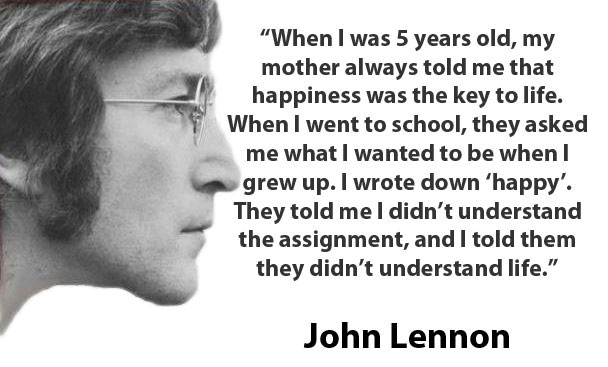
John Lennon was once asked what he wanted to be when he grew up and he said happy. They said he didn’t understand the assignment and he told them they didn’t understand life. When we think of our loved ones, we want the best and the best in reality is for them to be happy. If we instill this way of being, then they will not settle for less than they deserve.

Our Most Vulnerable

blog 14 picOur most vulnerable are our children, elderly, women and sick. These four groups deserve the best practice and high quality care:  the word care. What does that mean? So many go into a 9-5 job and that is all it is for them: a job. A going through the motions like a machine kind of job. The worst is that some are good at their job and others are not. However, what sets a handful apart is how they care and treat another human being. It is caring for the job, taking pride in what you do and being happy with yourself when you look at the product and or your creation. It is also going the extra mile.
Long ago someone told me that there are three types of people and you store them according to how they perform. Top drawer is for the ones who go that extra mile and who you have to have to go on with your work and who you can lean on. Second drawer is for people who perform well and does everything by the book. The bottom drawer is for the ones who you would live without because they do the bare minimum and sometimes even cut corners. Why would you even keep them around you?

Why is this? Why is there only a few? Care is synonymous with responsibility, protection and control. So much is out of our control; however, to care about and for someone is profound work.

blog 14 pic 2

The worst thing you can do is turn your back on someone who is vulnerable. As I read the biography The Immortal Life of Henrietta Lacks a quote surfaces again and again throughout my life: “The worst thing you can do to a sick person is close the door and forget about him” (Skloot 276). It is the worst thing. No one will take care of a loved one like you will; that is the God’s honest truth. No one. And, when you see a person who does, appreciate them and thank the stars and your God for a blessing such as that. 

blog 14 pic 7

Who makes sure they eat and drink? Who ensures they are ok? That they don’t roll from the bed? Ensures they are loved and have attention? Ensures that crumbs are wiped away and holds their hand when in pain?

I want to tell you a folklore story passed down. Once there lived an Inuit grandfather who was so old and shaky that when he tried to feed himself or drink, his hands would shake and food would fall to the floor, water would spill and create a mess.

Many did not have patience and since he was disabled in a wheel chair, no longer working and providing “bread and butter” aka his fair share, it was almost time for him to move on. The following week the elder man’s son bundled him up in a jacket and handed him a blanket. The son told his son to please wheel him away deep into the forest. The boy pushed his grandfather over the bumpy ground. Feeling the weight and the burden, the boy pushed on and parked his grandfather’s chair deep into the woods out of sight.

As the boy turned to leave, his grandfather called his name. He said “yes?” The grandfather handed him the blanket back and said, “Make sure you give this blanket to your father when it is his turn.”

blog 14 pic 6

We cannot close the door on someone or anyone we are meant to care for whether it be a relative, a child…anyone.

blog 14 pic 4

There will be a point where you will be in those shoes.  At some point we were all children and at another point we will be old, weak and vulnerable like a child again. We need to take care of each other.

blog 14 pic 5

In the book My Stroke of Insight, Jill Bolt Taylor talks about how she recovered a stroke and could literally feel people’s energies. She felt and loved a select few of people in a hospital that cared for her. Most of all, she remembered as she recovered and regained parts of her brain. She felt the difference between nurses who poked and prodded and others who got low to her bedside and whispered, talked and asked “How are you feeling?” Accompanied by touch.

In this story it is similar to how we work and care for each other. Some do and some don’t. That’s the reality. The good ones are worth holding onto.

blog 14 pic 3