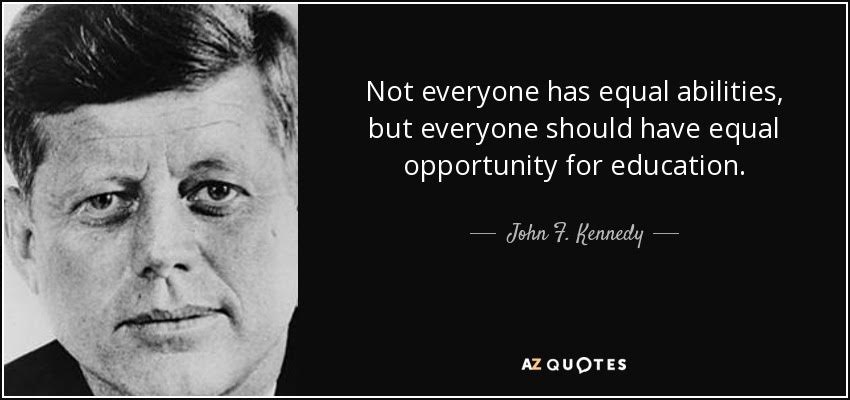
Truth or Dare? Choosing Both to Defend Early Childhood and Beyond the Early Years

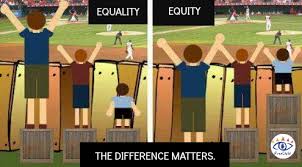
Education is said to be the great equalizer of all time but I’m not looking for it to make experiences equal. I am looking for it to make them fair.  Everyone has different experiences. If you give two people the same size box to stand on to look out of a window or to reach for an object up high it will not work for one of them.
blog 16

Children and families need fairness, high quality and authentic exposure to the world in which they are a part of.  Being more connected than ever before makes it is easier to see what it is like on the other side of the world and right here in your own city.  Connecting with people is important, not watching stereotypes or feeding into them.  There are many kinds of people. People want to survive and make the best with what they have and know.  People grow and change. They fall and get back up. Some need help getting back up while others brush their shoulders and carry on growing stronger.

blog 16 3

I grew up never knowing we struggled.  Childhood was magical for me. I played in the mud, made a lot of choices, fell down and got hurt, came in before it got dark and did I mention I played a lot? Every child deserves a magical and joyful childhood. They deserve to believe they are somebody, are special and have the potential to be who ever they dare to be.  I dare someone reading this article to not just go to a park but make some mud outside. Combine it with a  great book called The Mud Puddle by Robert Munsch.  Maybe make up your own story along the way.
blog 16 9

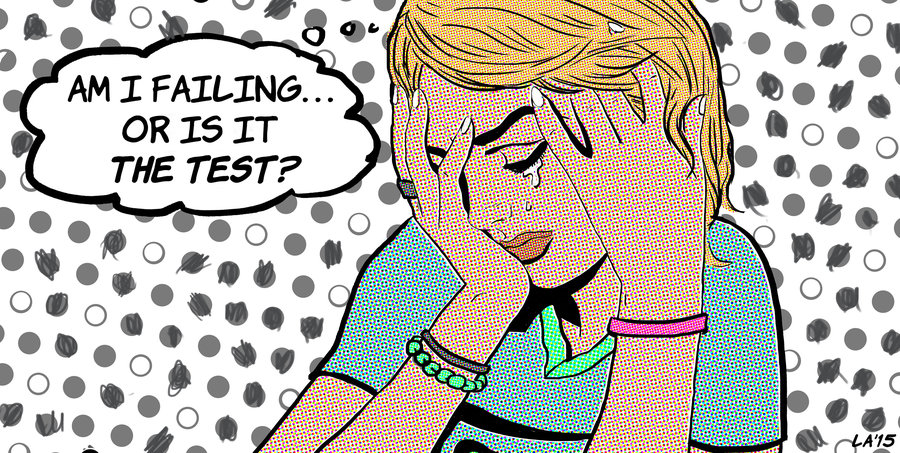
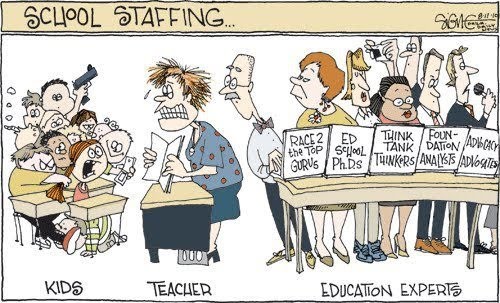
Some think No Child Left Behind means ensuring children are prepared academically and assessing children whether they are or are not is heavily emphasized through testing in math, reading and writing.  These skills are important but the way we assess them is so far from the reality. Relying upon a standardized test and not considering the student’s persona and capacity for test taking is a way to set them up for failure, furthermore a way to discourage them to try harder.   There needs to be a balance between standardized tests and authentic assessment including observations, dialogue and self-expression with a given project or an assignment. Children should also be assessed in their environment through journaling, evaluating their work over time and understanding who they are as a person and how they learn.  This is what fair assessment looks like. Standardized test scores determine funding? Well, we shouldn’t allow that.  I believe high quality early childhood educators have a lot to show and share with our K through 12 programs and the same vice versa.  Please understand early childhood is not just taking care of cute little people , as once I was told, it is not changing diapers, feeding babies and rocking them to sleep. There is no need to say “I don’t know how you do it but we thank you” from higher-level teachers. We need you to provide continuity so that there is a solid bridge between early years and formal school years. How can you do that?
blog 16 5

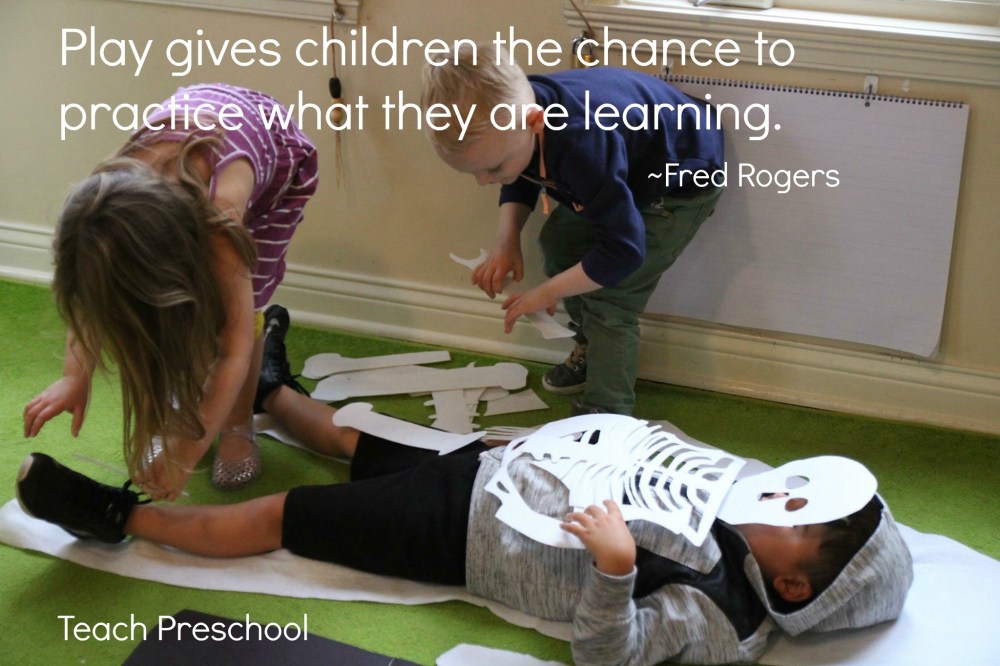
By partnering with families, listening to their needs and expectations, sometimes even their hurldles. By building strong relationships, ensuring the classroom feels like a home away from home and every child has a place and feels included. Allowing children the freedom to express themselves and providing guidance and engaging them in the lesson in a way that they do not even realize they are learning. Making play a learning tool and knowing how children learn best, articulating why it is ok if a child is not reading but is on the way to and how to positively make him or her love and enjoy reading. It’s not just about the abc’s. Advocating for children and families and empowering each other.   This does not have to happen all at once but in steps…one at a time… walking feet…
blog 16 7

Here are lessons learned:

Preschool’s top six rules:

  • Be kind and when someone’s not: speak up
  • Take care of each other and the classroom
  • Be safe
  • If you fall…get back up (if you fail, try again)
  • Work hard, work smart and work together
  • Have fun

Remember that life long learning is a process rather than a product.  Each of us is in a process of becoming. It is not only what we know but who we are.

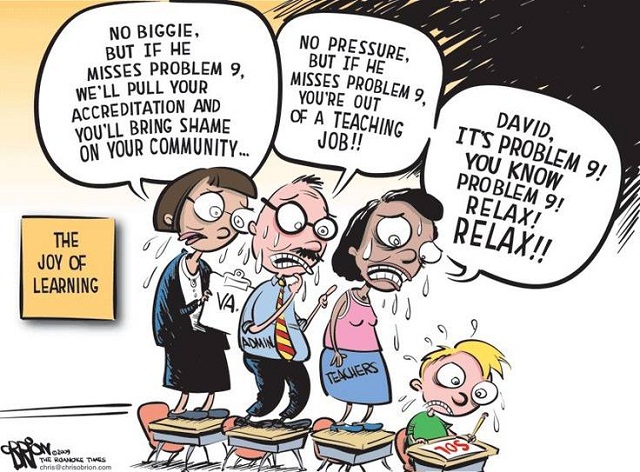
When we solely focus on academics and testing then childrens’ potential, character, critical thinking, problem-solving and symbolic thinking is left behind in the process. While in New Mexico, I witnessed children having shorter recess time with teachers standing around arms crossed watching and monitoring equaling no engagement.  No leading play efforts.  If it got rough they were not allowed to play certain games such as football.  How do you interact? How are you forming spatial awareness and sensory functions? Humans need contact. Children lined up single file for lunch, sat in chairs all day and had limited play and interaction.  There was a power struggle present and children were seen not heard. Children were required to listen not be listened to. This is not positive and it does not help building strong relationships. This way of thinking is not making our children grow into better adults than we are.  The purpose of education is to ensure the next generations are better than the previous ones.
blog 16 8

How and why did we get here as a society?  We want to keep our children safe and we want the best for them but is this the way? Children and families are lost in the process where it feels like a systematic institution as opposed to a nurturing community.  As an example, a few years back, I started bringing in my own basketball and showed children how to play and guided them in the process.  As a result, I observed more joy and togetherness.  I grew up playing basketball. While my sister pushed me to be a strong athlete my brother in law showed me the fun side of it.  Balance.

We are not meant to sit all day long. Our bodies need to move. Our brains need a break.  A Turkish saying goes ” Healthy body, healthy mind”. In aftercare, children do homework and eat snack. What happens to all that energy and the need to interact with one another, socialize and create friendships? Where is enrichment so that our children turn into well rounded adults? How can’t they get bored and get in trouble because they are not intrigued and occupied by positive activities?  It often feels more like a boot camp than an educational experience. It makes the cradle to school to prison pipeline real for me. We are preparing children for…prison? I recognized it started there.

blog 16 4

It doesn’t matter where you come from to make it to where you’re going. This is true. This is what my life’s work is built on. This I believe is what life is built on.  We can change this as people, citizens, educators and whatever else our social roles are.  If we work together… People fought and were tried before. Of course, we will get tired. It will not always be a smooth ride. We’re human and we believe our children are worth fighting for.

Our Most Vulnerable

blog 14 picOur most vulnerable are our children, elderly, women and sick. These four groups deserve the best practice and high quality care:  the word care. What does that mean? So many go into a 9-5 job and that is all it is for them: a job. A going through the motions like a machine kind of job. The worst is that some are good at their job and others are not. However, what sets a handful apart is how they care and treat another human being. It is caring for the job, taking pride in what you do and being happy with yourself when you look at the product and or your creation. It is also going the extra mile.
Long ago someone told me that there are three types of people and you store them according to how they perform. Top drawer is for the ones who go that extra mile and who you have to have to go on with your work and who you can lean on. Second drawer is for people who perform well and does everything by the book. The bottom drawer is for the ones who you would live without because they do the bare minimum and sometimes even cut corners. Why would you even keep them around you?

Why is this? Why is there only a few? Care is synonymous with responsibility, protection and control. So much is out of our control; however, to care about and for someone is profound work.

blog 14 pic 2

The worst thing you can do is turn your back on someone who is vulnerable. As I read the biography The Immortal Life of Henrietta Lacks a quote surfaces again and again throughout my life: “The worst thing you can do to a sick person is close the door and forget about him” (Skloot 276). It is the worst thing. No one will take care of a loved one like you will; that is the God’s honest truth. No one. And, when you see a person who does, appreciate them and thank the stars and your God for a blessing such as that. 

blog 14 pic 7

Who makes sure they eat and drink? Who ensures they are ok? That they don’t roll from the bed? Ensures they are loved and have attention? Ensures that crumbs are wiped away and holds their hand when in pain?

I want to tell you a folklore story passed down. Once there lived an Inuit grandfather who was so old and shaky that when he tried to feed himself or drink, his hands would shake and food would fall to the floor, water would spill and create a mess.

Many did not have patience and since he was disabled in a wheel chair, no longer working and providing “bread and butter” aka his fair share, it was almost time for him to move on. The following week the elder man’s son bundled him up in a jacket and handed him a blanket. The son told his son to please wheel him away deep into the forest. The boy pushed his grandfather over the bumpy ground. Feeling the weight and the burden, the boy pushed on and parked his grandfather’s chair deep into the woods out of sight.

As the boy turned to leave, his grandfather called his name. He said “yes?” The grandfather handed him the blanket back and said, “Make sure you give this blanket to your father when it is his turn.”

blog 14 pic 6

We cannot close the door on someone or anyone we are meant to care for whether it be a relative, a child…anyone.

blog 14 pic 4

There will be a point where you will be in those shoes.  At some point we were all children and at another point we will be old, weak and vulnerable like a child again. We need to take care of each other.

blog 14 pic 5

In the book My Stroke of Insight, Jill Bolt Taylor talks about how she recovered a stroke and could literally feel people’s energies. She felt and loved a select few of people in a hospital that cared for her. Most of all, she remembered as she recovered and regained parts of her brain. She felt the difference between nurses who poked and prodded and others who got low to her bedside and whispered, talked and asked “How are you feeling?” Accompanied by touch.

In this story it is similar to how we work and care for each other. Some do and some don’t. That’s the reality. The good ones are worth holding onto.

blog 14 pic 3

“Why is My Child Acting Out?” Often There is a Reason Why

By Jill Telford and Berna Artis

As a teacher, sister and aunt I learned a lot about and from children. I am one of three sisters and an aunt to nine nieces, nephews and grew up with one of my nieces pretty much as sisters. I watched how she grew from a baby soon to be college freshman. Time goes by and waits for no one. I am reminded of this everyday especially working with children.

blog 12 pic 7

What I love the most about guiding children is that each and every single child has their own individual personality and most often, I wonder who and how they will be when they grow up. Often, I look around at adults as well and think “wow how incredible to be surrounded by such unique personalities”. We are all very different. Everyone of us has something to offer each other when we listen. Most of all, I believe that we all want what’s best for our children, there is no doubt in my mind about that. Families do what they can with what they have and what they know.  No one wants to be in the middle of a tantrum or a very bad day. However, there will always be bad days. We will find ourselves right in the middle of it when times get a little ugly. These are the moments that make or break us as we guide children’s behaviors. We all make mistakes but it’s the ability to reflect and learn from them to see how we can best support and care for our kids. Making mistakes is okay. Let’s also not forget about supporting and caring for each other while being in the middle of it.

blog 12 pic 2I vividly remember my niece and how she did not want to put her seatbelt on to many of my requests and furrowed eyebrow looks in the rear view mirror and she literally crawled behind the seat and protested while I was driving. I pulled the car over to the side of the road and parked it.  I said, “We had an agreement that you’d wear it if you went on this drive to the store.” Then I asked, “Why don’t you like wearing a seatbelt?” She said, “I don’t like how it feels against my neck.” “Ok, no problem there is a way to wear it where you won’t feel it”, then I showed her a trick and how to put it behind her back.  We always struggled with this and finally by asking the right question we solved it together. There is almost always a reason for a behavior. One guidance technique may not work for every child. It’s really about being attuned and listening to a child to get down to the bottom of it. It’s not easy.

blog 12 pic 5


Like us, children want to be respected, nurtured, cared for and treated kindly. How do we teach that when we are pushed to the limits? I admire families with children, hectic work and school schedules. I don’t know how they do it honestly. Families are a child’s first and most important teacher. To me, families are like super heroes. I think if I had to go home to children or pick them up from school, how would I respond and act with them after a complete full day of work? Would they still have a good part of me? Would they ever see me at my worst? Would I ever make them feel like they were last? Would I show them the same kind of care and understanding as I show others? Would they have my undivided attention? Would I listen? Would I be there? All I know is that we at times are our own worst critics. In classrooms full of children with all different needs often I am at their eye level talking and working problems out. We solve one problem at a time the best way we know how. Most times, I ask children how they can solve it. And, often I find research, articles talking about strategies of how to talk and guide children because just because one strategy worked for one child it may not work for the next. 

blog 12 pic 4

I had a child who pushed me to my limits and made me start praying. Everyday, I said a little prayer in hopes that Johnny would be gentle and not hurt anyone that day.  The child was one of my most challenging students. Nothing seemed to work. Each day was a challenge. However, I did not give up on Johnny. We observed and you know when clouds drift away, rain stops and blue skies come: that’s exactly how I felt when the child stopped hitting after many months of reading, “Hands are Not for Hitting”, modeling gentle touches, talking about how it hurts, checking in on the children who were hurt, catching the child being gentle, and literally guiding the child each and everyday not to mention talking with the family about how we are working on and how the child is not bad just has challenging behavior. Giving the family strategies and advice all the while taking theirs of what is working. Working tirelessly so the child was not labeled as “bad”. Positive guidance works. It may not happen as fast as we’d like and yes it may be very difficult but the results are worth it. If we yell, if we hit and we are grown ups what are we teaching? That is confusing to a child.

As a classroom teacher, one of the biggest things I learned that is if you whisper, children will listen.  Most of all when you care the rest handles itself.

blog 12 pic 6

Like Jill, I come from a big family. We love children. We are very emotional and touchy feely people. This is not unique to my family of course but I realized especially educators who work with children side by side are generally emotional people. Why? Because it is not possible for a person not to be emotional when there is passion inside.

I often hear parents and other family members and unfortunately teachers stating “tough love is all children need to grow and become responsible individuals”. “Too much love will spoil them, I don’t baby my kid. They need discipline”. Agreed, they need discipline. But what is discipline?

blog 12 pic 8

Taking a way a child’s belongings? Keeping him in the classroom during recess? Kicking him out of the classroom? Sending him to the office? Taking away his points or giving a bad grade? Putting him in the corner for time out? Yelling at him in front of the whole classroom? Telling him: “you are being a bad kid” ?  None  of the above. Not until you try everything. Not until you try to build a connection and a relationship. Not until you understand what the underlying cause is for the behavior. Not until reaching out to the family asking for their help. Not until looking into his or her eyes and asking why and what. Not until giving choices and guiding him to make better choices. One size does not fit all.

Sadly I see these things too often in schools. Here we are in 2016. 21st century, right? Information age. Technology age. Family styles are different. Parenting techniques and expectations are different. We read and we know more. There is a ton of contemporary and progressive techniques. Why does all this knowledge stay in the books or in between shuffled files? Why do we talk the talk but not walk the walk?  We all communicate constantly. More than half the time, not face to face but screen to screen and in the moment when things are happening. We are connected more than ever before. Why not take the time and approach the bad behavior, not the “bad child or student”. A teacher’s role is not only to teach academics. Most teachers forget this and all they focus on is: “I need to teach the lesson, scores need to go up”.

blog 12 pic 3

How about “Let me learn more about positive guidance or positive discipline. Let me talk to the family and see if there is anything I can do. Let me ask other colleagues and see what they would do if they were in my shoes. Let me ask this student why he is the way he is. Is he bored? Does he need attention? Does he need to be challenged more? Does he feel scared or frightened of something or someone.” How about we replace all the “punishment” hidden under discipline or (my favorite) consequence? Why not calling it what it is? It is punishment. A consequence is for the child to know what his options are and teaching him how to make good choices. In the event the choice is not good, then there is a consequence. For example, “If you do not finish writing down your homework, you will not be able to go out for an extra 5 minutes before we are released” or ” If you want to watch a cartoon, you will not be able to play scrabble because we do not have that much time and you need to go to bed on time”. The chid still has control over his actions and is aware of the consequences either way.

blog 12 pic 9

As long as there is mutual respect and hands stretched out to help children who are eager to learn. If they knew how to behave, they would not be minors. Especially, in a world where adults have a lot to learn, just try. Understanding and caring goes a long way and can create wonders. Even with the most challenging child. We all make a difference in the world. One child, one student, one person at a time. blog 12 pic

Is it Real? Authentic Teacher Relationships in Education

blog 11 velv pic

“Children are shrewd judges of character; they know whether a teacher is authentic, and they respond accordingly” -Laura Colker

While there are many types of relationships built with families, community and children in education, another relationship that is just as important is the relationship built amongst teachers in and outside of the classroom.

blog 11 9

There is a shift occurring in education. A classroom teacher is not alone anymore or should not feel alone as there is a larger connected professional community of educators and leaders in the field. Establishing a strong healthy reciprocal learning community where teachers reach out locally and globally does several things:  it supports everyone involved from novice teachers to seasoned ones. A reciprocal exchange of ideas occur and connection creates a local and global community of educators.

blog 11 2

Learning goes beyond the walls of a classroom. It is impossible to know everything, education is always changing and so are we. We are always in a process of becoming. If we stay the same with the same outlooks then we become like a pool of stagnant water and stagnant water collects flies and mosquitos. Think like an ocean: waves moving, not a still pond.

blog 11 4

A machine that moves, never gets rusty (Turkish proverb)

In Early Ed we have co-teaching teams. Relationships should be and do several things: 

  • Healthy and strong
  • Authentic
  • Continues learning
  • Open, honest and reciprocal
  • Non judgmental
  • Supportive not co-dependant

blog 11 10

How do we grow? How do we become authentic? By learning from each other, with each other and pushing each other to a higher level. By knowing what you stand for and why. It is almost like making the muscles that we never knew existed move and get stronger. There is no single way to do something or teach something and there is nothing more dangerous for an educator than hitting the glass ceiling or becoming complacent.
Smart people surround themselves with people who are smarter than themselves. Progressive and positive partnerships support personal and professional growth. Educators must be in a cycle of learning.

blog 11 6

There is no other way of growing and providing the best learning experience for the children. Education is evolving and we need to be on that train going towards the direction where there is more light and better ways to have an impact on generations to come. It is possible to do so if we are open with one another and take constructive criticism rather than making it personal. Everyone has something to offer. Everyone has something to learn. There is no teaching without learning.

blog 11 3

Breaking the Cycle with High Quality and Equity in Education: Why it Matters

By Jill Telford and Berna Artis

There are many issues and reasons when it comes to children from lower socioeconomic backgrounds not doing as well as their affluent counterparts.  Children deserve high quality education, equity and equal opportunities regardless of their origin, socieconomic status and family tree.  They deserve to realize their full potential and grow into their highest capacity.  Educators and families must have strong partnerships. This can be established when teachers treat everyone fairly and ensure children and families feel safe, welcomed, loved and cared for.  Just as there are rules in the classroom: be safe, be kind and most of all take care of each other.  I am a preschool educator at heart. When I say let’s hold hands and stick together like peanut butter and jelly I mean it.

blog 10 pic

There are two myths about the achievement gap: low-income families have lower expectations for the academic achievement of their children and students from low-income families have much lower motivation to learn.  This is false. I come from lower class and we struggled. I never knew we were poor or how much my family sacrificed to ensure I made it so to speak.  It comes down to many influences but I will talk about two main influences: family expectations and how teacher(s) perceive their students.  Teachers must have high expectations and a belief in their students that they can in fact succeed and they are somebody.  We all are somebody. You can tell so much about a person by how they treat people…every person no matter who they are.

blog 10 pic 2

Our exposure and our experiences make us who we are and who we are to become.  My family, especially my sister, pushed me to succeed and had high expectations of me and motivated me to learn.  She would stay up most nights mispronouncing vocabulary words to ensure I knew them for the next day.  At a young age, I was taught to read to understand not by anyone else but my older sister. When I was failing, my sister figured it out by asking and talking with my teachers.  A strong school family partnership is key to change someone’s trajectory in life.

I believe a family is a child’s first teacher and wants what is best for their child.  At times they may not know what to do and seek help.  Families do the best they can.  When a child has someone in their life who truly cares, anything is possible.  Children are resilient and need a dedicated role model to help them.  When a child has a handful of individuals who care and do the best they can, they are empowered and they believe in themselves.  There is no excuse why we cannot help children and families through education.  Education turns lives around and is the cure for poverty.

blog 10 pic 4

Give a man a fish and you feed him for a day. Teach a man to fish and you feed him for a lifetime (Chinese Proverb).

As opposed to Jill, I grew up in a highly diverse neighborhood. Christians, Jewish, Muslims, rich, middle class and poor. There was no upper middle class then. I remember going to elementary school and being in a classroom of 32 students with only one teacher. My mom was the room parent for five consecutive years and she contiued to stay engaged in parent-school association until I got to my senior year in high school. I must say I owe my success to my parents and their ever lasting support.

blog 10 pic 3

Education starts at home. First, we learn to be a good human being by treating one another with respect, understanding and showing empathy. We learn to take turns listening and speaking. We carry these personal traits to school life.  Then we start learning the academics. When I was growing up, my parents would tell me “never talk about money or what you do over the weekend or on breaks. It is rude to brag about what you have. You can hurt others’ feelings because you do not know where they come from and what they can or cannot afford”. Today, I teach the same thing to my son. There are so many other things we can talk about and share with each other. There are so many ways we can support each other, work and grow together.

Achievement gap is unavoidable in today’s world but it can be minimized. This is only possible if we work together. Shared understanding of what high quality is by all stakeholders, exposure to cutting edge information, various experiences and collaboration with others. These are some of the most crucial factors in progressive education. We are raising children in the 21st century, therefore we cannot continue to think like and use the methods from 30 years ago. Family styles, parenting styles, technology and many other things are different than the way they were in the old days. There is so much research out there, within our reach. One click of a button and information is in front of our eyes. No need to wait, no need to check out the book from the library, in many cases, no need to pay for it…So, if we know better and have more information, why not apply this knowledge into our classrooms and provide our children enriching experiences and prepare them for success?

blog 10 pic 5

Assumptions as Jill desribes at the beginning are no different than stereotyping people. How many of us think it is not OK to stereotype? I am sure, MANY of you who are reading this right now. There are families who are fortunate and there are ones who are not. There are families who want the best for their children but they do not have the means and there are ones who do not know what is best or how to provide the best. Anytime I come across a family who is not as fortunate as I was when I was growing up, I spend more time with them. I reach my hand out farther and try to pull them closer. Why? Because I may be their only chance. I may be the one who is supposed to break the cycle for this family. Because  8 to 10 hours this child spends in my care may be the happiest and the only productive time period he or she has. Helping someone achieve does not always cost a lot of money. We only need to pay attention, listen and reach out within our means. When it goes beyond our means, we can partner with others and ask for help. Remember we said closing the gap is only possible with collaboration? Well, it really is.

blog 9 image 3

Achievement is not only for a certain group of children. It is for all. All it takes is an opportunity. Any one of us can be that opportunity for a child who then may become a doctor, scientist, teacher, lawyer, police officer, entrepreneur and who knows.. perhaps the future president.