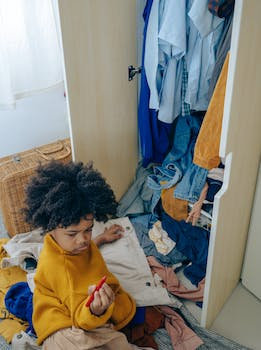
You’re in the store. You hear, “Mommy, I want that.” You peer down to see your child pointing to a brightly colored stuffed elephant that you know he has more than you can count at home. You whisper, “No, not right now you have some at home.” He urges, begs and pleads. You don’t cave in. You stand your ground. Then to your surprise (or perhaps, not to your surprise) as it’s been boiling you see your 3 year old start to cry. He may scream. He may even throw himself to the floor.
You as the grown up can’t run or hide. What do you do?
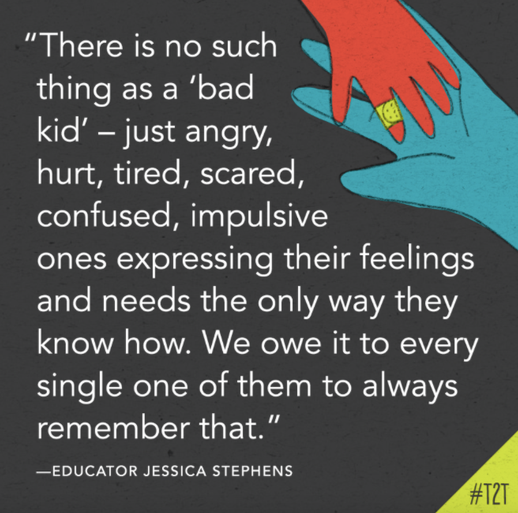
During childhood, young children are experiencing a vast array of emotions: big and small, discovering new places and self as they change and grow. As they take in the brand new world around them, they could get easily frustrated especially when they are not able to fully say how they feel or fully articulate their needs. As a result, a child may show this exasperation and big emotions through what grown ups see as challenging behaviors not a bad child but a challenge. Even adults could reach a point or limit of not being able to self-regulate. Imagine how children feel as everything is brand new especially as they grow into themselves.
According to NAEYC, challenging behaviors often emerge in the second year of life. Why? Toddlers are unable to fully label how they are feeling as well as their needs as they are still developing language skills. So, a child will use nonverbal possibly biting or verbal: crying to get their needs met.
Here are some research backed strategies to guide children to more positive outcomes that may prevent leaving the store in gallons of tears and energy.
Avoid common triggers or situations that cause challenging behavior: Prepare in advance for activities or store trips. Observation is key here. If you know when you go to the store, he will see a fluffy bright elephant that he will beg for, and prepare one he already has to take with him. Bonus: let him choose which one he wants to take. In the moment at the store: it may not be the “want” of the toy but the “want” of a comforting item that seeing that bright elephant reminds him of. Identifying patterns in timing, routine, anticipated outcomes or root causes of challenging behaviors can help families better support their child.
Establish predictable and consistent routines and behaviors: Children and grown ups thrive in predictable and consistent routines. It feels safe to know what is coming next. Model kindness and empathy with others and yourself. Your child will notice and show the same. Model how to take care of others, the environment and the self. Keep a consistent and predictable schedule. Have cereal together. Breathe and meditate together. Show and share a calm, supportive, consistent and loving environment. If ever upset, model that you will need a moment to calm down, breathe and return when ready. Children learn by what they observe and experience. If you curse, your child will. If you’re calm, your child will be. Families are successful by being consistent through predictable routines, setting limits and modeling care and compassion through smiles, intentional verbal, nonverbal praise and action.
Notice and talk about positive actions during the day: Every day is a fresh and new day to get it right or learn from mistakes. Families have the potential to promote positive behaviors throughout the day, not just when challenging behaviors emerge. Catch children’s positive actions and comment on them. Notice other people’s actions too and comment out loud in front of your child about them. For example, wow without Kelly, our mailperson we would never get postcards from Grandma or when at a restaurant, comment on the service. For example, our waiter is so kind and without him we would not be able to order food. Notice and comment on the helpers of our world. Without each and every person’s kindness, we would have a mean and disturbed kind of world.
Hopefully, these tips help so that next time you find yourself somewhere such as a store, it goes more smoothly and there are no screams or tantrums. Screaming love instead of frustration. Here’s to pinpointing and solving those challenging behaviors. Cheers! Remember, you got this!
Last Fall, as I was driving into work I was thinking of my mom and then her song came on. When the ending of Black Velvet came on the radio, it was fused-staticky mixing with another station. Although it was not very clear and smooth, I smiled. I still hear you Mom.
Today the same song came on while I work from home. It’s clear. Smooth. Perfect timing as I hear the raspy voice of Alanah Myles. My mother had a raspy voice, too. Signs are everywhere when you pay attention. I still hear you Mom.
When we lose the ones we love, the pain stays for forever but what do you do with the pain that you feel?
Think about that.
Breathe on that.
Inhale and exhale.
A former family member of a former student taught me (without realizing that she was teaching me) to:
Smell the flowers.
Blowout the candles.
And, I’ll never forget it.
If we don’t take care of ourselves like how we care for others and our environment then who will?
No one takes care of ourselves the way we will. That kind of light emanates outward from within to the world.
Remember breath work, stretch work and sense work.
Love and light. Most of all, calm and peace in the moments.




 From the Playground