Stick Together Like Peanut Butter and Jelly: Walking, Working and Moving Together

stick

While there are many stories from preschool that resonate with me, none affect me more than being in the middle of our own classroom stories. The poem by Robert Fulghum  illustrates it best:

All I Really Need To Know I Learned In Kindergarten by Robert Fulghum

Most of what I really need

To know about how to live

And what to do and how to be

I learned in kindergarten.

Wisdom was not at the top

Of the graduate school mountain,

But there in the sandpile at Sunday school.

These are the things I learned:

Share everything.

Play fair.

Don’t hit people.

Put things back where you found them.

Clean up your own mess.

Don’t take things that aren’t yours.

Say you’re sorry when you hurt somebody.

Wash your hands before you eat.

Flush.

Warm cookies and cold milk are good for you.

Live a balanced life –

Learn some and think some

And draw and paint and sing and dance

And play and work everyday some.

Take a nap every afternoon.

When you go out into the world,

Watch out for traffic,

Hold hands and stick together.

Be aware of wonder.

From: https://www.goodreads.com/quotes/246075-these-are-the-things-i-learned-in-kindergarten-1-share

I learned these life lessons shared by Robert Fulghum even before Kindergarten. I learned these little life lessons in Head start where I started preschool. These are the same lessons that I now pass on in words and action almost two decades later in a preschool classroom and playground.

I work at being the kind of grown up I needed as I a child. Families do their best with what they know each and every generation. By walking, working and moving together we create a reciprocal relationship where the best kind of learning takes place: from one another.

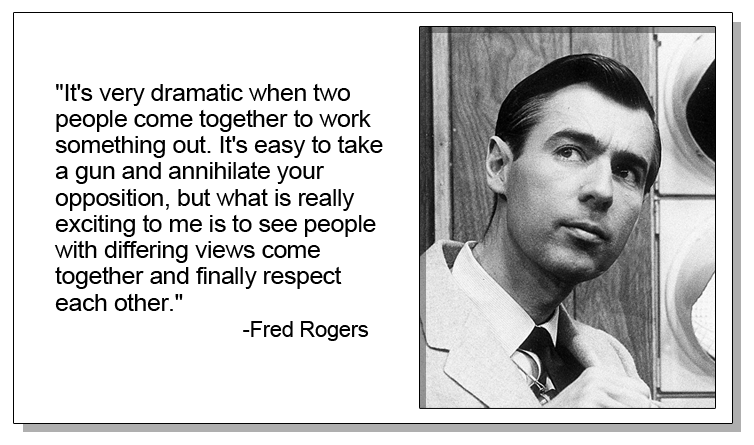
Best of all, children rise up and pass it on. I was a child who rose up. Preschool changes trajectories. Preschool definitely changed mine. A group of people worked together with or without knowing the power of the early childhood education profession. Not to mention the power of tuning into Fred Rogers. http://www.fredrogerscenter.org/

However, that is for a whole other post. In the meantime, here are some of the lessons from Robert’s poem in real life action:

We share. We come up with questions and solutions. “When can I play with it?”, “Is there another one?” or “I’ll play, read or create something awesome in the meantime.”

We often play fair and when it doesn’t feel fair we talk about it. Racing faster than cheetahs teaches us a lot on the playground. “Is it fair to run before finishing the sentence: “Ready steady, go” or “On your marks, get set, go!”

A game of tag teaches us gentle touches without having to say, “Don’t hit.”  When frustrated we verbalize it. When we can’t we rip paper, pound and squeeze play dough, paint, hit a pillow, yell among so many more strategies.

When it comes to saying sorry, we go a bit deeper. We work to fix what we did and help our friends to feel better. We get to the root of the problem. “What happened?”, “Why”, “What can I do?” and “how?”

Our hands are very dry. You know why we keep lotion on standby.

We flush. When we don’t, we still flush. It’s called a courtesy flush. Because, we all forget sometimes.

Warm cookies are delicious especially when we followed the recipe but sometimes we go overboard with the amounts we shake in. We just can’t control our excitement for making these cookies right now! (Side note: Doesn’t have to even be cookies could be anything:  play dough, Oobleck or just putting it together to see what happens as we wonder what will happen as we test out our theories). If children getting excited about mixing flour and water doesn’t remind you to appreciate and marvel at the little things, I don’t know what will.

Robert covers living a balanced life in the poem itself. If you don’t see living a balanced life in action at your child’s school or at your work then it’s time to find a new one. Living a balanced life looks like the bolded words below and STILL applies to grown ups.

“Live a balanced life –

Learn some and think some

And draw and paint and sing and dance

And play and work everyday some.”

We take our naps. We sprinkle magical sleeping sprinkle dust after reading a few stories and making some up from our brains. It works…every time.

Most of all, we sing each and everyday.

When walking up the sidewalk, we sing. We sing: “Stick together like peanut butter jelly.”We think about what else could be as sticky. We change the words to gum, play dough, tape, duct tape, hummus, yogurt, glue and the list of words never end.  We hold hands. We look out for one another. We stick together. Not only do we watch out for traffic, we watch out for each other.

Jill Telford is an American artist, author, storyteller, educator and creator of children’s books. More of her work can be found:

http://amazon.com/author/jilltelford

@artbookstories @jill.telford


stick tog pic ford

Setting Children Up For Success

By Jill Telford and Berna Artis

Families and educators have one thing in common: every family wants the best and for their children to succeed. Is it enough to want it?  What are some of the corner stones of success for our children?

blog 15 pic 4

Unfortunately, there is not an exact list or recipe for this but now we know more than we have ever known thanks to research and data. The bottomline is: families!

blog 15 pic 1

As a mom of a wonderful boy, I used to do everything for him. Dressing him up, putting dirty clothes in the laundry basket, cleaning his toys up, preparing his bookbag for school and tying his shoes. Actually the list is longer but this last one was a wake up call for me and my husband. I thought, “I can do this better, I can do that faster, he is tired let me help…” Until one day, he was playing soccer and while all of the other children were able to tie their cleats, our son was looking at us: “My shoes are untied, help”. It is ok to help of course but a 6 year old should have known how to tie his shoes.

blog 15 pic 3

After all, this is a skill they usually learn by four or five. How could he have learned when I was constantly disabling him by “helping” him tie his shoes? Since that day, gradually I stepped back and now I allow him to try and try again. Unless it is absolutely necessary, as in an emergency, I wait and he does it on his own. Folding his clothes, putting dirty clothes in the basket, preparing his bookbag for school, taking breakfast items out, setting the table, cleaning up his toys etc. In fact, every time he does something, I see the feeling of accomplishment and pride. Especially, after he helps take the groceries into the kitchen and puts things away with me. Small steps for me but a huge one for him: responsibility.

blog 15 pic

Taking responsiblity leads to appreciation. Instead of finding everything readily available, he works for it. He has a better understanding of coming home after a long busy day and helping to set the table or preparing his uniform for the next day. He has empathy for mommy and daddy because he knows how it feels fulfilling responsibilities no matter how tired we are. This is not any different than someone getting up and going to work even if he is tired from the previous day or night. Or in college, getting up early for finals after studying all night or completing a project by the deadline, no matter what the circumstances are. This is beneficial especially when most families are not with their children once they go to college.

blog 15 pic 2

The importance of healthy social emotional development is undeniable. We encourage children to use their words instead of being physical. We model how to identify and label feelings so they can communicate and share their feelings with one another. We walk them through steps to resolve conflicts and negotiating. These are crucial skills for adulthood. Think about your collegaues, coworkers, family members and even friends.

What are the common issues in relationships? From experience, I find it to be lack of understanding, empathy, self-regulation and communication. The majority of the time, these are the culprits of poor performance, unhealthy and dysfunctional relationships. There is a saying that goes, “You should straighten the tree when it is young, once it gets older, it becomes harder and if you try to bend it, it breaks”. From childhood, you can see the predictors if the child will succeed or not. Childhood is precious and children have great potential to become functional and positive members of this world, as long as they get what they need to reach their fullest potential.

blog 15 pic 8

We work to set our children up for a better life than the one we had. The kind of life we never had not the kind of life we want for children. We help children set up the life they want for themselves and encourage, encourage not praise the whole way. There is a thin line between the two. In order to understand where you are going, you must recognize and realize where you come from. Coming from a family that valued hard work, grit (resiliency), integrity and fun, I carry that with me everywhere I go and apply it to every part of my life. Often when faced with challenges I think no worries, life is short, live the moment and in Pete the Cat’s terminology, “It’s all good”.

blog 15 pic 9

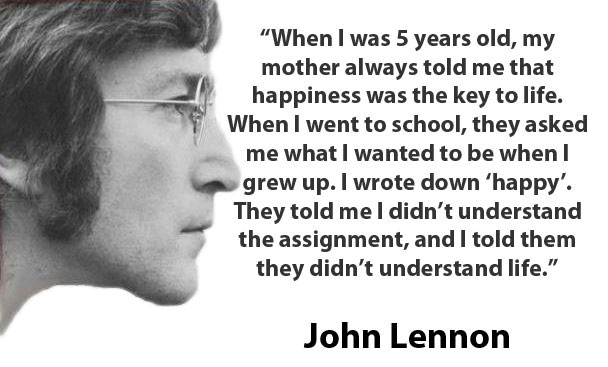
John Lennon was once asked what he wanted to be when he grew up and he said happy. They said he didn’t understand the assignment and he told them they didn’t understand life. When we think of our loved ones, we want the best and the best in reality is for them to be happy. If we instill this way of being, then they will not settle for less than they deserve.

Passing the Torch: Early Ed… Then What? Why and How We Should Be Ready for Our Children. Speaking up for Children, Families and Educators

Posted by Jill Telford and Berna Artis

“Come as you are”, said he. “But I love you, so I will not let you stay there. I will move you, and it will hurt, but I promise I won’t leave you.” –sum.c

Recently, we attended a conference, “It Takes A City” in DC and I reflected on my experiences and how I felt immediately. While sitting at a table of educators, with widely different views and experiences in education and hearing from a high school teacher, first grade teacher, education specialist and an assistant…When asked what I do, I responded I work in an Early Learning Program in DC. I heard from most of them at the table “They are just so cute but I don’t know how you do it.” Pause. Sigh. I took a deep breath. I realized I was sitting at this table for a reason.

There is a disconnect between early childhood education and the K-12 world. As I listened to their set of experiences, I realized we are so connected so why is there a disconnect? A high school teacher lamented how 23 out of 26 of her students have IEPS mainly for ADHD. 23 out of 26. My eyes widened. My chest hurt. These numbers bothered me and I could tell it bothered her too. I talked more about how early education focuses on the whole child. After my talk about developmentally appropriate practice (DAP), meeting children where they are and helping when needed, utilizing the curriculum but being flexible and following the lead of the child…the teachers said how thankful they are when children come from a high quality program and previous classes that supported them. They said our work shows. We make a difference!

I thought we don’t do this kind of work for a thank you. Our work should not stop there. Children come to a classroom with a diverse set of experiences, perspectives and ways of being. They come as they are and it is our job to help move them. Families, get to know your child’s teacher. Write a letter explaining who your child is and how he or she best learns. Paint the picture of your child in a positive and realistic light. Show and share who your child is in order to create a mutual understanding and best possible support. What is your child’s hopes and dreams? After all, you know your child the best. This way teachers can meet him where he is developmentally. Collaborate. Families are a child’s first and most important teacher. The mentality of readiness…of children being ready needs to change. Testing? This is not the only way. This idea of readiness and testing causes anxiety for the child, family, teachers and administration. We need to think like this: educators and schools should be ready for children. We hope that after children leave our world of early education that our work continues not only through our children and families but from their new teachers. We pass on the torch. As an early childhood educator, we hope that children will be challenged, asked how they feel, asked open-ended questions, met where they are. Most of all, we hope they are cared for, supported, inspired and understood.

school readiness

Often we hear how children are misunderstood. This is not working well. Emerson stated, “To be misunderstood is to be great.” When misunderstandings happen we should seek to understand. We have the power to change this way of thinking. We can totally relate to children: at some point grown-ups were in fact children. Do you remember standards? Do you remember the one-dimensional testing? Do you remember the cookie cutter art? Do you remember being quiet during lunch? Do you remember not playing? What do you remember? What made you proud, confident, loved, inspired? What caused an a-ha kind of moment for you? What challenged and hurt that helped you grow not caused anxiety?

The reality is that too many children are labeled. We are talking about high quality and equity in education but how is this fair? Diagnosis: ADHD Answer: Medication. Diagnosis: Disruptive, hurtful and troubled. Answer: removed. Isolating and shaming children to “remove the problem” so we can continue teaching? We are educating children who will one day be grown ups. They are not grown ups yet so we shouldn’t treat them like grown ups but who they are: children.

Although we realize children are uniquely and amazingly different, have a plethora of experiences, personalities and skills coupled by our understanding of current research, DAP and being culturally responsive; there are still educators and leaders who settle on the maturationist point of view of children…knowing what we know we cannot sit passively and think a child will mature and grow based on a life cycle. This is where we work to help children build and learn. This is when we mold them.

If we know there is a five year range in children’s literacy in an average kindergarten classroom then there is not only one way to teach a subject such as reading. There also should not be a standard that all children must be at. Standards and goals are necessary but let’s use them to challenge each child in different ways by meeting him or her on his own unique level of understanding. Only then can we help a child grow, actively learn, and move forward in his development.

Children are not meant to be test takers but movers and shakers of this world. If we are to adequately challenge and promote 21st century skills, we must stick to our gut instincts as educators, families and leaders and do what is right and developmentally appropriate for children. Testing should not be the only method or option in seeing where children are. There are tons of other ways as well.

testing

Every child may not be good at test taking just as every child who scores high does not mean he knows or understands the subject he was taught. Learning is a lifelong activity, a hobby for some of us. It keeps us going, allows us to stay sharp and relevant. We want our children to love learning, right? We want them to try harder each time, to think that there is no limit for growth. There is no job that is impossible to get. With education, comes great opportunities. From meeting friends who continue as colleagues and or partners to high paying jobs or satisfying careers. Most important of all, we want them to be successful in every which way. How is this possible if we do not speak up for them, if we do not stand up for their needs and rights?

For each one of us there is at least one thing to do. Mothers, fathers, grandparents, uncles, aunts, cousins, teachers, administrators, doctors, policy makers… The list is long and there is always at least one thing for each one of these individuals to do to advocate for children. There is always a step each one of us can take when we see injustice, misuderstanding, maltreatment, unfairness… It is everyone’s job to protect the youngest citizens of this world. It is everyone’s responsibility to protect their interest and to pave the road to success. We reap what we sow and what we want to sow is the best seed that will grow and take his place in life. One day, they will continue the cycle and when that day comes they will be confident, happy, productive, thoughful, succesful, innovative, problem solvers and leaders… Be their voice, now.

fred-rogers 2

Lighting up Creativity by Keeping the Magic Alive: The Power of Creativity in Children and Grown ups

Posted by Jill Telford and Berna Artis

lightbulb

Creativity=Magic. It comes down to being present in the moment and wanting to be there even in the difficult times with children and families in order to create an awesome learning experience. It’s about doing the right thing for your students, families and yourself and having the courage, confidence and creativity to thrive. I think even if you have the most up to date technological school what is at the heart is caring and nurturing teachers, families and children. A person can have a school anywhere in the world even without the best of the best but it comes down to educators, families and children. When you walk into an awesome classroom you immediately want to be there: it feels warm, accepting, safe and fun. You don’t want to leave. You feel it. To be a part of something like that is incredible.

Inspiring Ways to Spark Creativity and Ingenuity at School, Work and at Home

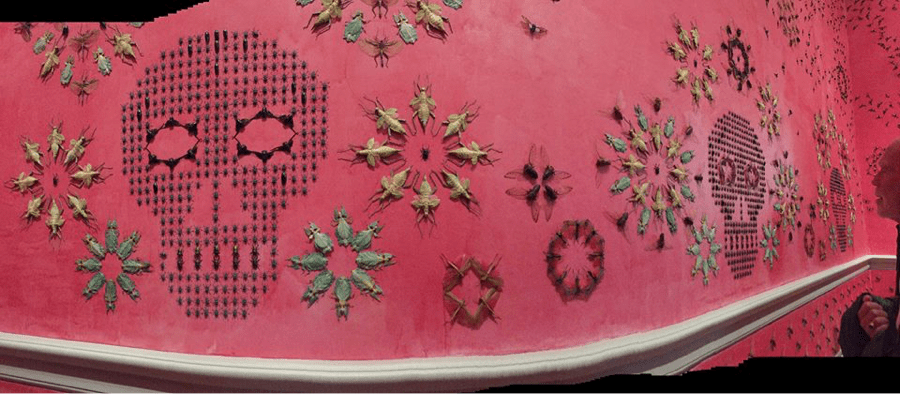
  1. Visit a museum to look and admire art and/or living/dead things. Admire some bugs together or face a fear of creepy crawly bugs. Marvel at the fragility of a butterfly. Bring a hands on activity for you and your child to recreate what you see together. There are awesome and free museums, our national zoo and the sculpture garden in DC to explore. Not to mention the reopening of the Renwick with the exhibit Wonder. http://renwick.americanart.si.eduskullswonderbuginsectzoo
  2. Give them real tools to copy you and put stuff at their level. Children may not always listen to and/or follow our advice or even have a hard time learning limits but I do know I am 99.9% sure children imitate what they see. Whether we call ourselves role models or not we are that for children. Be who you want your kid to be.aub
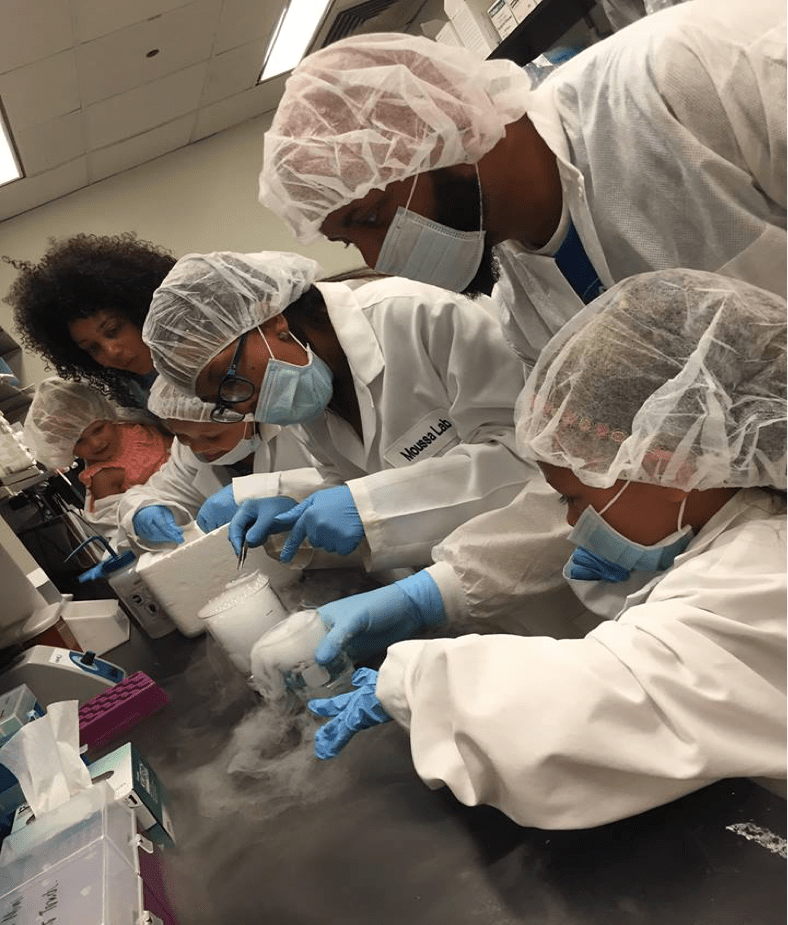
  3. Invite children to your workspace. Bring them for a day in the life of your work. Ask working family members to volunteer some time so they can visit their work too. Make it fun and interesting. Play make believe with them.  After the work experience ask them what they think about your work? Ask them their opinions and ideas. They are our future. Before you know it they will be grown ups.   Help them think of ways to think outside of the box and change the status quo. This leads to changing the world.

experiement

  1. Offer open-ended art materials. Don’t buy into commercialism all of the time. Many toys on the market inhibit creativity. They have certain limited functions. Cardboard, paper, (large paper), wood, paint (mixing primary colors to make colors), clay, chalk, crayons, pastel, collaging, mixed media arts, journaling, art journaling, photo journaling, dancing, singing, sports (recreational and organized). The list is endless. Harness whatever it is they love and let them run wild with it. Let them be in the moment making a mess. Be in the process with them.
  1. Read good books. You know what we’re talking about. The ones you like. And, read many genres. When children grow, they will appreciate this exposure and become literate awesome global individuals of the world. Teach them not to just read to read but read to understand.
  1. Make up stories together. Illustrate them too. If your children love this let them do it and appreciate it. Show them the process of publishing. And, as we are changing into the world of self-publishing show them that too. A great source of inspiration is Stephen King’s On Writing.
  1. Go on adventures. A lot of them. Take a trip somewhere. Take planned and unplanned ones. This way you show a planning process and spontaneity. We need both of these in our lives. Without a balance we get dull. Keep that gleam in your eye. This carries into old age. Keep the magic alive.
  1. Show how technology rules but does not rule you. Don’t always be on your phone. Be present in the moments. So many of them you can’t recreate or get back. Show how technology rocks. There is a thin line between our real lives happening now in the moment and technology.
  1. Eat cereal and watch cartoons together in your pajamas.
  1. Visit places to discover how things work, are made and so much more.
  1. Ask them. Ask yourself. Find out what your child loves to do and let them do it. Find out what you love to do and do that.
  1. Give your time.