Notes of A Grateful-Hearted Teacher and Life-Long Learner

Photo by Tim Mossholder on Pexels.com

I was feeling grateful while reading an article that reflected on whether teaching was stunting other passions by Patrick Harris. Throughout it, I felt affirmed and validated in my own decade and a half experience from being busy all of the time to finding the time for the other things I care deeply about such as writing and creating. Read more from the article that inspired this one below:

Teaching just like receiving an “F” or a zero on a paper can literally “suck the life out of you” in the words of Rita Pierson but a “plus two” or being in pursuit of your passions / what you care about can fill you back up a bit.

The dilemma all comes down to having no time to pursue the other things that you love.

The top three for me are: reading, creating and travel. 

That is what I intend to keep on doing. 

Photo by Jessica Lewis on Pexels.com

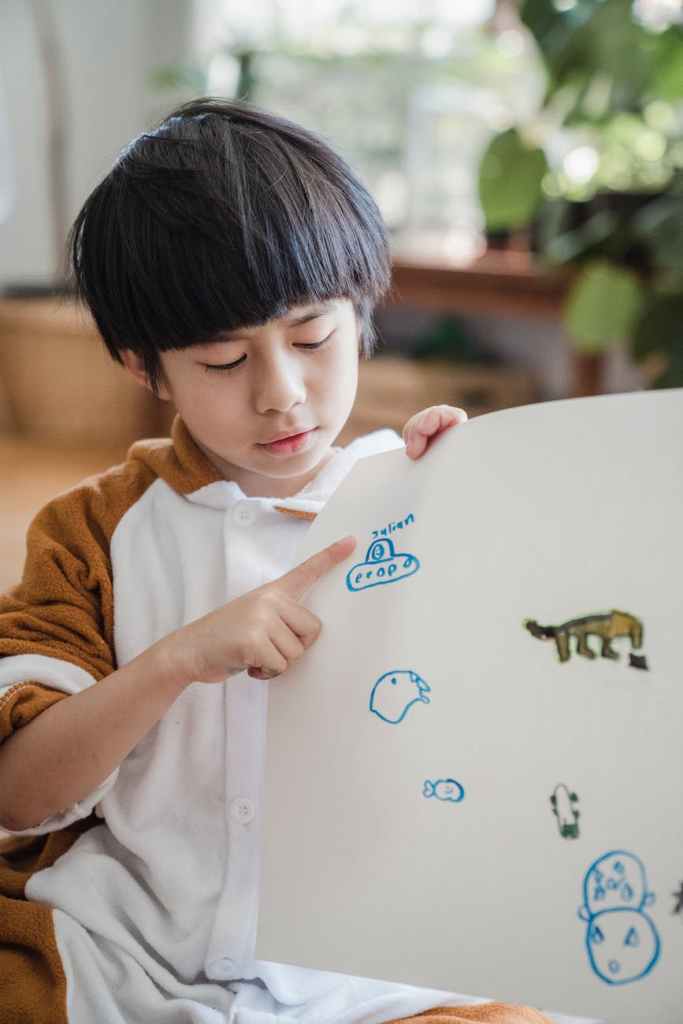
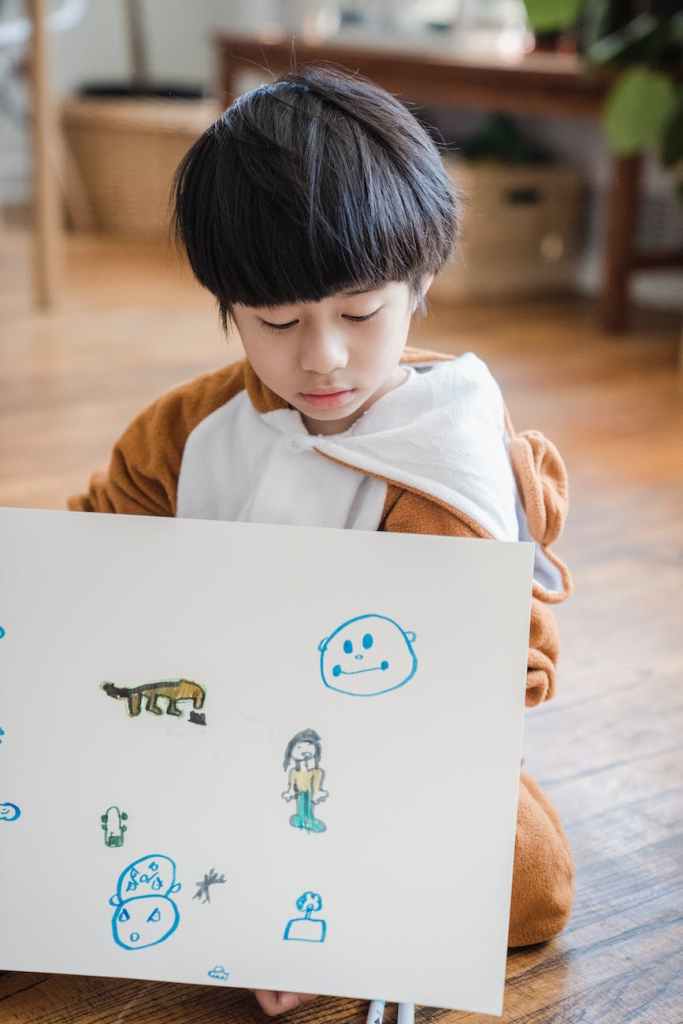
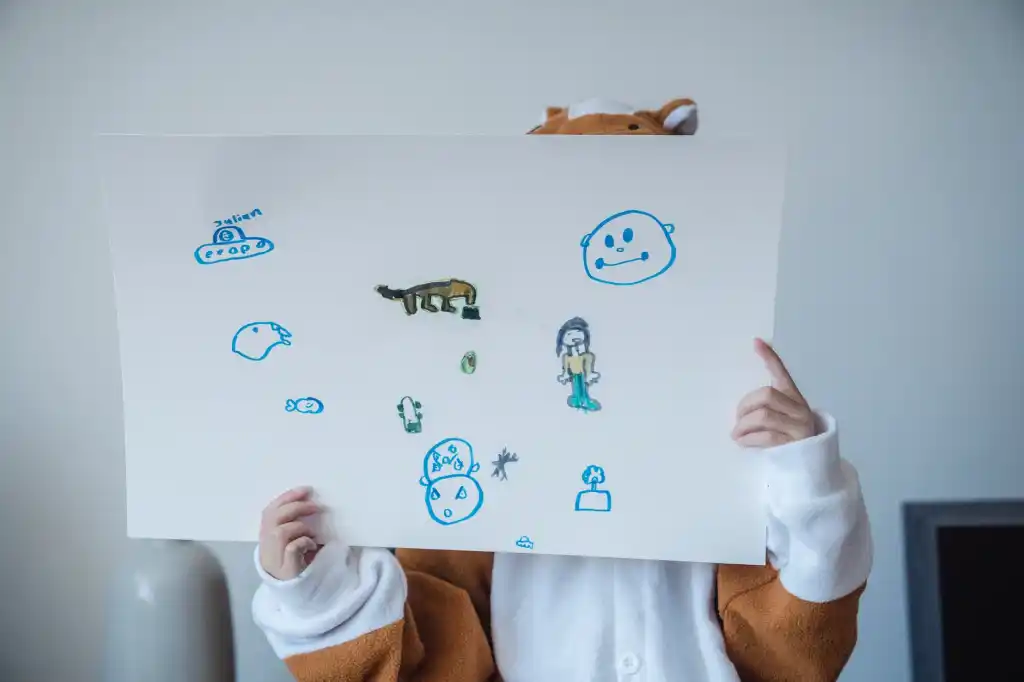
It’s not a Dog, it’s My Mommy: Tips for Drawing and Creating with Children

When you see a child’s drawing what do you notice, say or ask? 

Most times, as grown ups, we’ll label what we “think” the drawing / painting / sculpture / creation is that a child made. Or as children create, we will show them what whatever it is “should” look like. For example, take a star — we may show them. What would happen if we didn’t show them but see what kind of star they’d create based on their own observation and imagination? As opposed to getting a replica of the carbon copied four pointed star (as illustrated in the picture below) — we may just get something else more creative and out of the box way of seeing the world in which we live. 

The following are tips for making with children. 

  1. Don’t name it — ask open ended questions. Ask children to tell you the story of their picture / creation and write it down as they tell you the story of it. Ask them to describe it. Think of who, what, when, where, why and how questions. This shows you value their masterpieces as you actively listen and take notes about their work.
  2. Save their creations — save their work and bring it back out so they can add more detail to it or be inspired to make another part. Learn new terms like dip-tic, trip-tec etc. This helps children to work on a project over time and strengthens their attention to detail. 
  3. Display their work — at their eye level. If they want let them help you or even let them do it by themselves. This shows that you value their work without over empty praise such as always saying good job or it’s beautiful. The action of displaying their work whether on a shelf or on a wall says to children: “I value your work. You are a creator.” 

What ways do you inspire and encourage children’s creativity?  

Don’t Draw on the Table and Don’t Draw on the Walls

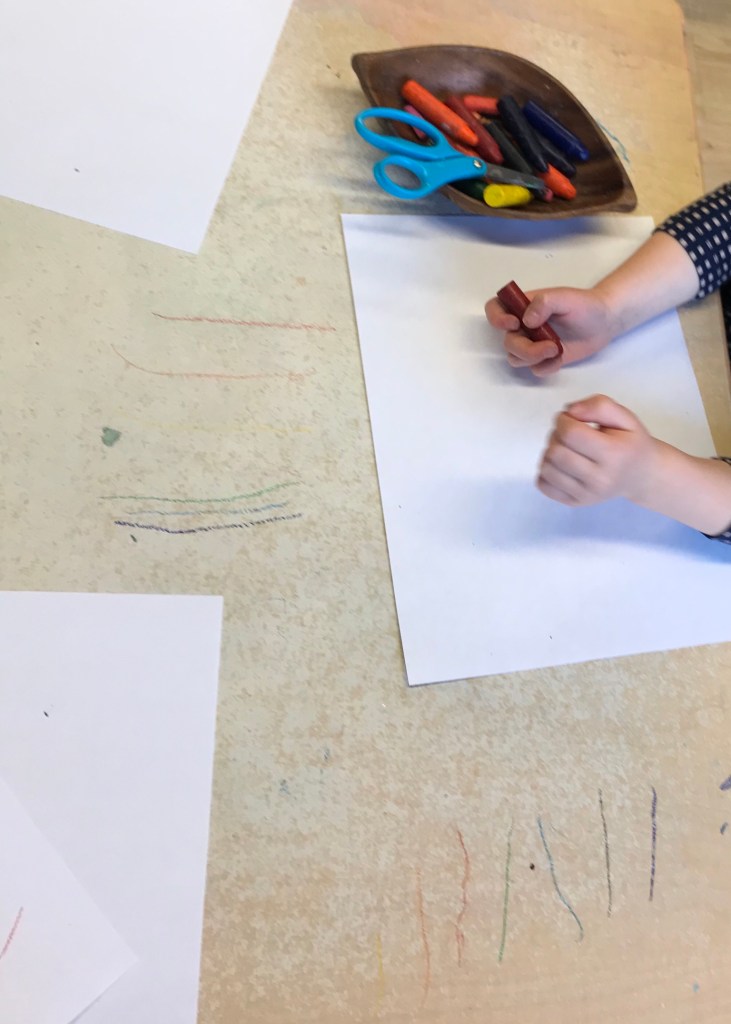
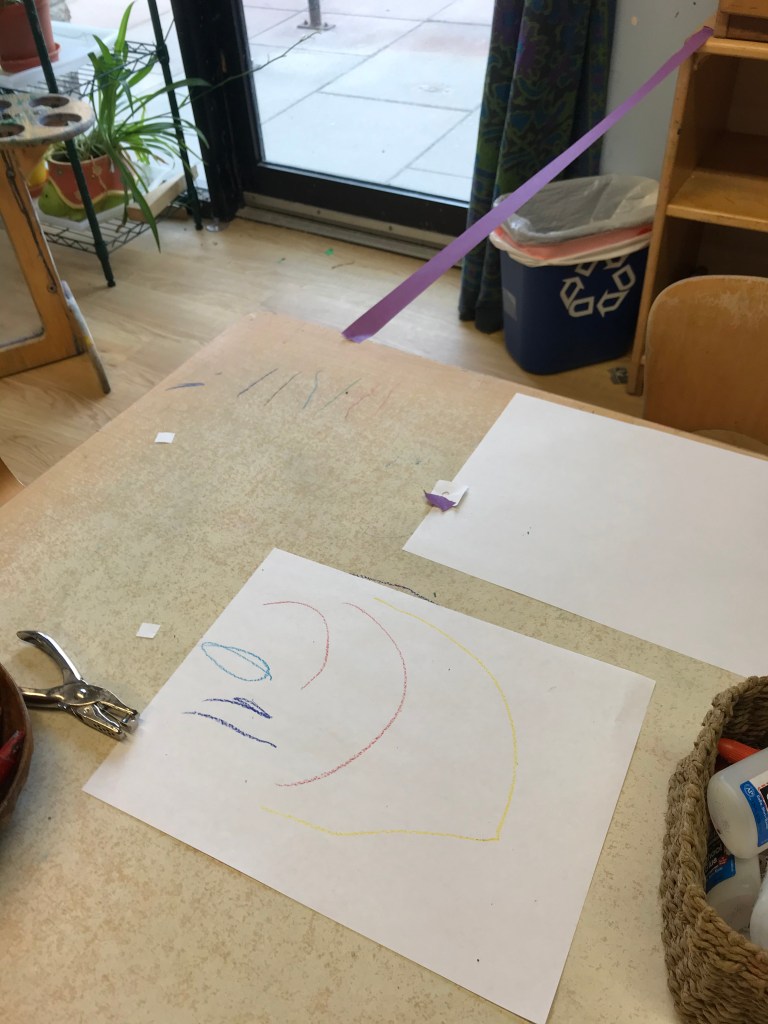
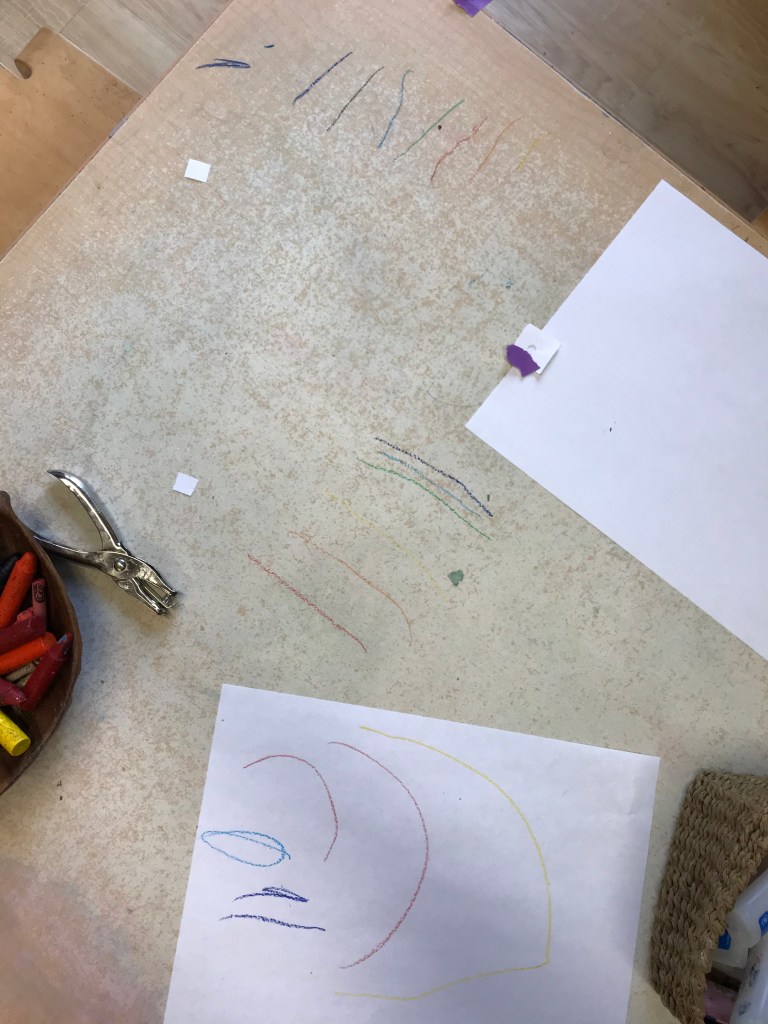
A child said, “Look, she’s drawing on the table!” I noticed she was in fact drawing on the table. I also noticed she was not drawing on the table in a destructive way but she was drawing on the table in a figuring something out kind of way. She drew the colors of the rainbow on one side out of order and on the other in order. 

I looked. I peered over. I knelt down and asked her why. She said, “I’m trying to figure out the pattern of the rainbow. The order of it.” I smiled. I said, “Artists do that. Some need to visually see it and play around with the color. Next time use scraps of paper to experiment with color. I handed her some paper and she started drawing and drawing lines and lines as she sorted out and ordered the colors of the rainbow line by line. All on her own initiative.

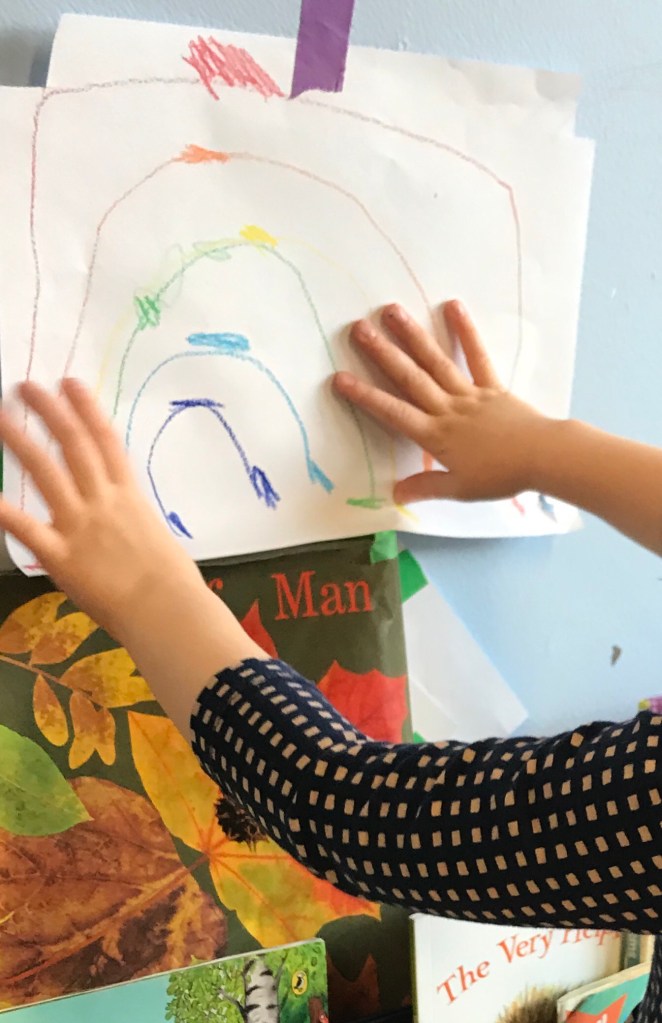
After she drew arches and created each part of the rainbow from red, orange, yellow, green, blue, indigo and violet. 

She smiled. She took out tape and hung up her rainbow. 

The process was amazing. I was a fly on the wall for a moment. 

Look at what happens when we simply don’t say “Don’t draw on the table!” Look what happens when we ask higher level thinking questions and wonder with children. Amazing work and “play” happens creatively, constructively coming from the child’s own being. 

Beautiful. In the words of Langston Hughes “It’s beautiful and ugly too.” The process. When we give space, time and a lot of understanding — a lot of magic happens.