Passing the Torch: Early Ed… Then What? Why and How We Should Be Ready for Our Children. Speaking up for Children, Families and Educators

Posted by Jill Telford and Berna Artis

“Come as you are”, said he. “But I love you, so I will not let you stay there. I will move you, and it will hurt, but I promise I won’t leave you.” –sum.c

Recently, we attended a conference, “It Takes A City” in DC and I reflected on my experiences and how I felt immediately. While sitting at a table of educators, with widely different views and experiences in education and hearing from a high school teacher, first grade teacher, education specialist and an assistant…When asked what I do, I responded I work in an Early Learning Program in DC. I heard from most of them at the table “They are just so cute but I don’t know how you do it.” Pause. Sigh. I took a deep breath. I realized I was sitting at this table for a reason.

There is a disconnect between early childhood education and the K-12 world. As I listened to their set of experiences, I realized we are so connected so why is there a disconnect? A high school teacher lamented how 23 out of 26 of her students have IEPS mainly for ADHD. 23 out of 26. My eyes widened. My chest hurt. These numbers bothered me and I could tell it bothered her too. I talked more about how early education focuses on the whole child. After my talk about developmentally appropriate practice (DAP), meeting children where they are and helping when needed, utilizing the curriculum but being flexible and following the lead of the child…the teachers said how thankful they are when children come from a high quality program and previous classes that supported them. They said our work shows. We make a difference!

I thought we don’t do this kind of work for a thank you. Our work should not stop there. Children come to a classroom with a diverse set of experiences, perspectives and ways of being. They come as they are and it is our job to help move them. Families, get to know your child’s teacher. Write a letter explaining who your child is and how he or she best learns. Paint the picture of your child in a positive and realistic light. Show and share who your child is in order to create a mutual understanding and best possible support. What is your child’s hopes and dreams? After all, you know your child the best. This way teachers can meet him where he is developmentally. Collaborate. Families are a child’s first and most important teacher. The mentality of readiness…of children being ready needs to change. Testing? This is not the only way. This idea of readiness and testing causes anxiety for the child, family, teachers and administration. We need to think like this: educators and schools should be ready for children. We hope that after children leave our world of early education that our work continues not only through our children and families but from their new teachers. We pass on the torch. As an early childhood educator, we hope that children will be challenged, asked how they feel, asked open-ended questions, met where they are. Most of all, we hope they are cared for, supported, inspired and understood.

school readiness

Often we hear how children are misunderstood. This is not working well. Emerson stated, “To be misunderstood is to be great.” When misunderstandings happen we should seek to understand. We have the power to change this way of thinking. We can totally relate to children: at some point grown-ups were in fact children. Do you remember standards? Do you remember the one-dimensional testing? Do you remember the cookie cutter art? Do you remember being quiet during lunch? Do you remember not playing? What do you remember? What made you proud, confident, loved, inspired? What caused an a-ha kind of moment for you? What challenged and hurt that helped you grow not caused anxiety?

The reality is that too many children are labeled. We are talking about high quality and equity in education but how is this fair? Diagnosis: ADHD Answer: Medication. Diagnosis: Disruptive, hurtful and troubled. Answer: removed. Isolating and shaming children to “remove the problem” so we can continue teaching? We are educating children who will one day be grown ups. They are not grown ups yet so we shouldn’t treat them like grown ups but who they are: children.

Although we realize children are uniquely and amazingly different, have a plethora of experiences, personalities and skills coupled by our understanding of current research, DAP and being culturally responsive; there are still educators and leaders who settle on the maturationist point of view of children…knowing what we know we cannot sit passively and think a child will mature and grow based on a life cycle. This is where we work to help children build and learn. This is when we mold them.

If we know there is a five year range in children’s literacy in an average kindergarten classroom then there is not only one way to teach a subject such as reading. There also should not be a standard that all children must be at. Standards and goals are necessary but let’s use them to challenge each child in different ways by meeting him or her on his own unique level of understanding. Only then can we help a child grow, actively learn, and move forward in his development.

Children are not meant to be test takers but movers and shakers of this world. If we are to adequately challenge and promote 21st century skills, we must stick to our gut instincts as educators, families and leaders and do what is right and developmentally appropriate for children. Testing should not be the only method or option in seeing where children are. There are tons of other ways as well.

testing

Every child may not be good at test taking just as every child who scores high does not mean he knows or understands the subject he was taught. Learning is a lifelong activity, a hobby for some of us. It keeps us going, allows us to stay sharp and relevant. We want our children to love learning, right? We want them to try harder each time, to think that there is no limit for growth. There is no job that is impossible to get. With education, comes great opportunities. From meeting friends who continue as colleagues and or partners to high paying jobs or satisfying careers. Most important of all, we want them to be successful in every which way. How is this possible if we do not speak up for them, if we do not stand up for their needs and rights?

For each one of us there is at least one thing to do. Mothers, fathers, grandparents, uncles, aunts, cousins, teachers, administrators, doctors, policy makers… The list is long and there is always at least one thing for each one of these individuals to do to advocate for children. There is always a step each one of us can take when we see injustice, misuderstanding, maltreatment, unfairness… It is everyone’s job to protect the youngest citizens of this world. It is everyone’s responsibility to protect their interest and to pave the road to success. We reap what we sow and what we want to sow is the best seed that will grow and take his place in life. One day, they will continue the cycle and when that day comes they will be confident, happy, productive, thoughful, succesful, innovative, problem solvers and leaders… Be their voice, now.
fred-rogers 2

Leading from Within: From the Classroom to Leadership

Posted by Jill Telford and Berna Artis

“Courage is simply the willingness to be afraid and act anyway.” –Dr. Robert Anthony

Once a preschool teacher, I recently began my work as an assistant director.

Based on what I have experienced and researched so far I learned that it’s best to have one foot in and one foot out of the classroom. It’s like taking a pulse of the place and people as a collective. Just like with students it’s checking in and meeting them where they are, learning from them and working together. As I reflect on what will soon be almost a complete year as a school leader, I pause and take a deep breath. Two words: growing pains.  It takes a lot of hard work, working smart, collaboration and most of all courage to lead.

In my heart I always wanted to be an educator. Given the privilege to serve others is what is in my being…it is in my genetic make up, my DNA, my blood. It’s in my soul. It’s inevitable. It’s unavoidable no matter where I end up or what I do in life.

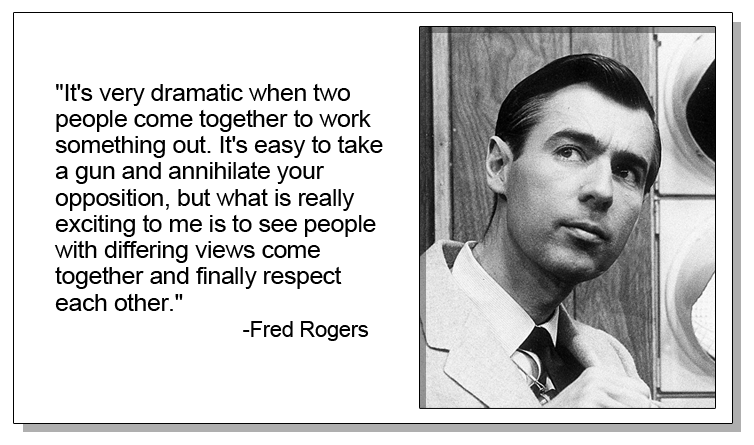
I have a vision. I still consider myself an educator and learner first and foremost. With this in mind, I enjoy keeping a pulse of our program. I look forward to saying hi and good-bye to everyone each and everyday. I look forward to seeing how others are truly doing and how they are feeling. Think: Mr. Rogers.

I believe every single person in this world deserves high quality and equity in education no matter where they are or where they’re from. I live to push everyone to realize and grow into his or her fullest potential.

There are 3 major takeaways and reminders since stepping and growing into this role:

  1. Being in Classrooms

Educators should never forget what its like to be a child/student. I take this perspective as I think about myself…I promise never to forget what its like to be a teacher. It’s similar to when I think and reflect on my experiences growing up…I never want to forget where I came from. My experiences made me the person I am today.   I work to spend time in classrooms not eyeing every little thing. I see the little things but I focus in on those little moments. The good things, the kinds of things that remind me why we are here in the first place to care, guide and challenge our children. In return to be challenged and learn from each other, families and children.

  1. Understanding, Empowering and Empathizing with Others

Taking time to understand other’s points of view. Perception is reality. Taking time to truly understand where others are coming from is important to me. It’s like two people looking and gazing at a work of art but feeling and seeing something completely different. I work and take the time to listen in order to understand why they are seeing it the way they are.

  1. Connecting, Building and Maintaining Relationships

I saved the best for last. When eating something delicious I like to save and savor the last “best” bite for last. Relationships are at the heart of our existence and being. No one wants to listen, be with or work with a person who does not genuinely care about them. Working to know everyone on a personal level is vital. I think about it like this: great teachers get to know their students and families. Knowing your people is important. Asking them how they are doing, creating outings and go to them. Work should not feel like work. You should want to be there.

Looking at leadership from several perspectives, I share some of the interesting experiences with Jill. I have taught 4th to 12th grade prior to taking my seat at the administration desk. I strongly believe that once you are an educator, you are an educator for life. A leader in a general sense must LEAD. To lead, one must possess the ability to listen and collaborate. As a leader in the field of education, you must possess other special skills such as high emotional intelligence and understanding the people you work with. I say “work with” because a good leader leads by taking part in the team.

On a daily basis, I am a very busy person. However, I enjoy taking the time to talk with my teachers, greeting children and families, squeezing in a little time to sit on the floor and play with children. This is not my main role of course but the classroom is where the action is. I remember my days being in the classroom and asking, “Who came up with this policy or regulation? Have they thought about this or that? This is unrealistic.” It seemed more “drop down” policy or rule rather than “well thought and realistic”. I have been in the trenches of teaching. I have faced many challenges and learned how to over come them and how to figure out a way to reach the goal. I am a firm believer that people like us make the best leaders. Why? Because we have been there and we have not forgotten what it was like. And we know and realize how it is now.

A leader approaches situations collectively and with a solution finder attitude. No matter what sector you work in, there are always going to be challenges, hardships, problems and negativity. A true leader gathers the team around, brainstorms together, takes everyone’s ideas and feedback into consideration and moves forward. There may be times when failure is inevitable. A leader knows what to take away from it as a learning lesson and shares it with the team trying to figure out how to avoid falling into the same situation again.

I enjoy empowering the people I work with. The stronger they get, the stronger I become. It is a cycle and a positive one. We grow together. I find coaching the most effective and enjoyable way to raise the bar for everyone. Seeing someone achieve makes me happy and gives me the biggest satisfaction. Just because I am no longer in the classroom does not mean I cannot influence what happens in the classroom. Better yet, now I can do it for more than one classroom at a time. I can establish a culture of doers, go-getters, problem solvers, communicators, and collaborators.

The most effective leaders are effective because they respect the mission, vision and the employees of their organization. They set the tone, establish a shared goal and produce a plan involving everyone. They are the role models. They get up regardless of how many times they fall. They are persistent, strong and have confidence not only in themselves but also in their teams. True leaders are inspirers and cultivators.  True leaders have courage.

courage


When its Time to Fly Away From the Nest: On Raising Independent Children

Posted by Jill Telford and Berna Artis

How are you raising your child? What is important to you? If you don’t have any yet what first materializes in your mind when you think of how to raise a child? We almost always think about safety, health, well-being, education, success, opportunities children will have to be well-rounded. We want them to ultimately be a good person.

What about independence?

One of the most important things in life is to be self-reliant. Children who are independent and rely on themselves grow to be more successful and happier. Of course, during the early years they are highly dependent on parents and other adults in their life including teachers. From feeding, diaper changing, dressing to reading, doing homework and taking them to basketball games or ballet lessons.

Then something happens when you least expect it. Like, clockwork. They reach a magical age when they are a bit more independent. This is the warm up time for adulthood. They make choices, they don’t cuddle with you that much, they ask you to drop them off a little further away from the school gate. They are capable of doing some chores, being in before the streetlights come on and you feel that they need you less.

Different types of parents raise different types of children. Seems like a no brainer right?

If you are a controlling parent and you do not give your child the opportunity to take responsibility, to do chores, to share his or her thoughts, to make choices and decisions, chances are you are disabling your child. In fact, these types of children grow to be adults with the potential at making poor decisions, blaming everyone else for their mistakes and in need of reassurance in order to feel happy and gratified.

On the other hand, parents who respect children’s wishes, seek their feedback, ask what their thoughts are helping children grow to be happy, responsible, self starters, capable and competent in taking care of their needs. This is a collaborative and positive relationship rather than controlling. As always, it is paramount to have a well-balanced style.

Here are some ways to raise independent children:

  • Provide guidance instead of telling them what to do
  • Give options instead of making the choice for them
  • Listen more
  • Show affection and love
  • Show empathy
  • Catch them doing good and reward for big accomplishments, not for every little thing.
  • Provide encouragement
  • Give them responsibilities and hold them accountable
  • Appreciate and acknowledge their efforts and verbalize it
  • Never make fun of their shortcomings and or mistakes
  • Set limits and clear expectations
  • Understand that they will make mistakes
  • Help them enjoy their success and admit their mistakes
  • Let them know that you are there to provide safety but eventually they need to fly away from the nest to explore the bigger world and test limits


Lighting up Creativity by Keeping the Magic Alive: The Power of Creativity in Children and Grown ups

Posted by Jill Telford and Berna Artis

lightbulb

Creativity=Magic. It comes down to being present in the moment and wanting to be there even in the difficult times with children and families in order to create an awesome learning experience. It’s about doing the right thing for your students, families and yourself and having the courage, confidence and creativity to thrive. I think even if you have the most up to date technological school what is at the heart is caring and nurturing teachers, families and children. A person can have a school anywhere in the world even without the best of the best but it comes down to educators, families and children. When you walk into an awesome classroom you immediately want to be there: it feels warm, accepting, safe and fun. You don’t want to leave. You feel it. To be a part of something like that is incredible.

Inspiring Ways to Spark Creativity and Ingenuity at School, Work and at Home

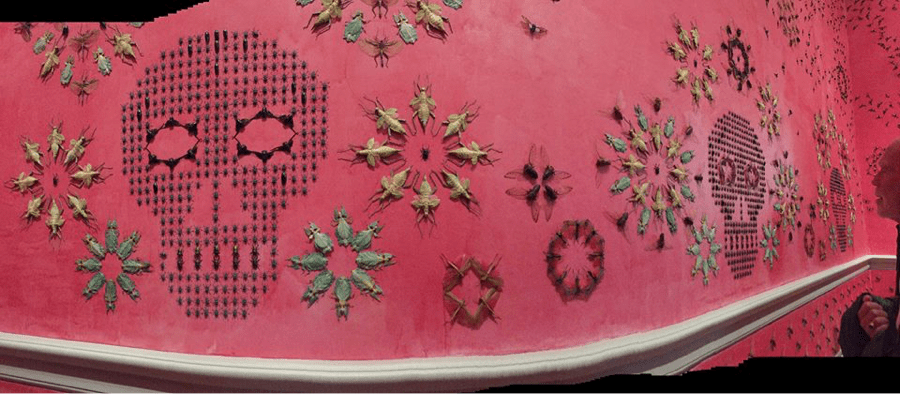
  1. Visit a museum to look and admire art and/or living/dead things. Admire some bugs together or face a fear of creepy crawly bugs. Marvel at the fragility of a butterfly. Bring a hands on activity for you and your child to recreate what you see together. There are awesome and free museums, our national zoo and the sculpture garden in DC to explore. Not to mention the reopening of the Renwick with the exhibit Wonder. http://renwick.americanart.si.eduskullswonderbuginsectzoo
  2. Give them real tools to copy you and put stuff at their level. Children may not always listen to and/or follow our advice or even have a hard time learning limits but I do know I am 99.9% sure children imitate what they see. Whether we call ourselves role models or not we are that for children. Be who you want your kid to be.aub
  3. Invite children to your workspace. Bring them for a day in the life of your work. Ask working family members to volunteer some time so they can visit their work too. Make it fun and interesting. Play make believe with them.  After the work experience ask them what they think about your work? Ask them their opinions and ideas. They are our future. Before you know it they will be grown ups.   Help them think of ways to think outside of the box and change the status quo. This leads to changing the world.

experiement

  1. Offer open-ended art materials. Don’t buy into commercialism all of the time. Many toys on the market inhibit creativity. They have certain limited functions. Cardboard, paper, (large paper), wood, paint (mixing primary colors to make colors), clay, chalk, crayons, pastel, collaging, mixed media arts, journaling, art journaling, photo journaling, dancing, singing, sports (recreational and organized). The list is endless. Harness whatever it is they love and let them run wild with it. Let them be in the moment making a mess. Be in the process with them.
  1. Read good books. You know what we’re talking about. The ones you like. And, read many genres. When children grow, they will appreciate this exposure and become literate awesome global individuals of the world. Teach them not to just read to read but read to understand.
  1. Make up stories together. Illustrate them too. If your children love this let them do it and appreciate it. Show them the process of publishing. And, as we are changing into the world of self-publishing show them that too. A great source of inspiration is Stephen King’s On Writing.
  1. Go on adventures. A lot of them. Take a trip somewhere. Take planned and unplanned ones. This way you show a planning process and spontaneity. We need both of these in our lives. Without a balance we get dull. Keep that gleam in your eye. This carries into old age. Keep the magic alive.
  1. Show how technology rules but does not rule you. Don’t always be on your phone. Be present in the moments. So many of them you can’t recreate or get back. Show how technology rocks. There is a thin line between our real lives happening now in the moment and technology.
  1. Eat cereal and watch cartoons together in your pajamas.
  1. Visit places to discover how things work, are made and so much more.
  1. Ask them. Ask yourself. Find out what your child loves to do and let them do it. Find out what you love to do and do that.
  1. Give your time.


Top 10 Ways to be Remembered as the Worst Educator of All Time.

Posted by Jill Telford and Berna Artis

We all remember the best and worst teachers in our lifetime. While teaching is a profound calling for some, others fall into it as a 9-5 job, not a calling. Here are the top 10 ways to be remembered as the worst teacher of all time. Before going any further… if you are stumbling down the road of becoming a terrible, horrible, no good, very bad teacher as Alexander’s day is described in the beloved story Alexander and the Terrible, Horrible, No Good, Very Bad Day now turned into a family comedic film, please check yourself, breathe and remember why you’re here in the first place. Teaching is not easy and not for the faint of heart: it demands tough, courageous and dedicated individuals and if you can’t handle the heat well, get out of the kitchen. While we all know what to do in terms of developmentally appropriate practice and forming strong relationships with children and families, here’s a list of what not to do as a teacher.

  1. Sitting down all of the time and being detached: ignoring students and being apathetic.    Why teach if you have no enthusiasm, interest or even concern? Students’ will pick up on this and will not want to be there either. You should be up and moving about helping, supporting, learning and teaching. Your job…is that. If you’re modeling apathy then we’re in trouble. Your students are doomed. Be present in the moments…so many of them are teachable ones.
  1. Always on computer, cell phone, reading something unrelated to the lesson. I know and realize we are in a technological age but what I cannot wrap my mind around is doing this inside of a classroom and/or while teaching. Sure, technology is awesome. However, always on a phone or computer while inside your classroom screams that a. something or someone outside of the classroom is more important than who is inside of it: b. your students.
  1. Often has tantrums, is dramatic and loses it over small issues. No one is perfect but if everyday you have an issue then there is a problem not with your surroundings but in fact, you. You must have a reality check. Ok, life is not sunshine and rainbows 24/7 BUT if you can’t learn to manage a few raindrops then you need help. If you are losing your cool and calm mostly everyday then you need to figure it out, seek help and learn how to cope. How are you to help your students keep calm, cool and be collected if you’re exploding and tripping out about every little detail? Take a lesson from the book I Was So Mad by Mercer Meyer. That little critter was frustrated but figured it out.
  1. Complains, gossips and spreads rumors about colleagues, administration, families and children. Why and for what? Misery loves company for sure but if you are a true teacher then you don’t judge and wreak havoc and wreck relationships but build them. Communication in Latin means to come together. If you’re communication is not a coming together and building relationships then you should not be saying it. Reflect and work on how to work and play well with others. No one likes a complainer. If you don’t like something try to fix it and make it better…offer solutions.
  1. Teaches using only one strategy. Every student learns differently and needs a differentiated approach. You will not connect with children on an individual level if you 1. Don’t know who they are and 2. Have unrealistic expectations of him or her. In our current education world we can CHOOSE how and what approach to reach each and every child. I know and recognize it is hard work but it pays off. Connecting, caring and helping are at the heart of teaching and human existence. If your kid wants to write about it let them write about it, if your kid wants to dance about it let them dance about it, if your kid wants to draw/paint it out let them do it, if they want to sing it let them do it, if they want to talk about it let them do it, if they want to listen let them listen, if they want to whisper let them, if they want to act it out let them do it, if they want to test it out let them do it and so much more. Give them the freedom to do this. They will remember, appreciate and do that thing you let them do forever. And, most of all they will be good at it.
  1. Acknowledges “good” and “bad” behavior. Why? When we are all good and bad. That is to be human. When we label good versus bad that is pitting children against one another. We all have good and bad in us. Read stories capturing people who have both of these traits. Teach children what it is to be human. Teach that it is ok to make mistakes but to learn from them. Teach kindness and forgiveness. Believe that every child and family is good but makes mistakes. Encourage children to take risks and be courageous.
  1. Teaching the same material every year in the same way. Every year we get a different diverse group of students. Why teach the same subjects using the same ways as the prior year. Growth is about being in a process of constant change and renewal. When we teach the same way every year then we become stagnant like a still pond of stagnant water. No one likes stagnant water unless you’re a fly, mosquito or some other kind of insect.
  1. Doesn’t show up on time or is inconsistent. If you are sick a lot. If you show up late with coffee in your hands and your cellphone…you are making a bold statement. You are basically saying you don’t care. Work at a coffee shop since you’re willing to be late on behalf of one. Coffee is awesome, we love coffee but coming in late because of it is not. Some teachers need coffee…but plan time accordingly so you make it to class on time. You are an example…set a good one, please. 
  1. Lacks compassion and does not understand human psychology. One of the most important corner stones of education is building relationships and connecting with children. Let it be a young child or a teenager, every student wants to be understood and heard. Each student is unique; therefore, requires a different approach. Understanding and connecting, means showing regard and trying to reach and help that child where he or she is. There is always a reason behind every behavior. A teacher’s job is to understand and tailor his or her approach accordingly. Is their something upsetting happening in the child’s home? Maybe there is tension or fights in the house? Is the child feeling left out or being bullied? Teachers should not use the same discipline method or guidance for every child as each child is different and requires a different approach. 
  1. Does not respect students. Just because children are not adults does not mean teachers should roll over them. It does not mean teachers will disregard the idea or the need of the children nor does it mean they will make fun of children. As young as infants, children need and deserve respect. It is important to show them they are worthy, valued and important. Lack of regard will harm a child’s self esteem and self respect. Children should be treated with kindness, respect and with the same kind of manners you ask of them. Treat others how you want to be treated. Model it yourself.
  1. Bonus* Being dismissive and knows what is best. When a family raises a concern, wants to have a conversation about their kid and you dismiss it and act like you know it all. This is not ok. A child is made strong through strong partnerships and relationships between families and teachers. Families want what is best and is a child’s first teachers in the first place…remember that. Establishing open two way communication is key in providing the best support for children. Do not pass judgment…seek first to understand than being understood. Show compassion, care and concern for your student and his or her family. This is how you build a strong foundation.

The preceding ten +bonus ways will definitely make you a memorable worst teacher in someone’s lifetime. Work at these and you will be regarded as the worst educator of all time brought up over dinners, lunches and over drinks with phrases such as “I really could not stand _______”, “That was the worst year of my childhood life”, “Thank goodness, its over”, “Oh man, you had him/her too?!”, “She/He was horrible”, “I hated______”, “She/He couldn’t teach!” and written down in academic history as a Terrible, Horrible, No Good, Very Bad Teacher.